

Views: 0 Author: Site Editor Publish Time: 2026-10-22 Origin: Site


Valves act as the heartbeat of any industrial piping network. When a valve fails in a chemical processing plant, it is rarely just a minor leak. It results in immediate system shutdowns, hazardous spills, and massive revenue loss. Modern industrial facilities demand absolute precision. Fluid control is no longer just about matching pipe diameters. It requires a deep understanding of pressure ratings, fluid corrosiveness, and system integration.
Recent shifts in industrial fluid control emphasize smart automation and predictive maintenance. Facility managers are rapidly moving away from reactive repairs. They want components that provide real-time data. This industry-wide trend means that upgrading your infrastructure requires selecting components that integrate seamlessly with advanced monitoring networks. Getting this right improves overall efficiency and drastically reduces the total cost of ownership.
Selecting the correct body style is the first critical step for any field engineer. Wafer designs are highly compact. They slip directly between two pipe flanges and save significant installation space. However, they lack dedicated bolting points. You cannot remove downstream piping for maintenance without draining the entire line. This makes them suitable for continuous loop systems but poor for end-of-line service.
In contrast, a Lug Butterfly Valve features threaded inserts on both sides of the valve body. This allows engineers to bolt them directly to individual pipe flanges. If a section of the piping needs maintenance, the lug design holds the line pressure securely. This makes it the standard choice for dead-end service in municipal water treatment facilities.
For high-pressure applications or exceptionally large pipe diameters, structural integrity is paramount. A Flanged Butterfly Valve provides the highest level of connection strength. The flanged ends distribute mechanical stress evenly across the joint. Heavy industries rely heavily on this design to prevent catastrophic blowouts under extreme flow conditions.
Furthermore, the physical valve body represents only half of the engineering equation. How you control the disc dictates the operational efficiency of the entire plant. Manual levers work fine for isolated water lines. Automated systems require robust actuation.
Plants with existing compressed air infrastructure heavily favor the Pneumatic Butterfly Valve. These actuators deliver incredibly fast response times. They also offer mechanical fail-safe spring returns. If power is lost, the valve immediately snaps shut to prevent chemical overflow.
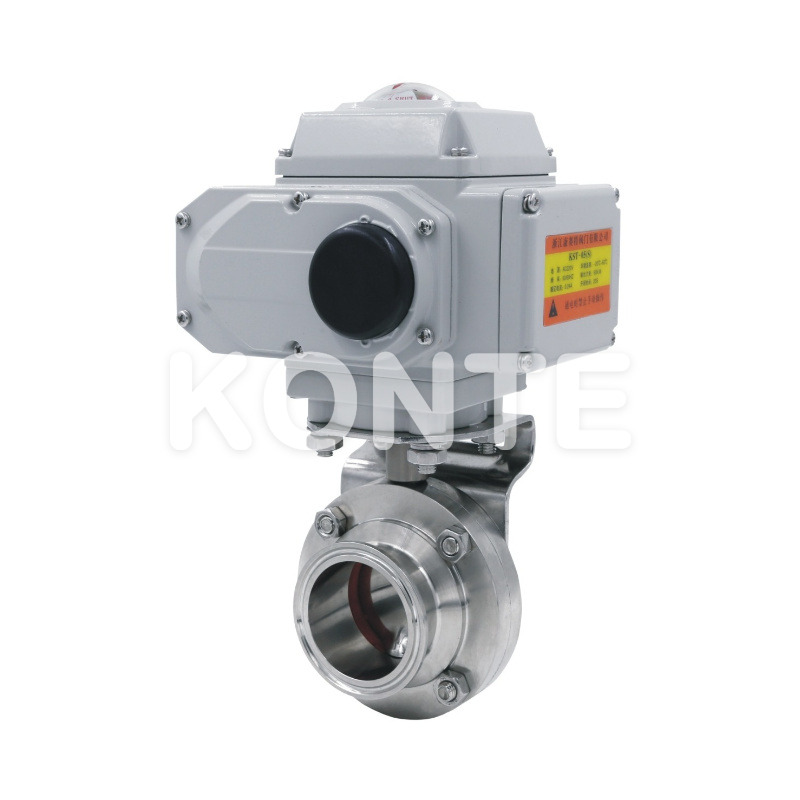
Alternatively, modern smart grids and building management systems require precise modulation. An Electric Butterfly Valve provides exact positioning. Premium sanitary electric models utilize 304 or 316L stainless steel bodies. These units feature IP67 protection classes to withstand harsh washdowns. The actuation torque is precisely calibrated at the factory. This prevents premature seat wear while guaranteeing a bubble-tight shutoff. These specific parameters keep high-purity food and beverage lines running flawlessly without contamination risks.
Every fluid environment presents unique engineering challenges. Chemical processing requires materials that handle aggressive acids and solvents. Standard elastomers degrade rapidly here. Engineers must specify PTFE or PFA lined seats and specialized alloy discs to ensure longevity.
Municipal water distribution focuses on high volume and longevity. EPDM rubber seats combined with ductile iron bodies coated in epoxy provide decades of reliable service. The focus here is preventing scaling and resisting mild chlorination.
Specifically looking at the HVAC sector, the current trend heavily favors IoT-enabled modulating control. Modern chiller plants require real-time flow feedback to optimize energy consumption. Valves in these networks must constantly adjust their disc angles to maintain precise temperature differentials across massive commercial buildings.
To streamline the procurement process, use this practical reference guide when evaluating system requirements against hardware specifications.
| System Application | Recommended Body Type | Preferred Actuation | Key Seat Material |
|---|---|---|---|
| Chemical Processing | Flanged or Lug | Pneumatic with Fail-Safe | PTFE or PFA |
| Municipal Water | Wafer or Lug | Electric or Manual Gear | EPDM |
| HVAC Chiller Lines | Lug | Modulating Electric | EPDM or NBR |
| Sanitary Food Grade | Tri-Clamp or Welded | High-Precision Electric | FDA-Approved Silicone |
Budgeting for fluid control based solely on the initial purchase price is a critical engineering mistake. Cheap materials lead to premature seal degradation. A single failed elastomer can halt an entire production shift. The cost of emergency maintenance and lost output dwarfs the price difference of a premium component.
Investing in components with calibrated torque limits and high-grade stainless steel internals drastically reduces your total cost of ownership. Predictable maintenance schedules replace midnight emergency repairs. System reliability translates directly to commercial profitability.
Concentric designs feature the stem passing directly through the centerline of the disc. They work exceptionally well for low-pressure clean water systems. Eccentric designs offset the stem slightly. This mechanical offset reduces friction as the disc opens and closes. It significantly extends seat life in high-pressure or highly abrasive industrial applications.
Yes. While they are renowned for quick on-off isolation, models equipped with electric actuators and smart positioners provide highly accurate flow control. They are widely specified in HVAC chiller lines and automated chemical dosing systems for this exact purpose.
Upgrading your piping infrastructure requires exact technical matching. Do not leave your system reliability to chance. For detailed product parameters, exact torque specifications, and to find the perfect hardware match for your specific industrial network, explore the high-performance solutions at Konte. Visit https://www.china-konte.com to secure your facility operations today.

