

Views: 0 Author: Site Editor Publish Time: 2026-04-02 Origin: Site


In dairy processing, filtration is essential for product safety, equipment protection, and regulatory compliance. The right Sanitary Filter removes contaminants from milk, cream, whey, and other dairy fluids while helping prevent downtime and hygiene risks. This guide helps procurement managers and process engineers evaluate Sanitary Filter based on hygiene standards, application requirements, and total cost of ownership.
Key Takeaways
Defining Success Criteria for Dairy Filtration
Solution Categories: Filter Types for Dairy Applications
Technical Evaluation: Key Parameters
Total Cost of Ownership (TCO) Analysis
Compliance Framework
Implementation Strategy
Conclusion
FAQ
Compliance is Non-Negotiable: Ensure all filters meet 3-A, USDA, and FDA 21 CFR standards to avoid recall risks.
Material Compatibility: Gasket selection (EPDM vs. Viton) is as vital as the stainless steel grade (AISI 316L) for fat-heavy dairy streams.
Pressure Drop Management: Exceeding a 20 psi differential can lead to internal element collapse and bypass contamination.
Operational Continuity: Duplex configurations are essential for 24/7 operations to allow cleaning without line stoppage.
Surface Finish Matters: A minimum polishing requirement (Ra < 0.8μm) is necessary to prevent biofilm accumulation.
Selecting the right filtration system for dairy applications begins with a clear understanding of its primary purpose. Not all filters are created equal, and their intended function dictates their design and performance requirements. Success is a delicate balance of achieving microbial safety, maintaining product quality, and ensuring operational efficiency.
The first critical distinction is between a "polishing" filter and a "security" strainer. While both remove unwanted particles, their goals are different:
Polishing Filters: These are designed for product safety and quality. They target micro-impurities, fine particulates, and even some microbial loads to enhance the final product's clarity, stability, and shelf life. Their micron ratings are typically much finer.
Security Strainers: Their main job is equipment protection. Placed upstream of pumps, homogenizers, and plate heat exchangers, these strainers capture larger, incidental debris like gasket fragments or metal shavings that could cause catastrophic damage. They act as an insurance policy for your most valuable assets.
Standard industrial filters, even those made of stainless steel, are fundamentally unsuitable for dairy environments. The reason lies in the "crevice-free" mandate of sanitary design. Industrial filters often feature threaded connections, sharp internal corners, and rough surface finishes. These design flaws create microscopic pockets where milk solids and bacteria can accumulate, forming stubborn biofilms. These biofilms are resistant to standard cleaning cycles and can continuously shed bacteria into the product stream, posing a severe contamination risk. A true Sanitary Filter for Dairy Products must have a smooth, polished, and self-draining design to eliminate these bacterial harborage points.
Success in dairy filtration is measured by three key outcomes. First, the filter must achieve its target particle retention size consistently, removing the specified contaminants without fail. Second, it must do so without compromising the process flow velocity, which would create a bottleneck in production. Finally, and uniquely crucial for dairy, the filtration process must not induce excessive shear stress. High shear can damage the delicate milk fat globules, leading to texture defects, altered mouthfeel, and reduced product quality, particularly in products like cream and yogurt.
Once you define your success criteria, the next step is to match the specific application with the right type of filter housing and element. Each design offers unique advantages in terms of capacity, maintenance, and spatial footprint. Selecting the appropriate category is crucial for optimizing both performance and operational workflow.
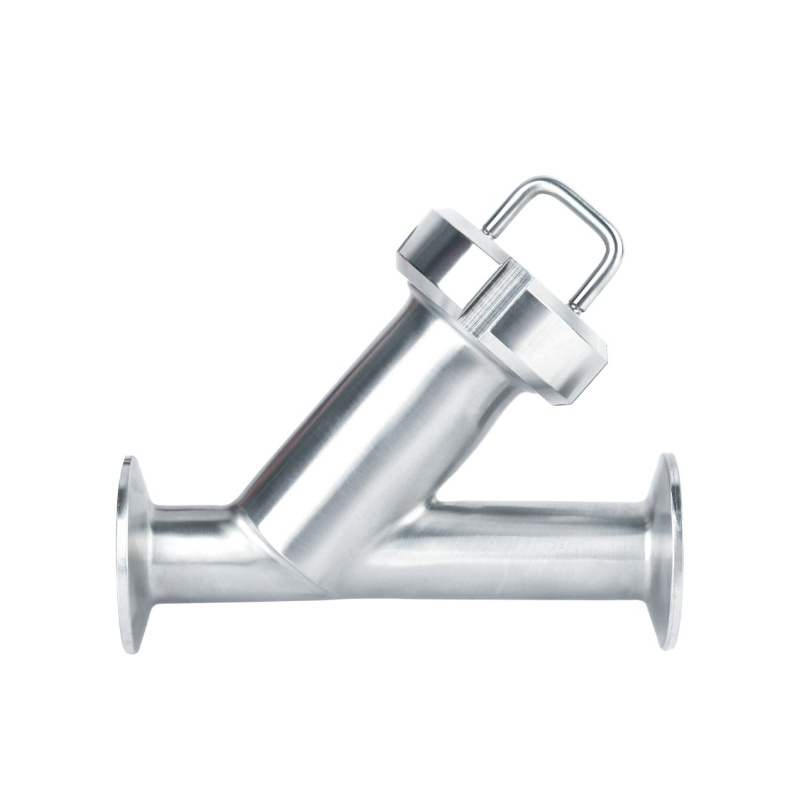
The sanitary inline filter is the workhorse of the dairy industry. Its straight-through design integrates seamlessly into processing lines, making it ideal for raw milk reception, clarifying standardized milk, and protecting pasteurizers. The primary advantage is its simplicity and ease of use. When evaluating an inline filter, focus on designs that allow for quick and easy disassembly. Tri-Clamp connections are the industry standard because they enable tool-free access to the filter element for inspection, cleaning, or replacement, minimizing downtime during sanitation cycles.
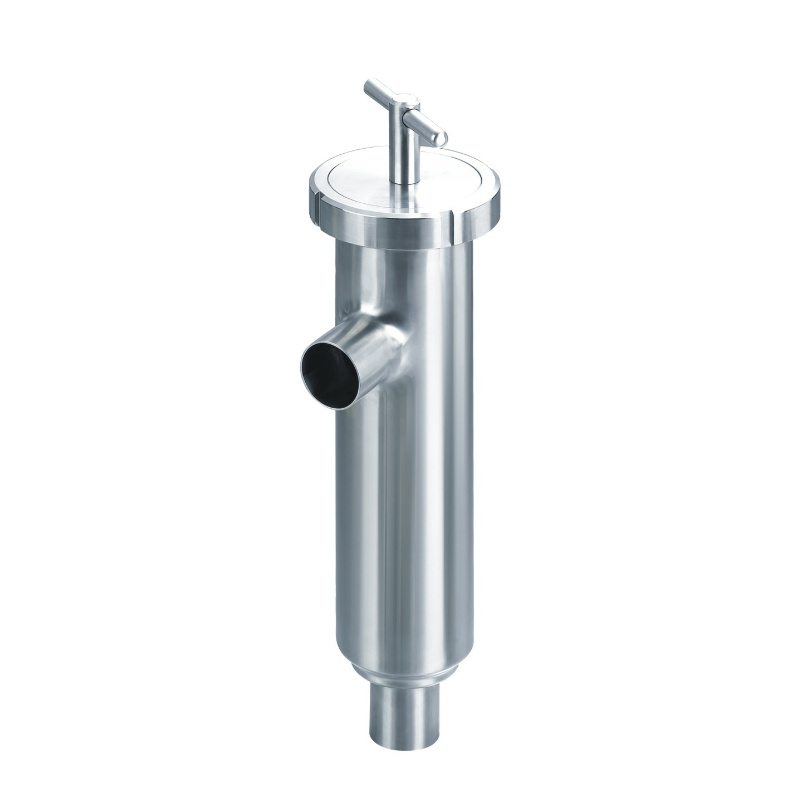
In modern dairy plants, space is often at a premium. A Sanitary Welded Angle Filter provides a clever solution for tight piping configurations. Its 90-degree, "L-shape" design allows it to replace a standard elbow in the pipeline, serving two functions with one component. When considering this type, it's important to evaluate the flow dynamics. A well-designed angle filter ensures minimal pressure drop and avoids creating "dead zones" where product can stagnate. This design is particularly effective for point-of-use filtration just before a filler or other critical equipment.
For high-volume, large-batch processes like cheese whey clarification or filtering milk powder reconstitution streams, a sanitary bag filter is often the best choice. These systems offer a significantly larger filtration surface area compared to cartridge or screen filters, allowing for higher flow rates and greater dirt-holding capacity. The main trade-off is the operational cost of disposable bags. You must analyze this against the labor savings from less frequent change-outs and the reduced risk of cross-contamination that comes with single-use media.
Filtration in a dairy plant extends beyond liquid products. The air and steam that come into contact with the product or product surfaces must also be pure.
A sanitary air filter is essential for applications like sterile tank venting. As a tank is filled or emptied, air must be able to move in or out. This filter ensures that the incoming "makeup" air is sterile, preventing airborne microbes from contaminating the tank's contents. They are also used to purify compressed air for pneumatic transport systems.
A sanitary steam filter is critical for processes using "culinary grade" steam. In applications like Direct Steam Injection (DSI) for UHT processing or Sterilization-in-Place (SIP) cycles, the steam directly contacts the product or equipment. These filters remove particulates, pipe scale, and rust from the steam supply, ensuring it does not introduce contaminants.
A deep dive into the technical specifications is essential for making an informed decision. Beyond the filter type, factors like micron rating, pressure handling, and material compatibility directly impact performance, reliability, and safety. These details separate an adequate filter from an optimal one.
The micron rating (for depth media) or mesh size (for screens) defines the size of particles the filter will capture. However, choosing the "tightest" filtration is not always the best strategy in dairy. High-protein or high-fat fluids like cream or yogurt can quickly "blind" or clog an overly fine filter element, leading to a rapid increase in pressure and a drastic reduction in flow. The key is to balance the required particle retention with the fluid's characteristics. For raw milk, a 100-200 micron screen might be sufficient to protect pumps, while a final polishing filter for bottled milk might be rated at 5 microns.
Pressure drop, or delta P (ΔP), is the difference in pressure between the filter's inlet and outlet. A clean filter has a low ΔP. As it captures contaminants, the ΔP increases. Understanding the physics of this trans-membrane pressure is critical. Every filter element has a structural limit. Exceeding a differential pressure of around 20 psi can cause the perforated metal insert or mesh screen to collapse or deform. This failure not only destroys the element but can also release all captured contaminants downstream in a single catastrophic event.
The gaskets and seals are just as important as the steel housing. They are a common failure point if not chosen correctly. Material compatibility with the product and cleaning chemicals is paramount.
| Gasket Material | Best Use Case | Limitations |
|---|---|---|
| EPDM | Water, milk, whey, CIP acids/alkalis | Poor resistance to high-fat products like heavy cream or butter oil. Fats cause it to swell and degrade. |
| Buna-N (Nitrile) | Oily or fatty products | Lower temperature resistance compared to EPDM and Viton. |
| Viton (FKM) | High-fat products, high temperatures, aggressive chemicals | Higher cost; may not be as flexible at very low temperatures. |
The type of connection impacts both seal reliability and maintenance speed. Tri-Clamp connections are the dominant standard in dairy for their hygienic, tool-free design. However, other standards exist. Comparing them helps in specific situations:
Tri-Clamp: Fast, secure, and easy to clean. The gasket provides an excellent crevice-free seal. This is the preferred choice for most applications.
IDF (International Dairy Federation): A union-style fitting common in older facilities or certain European equipment. It is hygienic but requires a wrench for disassembly, making it slower than Tri-Clamp.
Bevel Seat: Another union-style fitting. While functional, it relies on a metal-to-metal seal that is more prone to leaking if misaligned or worn. It is generally not recommended for new installations.
Smart procurement extends beyond the initial purchase price. Evaluating the Total Cost of Ownership (TCO) reveals the true long-term financial impact of a filtration system. A cheaper filter might incur higher operational costs, leading to a worse return on investment (ROI) over its lifespan.
A fundamental decision is between permanent and disposable filter media.
Permanent Stainless Steel Elements: These have a higher initial capital expenditure (CapEx) but can be cleaned and reused hundreds of times. The ongoing operational expenditure (OpEx) is primarily the labor and utilities (water, chemicals) for cleaning.
Disposable Paper/Cloth Filters: These have a very low initial cost. However, the OpEx is a recurring line item for replacement media. For high-volume processes, this can become a significant annual expense. Calculating the breakeven point is essential for making a cost-effective choice.
The design of the filter housing dramatically affects cleaning efficiency and labor costs. Look for designs that facilitate either Clean-in-Place (CIP) or easy Clean-out-of-Place (COP). "Side-entry" or certain angle filter designs are highly advantageous because they allow maintenance personnel to remove the filter element for inspection or cleaning without having to break the main process piping connections. This saves considerable time and reduces the risk of alignment issues upon reassembly.
The most significant, yet often overlooked, ROI driver is brand protection. A single product recall due to contamination can cost millions in lost product, logistical expenses, regulatory fines, and irreparable damage to consumer trust. A high-quality, properly specified Sanitary Filter for Dairy Products is a direct investment in risk mitigation. The cost of a premium filter is negligible compared to the potential cost of a single contamination event. This investment protects your brand and ensures consumer safety.
Your dairy plant is likely to grow. When selecting a filter, consider its scalability. Opting for modular filter housings that can accommodate higher flow rates by simply changing the internal element or adding parallel units is a wise long-term strategy. This foresight prevents the need to completely replace the filtration system when production volumes increase, saving significant future capital expenditure.
In the dairy industry, compliance is not optional. Adherence to established sanitary standards is a legal and ethical requirement. Standards set by bodies like the USDA and 3-A Sanitary Standards, Inc. are designed to ensure that equipment can be effectively cleaned and does not pose a contamination risk.
The baseline requirement for any product-contact surface in a dairy filter is AISI 316L stainless steel. While 304 stainless steel is common in general food processing, the "L" designation in 316L signifies low carbon content, which improves its corrosion resistance after welding. The higher molybdenum content in 316L provides superior resistance to chlorides found in both milk products and aggressive CIP cleaning chemicals, preventing pitting and corrosion over the long term.
Merely using the right material is not enough; how it is fabricated is equally critical. USDA guidelines are highly specific about design details to ensure 100% cleanability:
Radii: All internal corners must have a minimum radius of 1/4 inch (6.35mm). Sharp corners are impossible to clean effectively and become breeding grounds for bacteria.
Perforated Surfaces: The holes in a perforated strainer element must be completely free of burrs. Burrs are small, sharp imperfections left over from the punching process that can trap soil and microorganisms.
Welds: All welds must be smooth, continuous, and fully penetrated to eliminate cracks and crevices on the product-contact side.
The smoothness of the steel surface is measured in terms of its average roughness (Ra). For dairy applications, a maximum Ra of 0.8 micrometers (μm) is typically required for product-contact surfaces. This highly polished finish is achieved through mechanical polishing and, for the highest-purity applications, electropolishing. A smooth surface prevents milk proteins and minerals from adhering and forming "milk stone," a hard-to-remove deposit that can harbor bacteria.
Trust but verify. When sourcing a sanitary filter, it is your responsibility to audit the supplier's certifications. Ask for documentation proving 3-A compliance. More importantly, request Material Test Reports (MTRs) for the specific batch of stainless steel used to build your filter. These documents trace the material back to the mill, confirming its grade (316L) and chemical composition, providing an auditable record of compliance.
With a firm grasp of the technical and compliance requirements, the final phase is developing a practical strategy for selecting and implementing the right filter. This involves asking the right questions, evaluating suppliers comprehensively, and planning for a successful installation.
When shortlisting vendors, look beyond the price tag. Evaluate their technical support capabilities. Can they help you troubleshoot a pressure drop issue? What are the lead times for replacement filter elements and gaskets? A supplier who acts as a knowledgeable partner and can provide spare parts quickly is far more valuable than one who simply offers the lowest upfront cost.
Proper installation is crucial for the filter to perform as designed. Two common risks to avoid are:
"Dead Legs": Ensure the filter is installed in a way that does not create "dead legs"—sections of piping where product can be trapped and not reached by cleaning solutions. This often means placing the filter as close as possible to the equipment it is protecting.
Orientation: Install the filter housing according to the manufacturer's recommendations. Most housings are designed to be installed in a specific orientation (e.g., vertically with a bottom drain) to ensure full drainage of both product and cleaning fluids, preventing microbial growth in pooled liquids.
Choosing the right sanitary filter for dairy products is a critical decision that hinges on a careful balance of hygiene, throughput, and cost. It requires moving beyond simple product specifications to a holistic evaluation of material science, sanitary design principles, and long-term operational impact. By prioritizing systems that are fully compliant with 3-A and USDA standards, you establish a foundation of safety and cleanability. From there, matching the filter type and technical specifications to the unique demands of your fluid stream ensures both product quality and process efficiency.
For high-volume, critical dairy facilities, the final recommendation is clear: prioritize 3-A certified, AISI 316L stainless steel filter systems. Whenever continuous operation is a factor, investing in duplex capabilities provides an immediate and significant return by eliminating cleaning-related downtime. This strategic approach protects your equipment, your product, and ultimately, your brand.
A: The primary difference is the size of the particles they remove. A sanitary strainer typically uses a perforated plate or a coarse mesh screen (e.g., above 100 microns) to remove larger debris and protect equipment. A sanitary filter uses a finer mesh or depth media (e.g., below 100 microns) to remove smaller particulates for product purity and clarity. In short, strainers protect machines, while filters protect the product.
A: There is no fixed time interval. Cleaning frequency should be determined by monitoring the pressure differential (ΔP) across the filter. Most operators install pressure gauges on the inlet and outlet. When the pressure drop reaches a predetermined threshold (e.g., 15-20 psi higher than its clean state), it's time to clean the element. This performance-based approach is more efficient than a fixed schedule.
A: No. "Sanitary" design goes far beyond just the material type. Industrial filters often have threads, sharp internal corners, and rough finishes that create crevices where bacteria can hide and multiply. Sanitary filters are specifically engineered with polished surfaces, rounded corners, and clamp-style connections to be completely self-draining and easily cleanable, which is essential for preventing contamination in food-grade applications.
A: 316L stainless steel contains molybdenum, which gives it significantly better corrosion resistance against chlorides. Chlorides are present in milk itself and, more importantly, in many common cleaning and sanitizing agents. Using 304 stainless steel can lead to pitting and corrosion over time, compromising the sanitary integrity of the filter. The "L" indicates low carbon, which improves weldability without reducing corrosion resistance.
A: The standard varies slightly between farm-level and plant-level filtration. At the farm, filters are primarily for removing large debris from the milking process, so a coarser filter sock might be used. At the plant's raw milk reception, a security strainer with a mesh size typically in the range of 100 to 200 microns (approximately 150 to 75 mesh) is common to protect pumps and other initial processing equipment from incidental contaminants.


