

Views: 0 Author: Lucy Publish Time: 2026-04-23 Origin: Site


In industries such as chemical, power, and metallurgy, valves often face high temperatures, high pressures, and even corrosive media. Ordinary centerline butterfly valves and double offset butterfly valves are prone to wear and leakage under these harsh conditions. The triple offset butterfly valve, through a series of ingenious structural designs, effectively solves these problems.
1. What is Triple Offset?
2. What Are the Benefits of This Design?
3. How to Distinguish the Three Types of Butterfly Valves?
4. Summary
5. FAQ
You can quickly understand by watching the following videos:
https://youtube.com/shorts/z8bWaF5n3WI
(Triple Offset VS Double Offset Butterfly Valves)
https://youtube.com/shorts/9T2tpDhICKw
(How Did Eccentric of Butterfly Valve Evolve?)
1)Stem moved backward
The stem is not at the center of the sealing surface, but shifted backward. This allows the disc to immediately "move away" from the seat as soon as it opens, avoiding scraping.
2)Stem shifted sideways
The stem is also not exactly at the center of the pipe, but slightly to one side. This offset allows the disc to follow a more rational trajectory during rotation.
3)Beveled sealing surface
This is the most critical part. The sealing surface is not a straight cylindrical shape, but like a beveled cone. The disc only gently contacts at the very end of closing, rather than grinding all the way in.

1. More reliable sealing
Sealing is achieved by compression fit, not by rubber deformation. Under high pressure, it can achieve almost zero leakage.
2. Extremely low wear
The disc only contacts the seat at the exact moment of full closure; otherwise, it never touches, resulting in a very long service life.
3. Wide application range
The sealing pair is metal-to-metal, resistant to both high and low temperatures, from tens of degrees below zero up to over 600°C.
Butterfly Valve Comparison Table
| Comparison Item | Centerline Butterfly Valve | Double Offset Butterfly Valve | Triple Offset Butterfly Valve |
|---|---|---|---|
| Where is the sealing ring installed? | On the valve body | On the valve body (fixed by pressing ring) | On the disc |
| What does the disc look like? | Flat symmetrical disc | Metal disc with rounded edge | Beveled angle, with screws |
| Friction during opening/closing? | Full stroke friction | Separates after opening | Almost no friction |
| Suitable temperature range | Normal temperature | Medium temperature | High or low temperature |

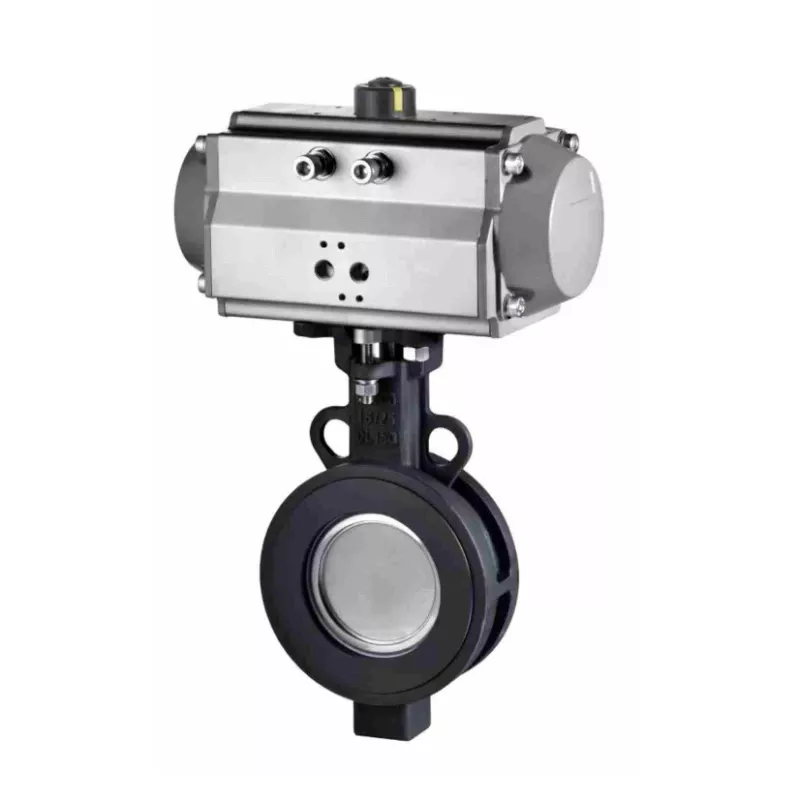

The reason why the triple offset butterfly valve is more durable and reliable than ordinary butterfly valves lies in its "triple offset" design – especially the beveled cone sealing surface. It allows the disc to stop rubbing all the way during opening and closing, instead touching gently at the very end like a door closing. Although the price is higher, in high-temperature, high-pressure, and zero-leakage-required applications, it is often the more economical choice.
1. Can a triple offset butterfly valve be used for bidirectional sealing?
Yes. Although it has a preferred pressure direction, high-quality products can also achieve good bidirectional sealing.
2. Why is it much more expensive than a centerline butterfly valve?
Because of the high manufacturing difficulty. The beveled cone surface requires precision machining, and the materials are more expensive alloys, but it provides a much longer service life.
3. How do I know when the sealing ring needs to be replaced?
Observe whether the valve closes tightly or leaks, or disassemble it to check the sealing surface on the disc for any grooves caused by erosion.


