

Views: 0 Author: Site Editor Publish Time: 2026-04-20 Origin: Site


At the heart of any sanitary processing vessel, a critical gatekeeper manages the flow of product. The Sanitary Tank Bottom Valve serves as the essential interface between in-tank processing and downstream discharge, ensuring product integrity and process efficiency. Conventional valves often create small crevices or "dead legs" where fluid can stagnate, leading to bacterial growth, cross-contamination between batches, and cleaning challenges. This not only compromises product safety but also significantly impacts batch recovery rates and the effectiveness of Clean-in-Place (CIP) cycles. This guide explores the critical design features, industry-specific applications, and engineering considerations for choosing the ideal valve for your process.
Key Takeaways
Critical Design Features
Industry Applications
Valve Architectures Comparison
Actuation Methods
Engineering & Installation Considerations
Total Cost of Ownership (TCO)
Conclusion
FAQ
Eliminating Dead Space: The primary driver for using a sanitary flush tank bottom valve is the elimination of "dead legs" where product can stagnate.
Industry-Specific Requirements: Pharmaceuticals demand sterility (ASME BPE), while food and dairy focus on viscosity handling and rapid maintenance.
Actuation Flexibility: Choosing between manual and pneumatic sanitary tank bottom valves depends on automation scale and safety fail-safes.
Installation Logic: 360° body adjustability and "Pad Radius" designs are essential for reducing installation errors and ensuring full drainage.
The term "sanitary" goes far beyond a simple polish. For a tank bottom valve, it represents a suite of design principles engineered to ensure absolute product purity, complete drainability, and reliable cleanability. These features are not optional add-ons; they are fundamental to preventing contamination and maximizing yield in high-purity industries.
The most significant flaw of a standard valve in a tank bottom application is the creation of a "pocket" or dead space between the tank's inner wall and the valve's sealing surface. The flush mount design eliminates this problem. The valve's inlet, known as the pad, is contoured with a specific radius to perfectly match the curvature of the tank's dished bottom. When welded or bolted into place, the valve's opening sits completely flush with the tank's interior surface. This creates a seamless transition, allowing gravity to pull every last drop of product into the valve, ensuring full drainage and preventing any hold-up volume where bacteria could thrive.
While 316L stainless steel is the standard material for most sanitary applications due to its excellent corrosion resistance, certain processes demand more. The internal surfaces of a high-quality sanitary flush Tank Bottom Valve are typically mechanically polished to a fine finish, often 20 Ra (0.5 μm) or better, and may be electropolished for an even smoother, more cleanable surface. For highly corrosive media, such as high-concentration saline solutions, certain acids, or aggressive cleaning agents, manufacturers may specify alternative alloys:
Hastelloy (C-276, C-22): Offers superior resistance to a wide range of corrosive chemicals, including strong acids and chlorides.
AL-6XN: A super-austenitic stainless steel with high resistance to chloride pitting and crevice corrosion.
Titanium: Used in applications where both high strength and extreme corrosion resistance are required, particularly against chloride-containing environments.
Material traceability, confirmed through Material Test Reports (MTRs), is non-negotiable for ensuring compliance and safety.
A subtle but critical feature for proactive maintenance is the "open lantern" bracket design. This is the component that connects the valve body to the actuator. Unlike a solid, enclosed bracket, the open lantern has visible cutouts. These windows allow operators to visually inspect the valve stem and its seals. If a primary stem seal begins to fail, product will weep into the lantern area, providing an immediate, visible alert of a leak before it can escalate, compromise the entire batch, or create a safety hazard.
Certifications are the backbone of trust in sanitary components. Reputable sanitary tank bottom valve manufacturers design their products to meet stringent industry standards:
3-A Sanitary Standards: Primarily focused on the food, beverage, and dairy industries, 3-A certification ensures a valve's design is free of crevices and is easily cleanable.
ASME BPE (Bioprocessing Equipment): The gold standard for pharmaceutical and biotech applications. It specifies criteria for materials, design, fabrication, surface finish, and drainability to ensure aseptic integrity.
USP Class VI: This standard applies to elastomers and polymers (seals, gaskets, diaphragms). It certifies that these materials are non-toxic and will not leach harmful substances into the product after undergoing rigorous biological reactivity tests.
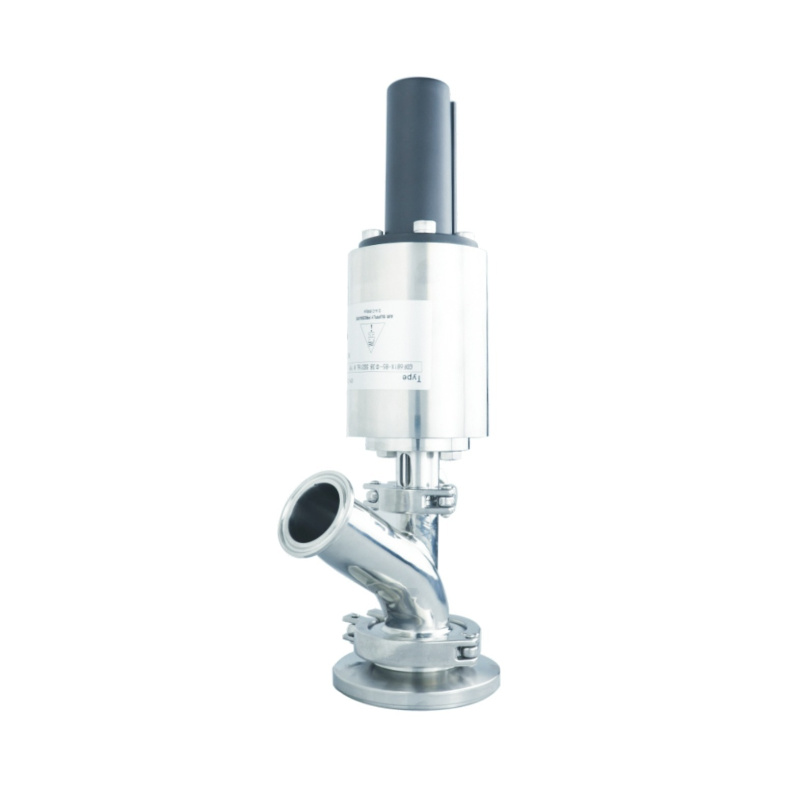
The versatility of the sanitary tank bottom valve is demonstrated by its wide adoption across various industries. However, the specific demands of each sector dictate the ideal valve configuration, material selection, and operational features.
In pharmaceutical and biotech manufacturing, the primary concerns are sterility and preventing cross-contamination. A batch of a high-value biologic can be worth millions, so absolute product integrity is paramount. Here, the focus is on aseptic design principles.
Aseptic Integrity: Valves must be designed to withstand high-temperature Steam-in-Place (SIP) cycles without compromising seal integrity. Materials must comply with ASME BPE standards.
Zero Product Loss: For high-value, low-volume fluids, complete drainage is crucial. The flush-mount design ensures maximum product recovery, which is critical for process economics.
Common Applications: Bioreactors, fermentation tanks, formulation vessels, and buffer prep tanks.
A Sanitary Tank Bottom Valve for Pharmaceuticals often features diaphragm-style architecture for the highest level of sterility.
The food and dairy industries handle a wide range of product viscosities, from thin milk to thick yogurt and syrups. The challenge is ensuring smooth flow without clogging and withstanding aggressive cleaning protocols.
Viscosity Handling: Full-bore ball-type valves are often preferred for their unobstructed flow path, which prevents thick products like creams, sauces, or yogurt from bridging or clogging the outlet.
CIP Resistance: Valves must endure frequent and aggressive Clean-in-Place (CIP) cycles using caustic and acidic agents. Seal materials like EPDM and Viton® (FKM) are selected for their chemical compatibility.
Common Applications: Milk silos, mixing tanks for yogurt or ice cream, chocolate melting kettles, and syrup blending vessels.
For these applications, a robust Sanitary Tank Bottom Valve for Food is essential for reliable production.
In beverage production, speed, efficiency, and preventing flavor carry-over are key drivers. Production lines often run multiple products, and any residue from a previous batch can ruin the next one.
Rapid Discharge: High-turnover processes require valves that can open quickly and allow for fast tank drainage to minimize cycle times.
Flavor Prevention: The zero-dead-leg design is critical for eliminating any area where a strongly flavored product (like root beer or a fruit concentrate) could be trapped, preventing carry-over into a milder product (like water).
Common Applications: Fermentation tanks in breweries, juice blending tanks, and bottled water storage silos.
Choosing the right Sanitary Tank Bottom Valve for Beverages ensures both speed and quality.
The cosmetics industry deals with complex emulsions, thick creams, and often abrasive particles (like in exfoliants). These products can be shear-sensitive, meaning their texture can be damaged by turbulence.
Handling Shear-Sensitive Media: The smooth, full-bore passage of a tank bottom ball valve minimizes agitation and shear stress on delicate emulsions like lotions and creams.
Easy Changeover: Product lines frequently switch between different colors, fragrances, and formulations. Valves with easy-strip designs, using quick-release clamps, allow for fast disassembly, cleaning, and reassembly, minimizing downtime.
Common Applications: Cream and lotion mixing vessels, shampoo and conditioner blending tanks, and foundation formulation vessels.
A well-chosen Sanitary Tank Bottom Valve for Cosmetics can significantly improve production flexibility.
The internal mechanism of a tank bottom valve dramatically influences its performance characteristics. The three primary architectures—ball, diaphragm, and mixproof—each offer distinct advantages tailored to specific process needs.
| Valve Architecture | Key Advantages | Primary Limitations | Best Suited For |
|---|---|---|---|
| Ball Valve | Full, unobstructed flow path; High pressure/temperature ratings; Robust and durable shut-off. | Potential for fluid entrapment in the ball cavity (must use cavity-filled seats). | Food, beverage, cosmetics; High-viscosity or slurry applications. |
| Diaphragm Valve | Hermetically sealed from the process; No stem packing; Superior sterility (weir-style). | Lower pressure/temperature limits; Diaphragm requires regular replacement. | Pharmaceuticals, biotech, ultra-pure water (WFI). |
| Mixproof Valve | Double-seat design allows simultaneous processing and cleaning; Prevents cross-contamination. | More complex design; Higher initial cost; Larger installation footprint. | High-volume dairy and beverage plants where tank filling/emptying overlaps with CIP cycles. |
This is the workhorse for many industries. Its design features a spherical ball with a bore through the center. When open, the bore aligns with the piping, creating a full, unrestricted flow path. This is ideal for viscous fluids, slurries, or any application where minimizing pressure drop is important. A crucial specification for sanitary ball valves is the use of "cavity-filled" seats. These are PTFE seats that fill the void between the ball and the valve body, preventing product from becoming trapped when the valve is closed.
For the ultimate in aseptic assurance, diaphragm valves are the preferred choice. In this design, a flexible diaphragm is pressed against a "weir" or saddle in the valve body to stop the flow. The key benefit is that the process fluid is completely isolated from the valve's moving parts and the external environment. There is no valve stem or packing that comes into contact with the product. This makes them ideal for sterile applications in biotech and pharmaceuticals, but they generally have lower pressure ratings and the diaphragm is a wearable component that needs periodic replacement.
In large-scale, highly automated facilities, mixproof technology offers a significant efficiency boost. A mixproof tank bottom valve uses two independent seals (a double-seat design) with a leakage chamber in between. This allows one fluid path (e.g., the product line) to remain completely separate from another (e.g., the CIP supply line). An operator can clean the outlet piping while the tank is still full of product, or begin filling a tank while the previous batch is being drained downstream, all without any risk of cross-contamination. This technology maximizes uptime but comes with increased complexity and cost.
The method used to open and close the valve—its actuation—is a key decision that impacts operational efficiency, automation level, and safety. The choice between manual and pneumatic control depends largely on the scale of the process and the need for integration.
A Manual Sanitary Tank Bottom Valve is operated by hand, typically using a lever or handwheel. This straightforward approach offers reliability and simplicity.
Small-Batch Processing: Ideal for pilot plants, R&D labs, or craft production where processes are closely monitored by an operator.
Infrequent Operation: Suitable for drain ports or sampling points that are not actuated frequently during a batch.
No Power Available: A simple mechanical solution for remote tanks or areas where running compressed air or electricity is impractical.
Modern manual valves often feature ergonomic, multi-position locking handles that allow for throttling flow and securing the valve in the open or closed position to prevent accidental operation.
A pneumatic Sanitary Tank Bottom Valve uses compressed air to drive an actuator that opens and closes the valve. This enables automation and remote control.
Automation Integration: Pneumatic actuators can be controlled by solenoid valves, which are triggered by a Programmable Logic Controller (PLC) or SCADA system. This allows the valve to be integrated into automated recipes for filling, mixing, and draining.
Safety Fail-Safes: Actuators are available in different configurations for safety:
Spring-Return: Uses air to open and an internal spring to close (or vice-versa). This provides a "fail-safe" position—if compressed air is lost, the spring will automatically return the valve to its safe state (e.g., Fail Closed or Fail Open).
Double-Acting: Uses air to both open and close the valve. This provides stronger force but does not have a default fail-safe position.
Position Feedback: For process verification, pneumatic actuators can be fitted with control tops or limit switches. These sensors send an electrical signal back to the control system, confirming that the valve is truly in the commanded position (open or closed).
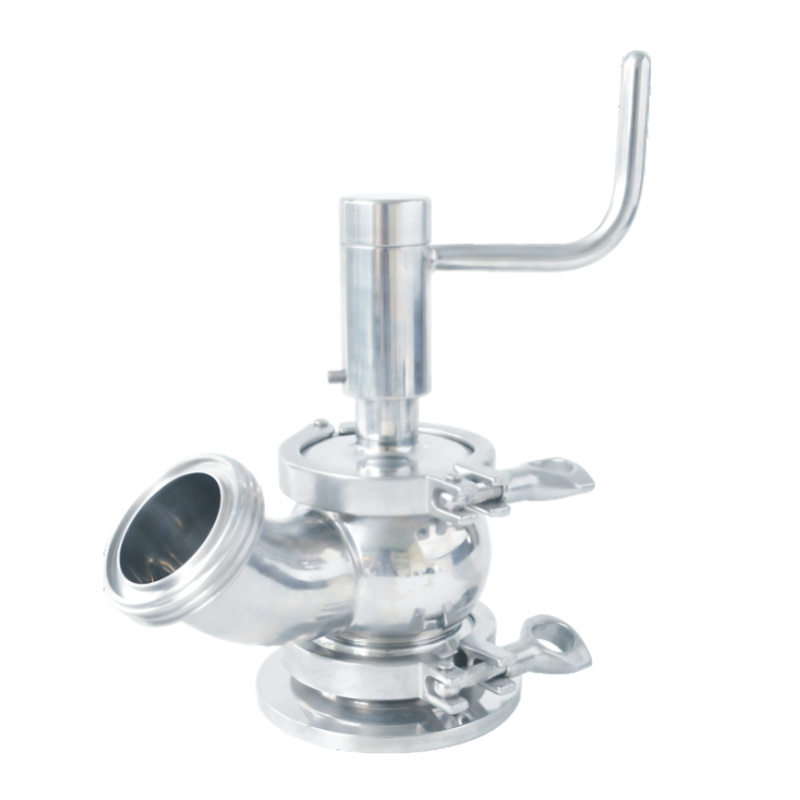
A perfectly designed valve can fail to perform if it is installed incorrectly. Proper engineering and implementation practices are crucial for realizing the full benefits of a sanitary tank bottom valve and ensuring a long, trouble-free service life.
The method of attaching the valve to the tank is a fundamental choice with long-term implications for both hygiene and maintenance.
Welded Connections: Welding the valve's inlet pad directly to the tank creates a permanent, crevice-free, and highly sanitary connection. It is the preferred method for most new tank constructions, especially in pharmaceutical applications. However, it requires a skilled welder and precise alignment during installation, as mistakes are difficult to correct.
Bolted/Flanged Connections: Using a flanged connection allows the valve to be bolted to a corresponding flange on the tank. This makes removal for maintenance or replacement much easier. The trade-off is the introduction of a gasket, which is an additional seal point that must be managed and periodically replaced.
One of the most valuable features for installers is a valve body that can be rotated 360° relative to its welded pad. After the pad is permanently welded to the tank, the installer can loosen a clamp, rotate the valve body to achieve perfect alignment with the outlet piping, and then re-tighten it. This feature dramatically simplifies installation, compensates for minor alignment errors, and prevents stress from being placed on the piping system, which could lead to future leaks.
Many sanitary processes involve thermal cycling—repeated heating and cooling during production and cleaning (CIP/SIP). These temperature fluctuations cause metal components to expand and contract. Live-loaded stem sealing is a design that uses a set of spring-like washers (Belleville washers) in the stem packing assembly. These washers exert constant pressure on the seals, automatically compensating for thermal expansion and contraction. This ensures a consistent, tight seal on the valve stem, preventing leaks even under demanding thermal conditions.
Even the best valve cannot overcome poor tank design. To ensure 100% drainability, the tank itself must be properly designed. The bottom of the tank should have a sufficient slope, or "dish," leading down to the valve outlet. The valve should be installed at the absolute lowest point of the tank. Verifying the tank's drainage slope and the valve's position before final welding is a critical quality control step that prevents costly rework later.
The true cost of a valve extends far beyond its initial purchase price. A comprehensive view of the Total Cost of Ownership (TCO) includes maintenance expenses, downtime, and the potential cost of a lost batch. Proactive maintenance and smart procurement can significantly lower TCO and maximize the valve's return on investment.
Rather than waiting for a seal to fail, a predictive maintenance strategy focuses on monitoring and planned replacement. The "open lantern" bracket provides a visual cue for stem seal wear. For internal seals (seats and gaskets), replacement schedules should be based on the number of valve cycles, the severity of the service (temperature, pressure, chemical exposure), and the manufacturer's recommendations. Valves designed with "easy-strip" clamps that require no special tools allow maintenance personnel to quickly disassemble, inspect, and replace soft goods, minimizing downtime.
When evaluating valve options, consider these factors beyond the initial price tag:
Cost of Batch Loss: What is the value of a single batch of your product? A single valve failure that leads to contamination could cost exponentially more than the price of a premium valve.
Downtime Costs: How much revenue is lost for every hour of unplanned production stoppage? Valves that are quick and easy to service reduce this cost.
Spare Parts Costs & Availability: Are replacement seal kits readily available and reasonably priced? Long lead times for spare parts can extend downtime significantly.
Choosing the right partner is as important as choosing the right valve. When evaluating suppliers, look for:
Technical Support: Can they provide expert advice on material compatibility, application engineering, and troubleshooting?
Documentation and Certification: Do they readily provide Material Test Reports (MTRs), certificates of conformity, and documentation for standards like 3-A or ASME BPE?
Customization Capability: For retrofitting existing tanks or for non-standard vessel designs, the ability to fabricate a custom "pad" with the correct radius and dimensions is crucial for achieving a true flush-mount installation.
Selecting the right sanitary tank bottom valve is a critical engineering decision that directly impacts product quality, operational efficiency, and profitability. Success hinges on aligning the valve's design with the specific demands of your process. This means carefully matching the valve architecture and materials to your media's viscosity, adhering to the sterility requirements of your industry, and choosing an actuation method that fits your automation strategy. Prioritizing certified "zero-dead-leg" designs and features that simplify maintenance will ensure a strong long-term return on investment, protecting your products and your process for years to come. Your next step should be to audit your current tank configurations for potential dead leg risks and consult with experienced valve manufacturers to discuss custom fitting and optimal selection for your unique application.
A: The maximum temperature is determined by the seat and seal materials. Standard PTFE (Teflon®) seats are typically rated for up to 260°C (500°F). For higher temperature applications, especially those involving steam, PEEK (Polyetheretherketone) seats can be used, often pushing the limit to over 300°C (572°F). Elastomer seals like EPDM or Viton® have lower temperature limits, so the entire material set must be considered.
A: Yes, many high-quality sanitary tank bottom valves are rated for full vacuum service. This is a critical requirement for processes like degasification, vacuum drying, or vessel transfers that rely on negative pressure. Always check the manufacturer's specifications to confirm the valve's vacuum rating before use in such applications.
A: A flush-mount outlet is installed at the very bottom center of a dished tank for complete gravity drainage. A tangential outlet is mounted on the side of the tank, near the bottom knuckle radius. Tangential outlets are often used in mixing applications where a vortex can form, helping to draw product out more effectively and prevent solids from settling in the center.
A: The primary difference is the inlet flange design. A standard ball valve has identical flanges or ends for in-line pipe connection. A tank bottom ball valve has a standard outlet flange but features a special extended inlet flange, or "pad," that is designed to be welded directly onto the curved surface of a tank, ensuring a flush, pocket-free connection.
A: There is no single answer, as it depends heavily on CIP frequency, chemical concentration, temperature, and pressure. A good starting point is to inspect seals every 6 to 12 months. However, for severe service, replacement may be needed every 3 months. Many facilities establish a predictive maintenance schedule based on historical performance and manufacturer recommendations to avoid unplanned failures.


