

Views: 0 Author: Site Editor Publish Time: 2026-02-16 Origin: Site


Angle seat valves have become essential components in modern industrial fluid control systems, offering superior performance in high-temperature and high-pressure applications. This comprehensive guide explores the critical features that make pneumatic angle seat valves the preferred choice across pharmaceutical, food processing, chemical, and manufacturing industries. We examine flow dynamics, material specifications including stainless steel angle seat valves, and performance metrics that directly impact operational efficiency. Whether you're a procurement specialist, process engineer, or facility manager, understanding these key features will help optimize your valve selection and system design.
Introduction
What Are Angle Seat Valves?
Key Flow Characteristics
Material Selection and Construction
Performance Factors
Applications and Industry Use
Selecting the Right Angle Seat Valve
Maintenance and Longevity
Conclusion
FAQ
In today's demanding industrial environments, valve selection can significantly impact process efficiency, product quality, and operational costs. Angle seat piston valves stand out as versatile solutions that combine exceptional flow characteristics with robust construction and reliable performance. Unlike traditional globe or ball valves, these valves offer unique advantages that make them indispensable in applications requiring high flow rates, minimal pressure drop, and extended service life.
The angle seat valves market has experienced substantial growth, driven by increasing automation demands and stringent hygiene requirements in sanitary applications. As industries evolve toward smarter, more efficient processes, understanding the technical specifications and operational characteristics of these valves becomes crucial for making informed purchasing decisions.
Angle seat valves are two-port control valves characterized by their distinctive angled body design, where the inlet and outlet ports form an acute angle, typically between 45° and 90°. This geometric configuration creates a streamlined flow path that minimizes turbulence and pressure loss, making them ideal for applications demanding high flow capacity in compact installations.
These valves utilize a pneumatically actuated piston that drives a seal (typically PTFE or EPDM) against a conical seat. When compressed air is applied to the actuator, the piston lifts the seal from the seat, allowing media to flow through. The angled design ensures that the flow path remains unobstructed, providing virtually unrestricted flow when fully open.
Konte Valve specializes in manufacturing high-quality angle seat valves designed for demanding industrial applications, offering both standard and customized solutions to meet specific process requirements.
One of the most significant advantages of pneumatic angle seat valves is their exceptionally high flow coefficient. The angled body design creates a straight-through flow path with minimal directional changes, resulting in:
Higher Cv values compared to globe or diaphragm valves of similar size
Reduced pressure drop across the valve, improving energy efficiency
Faster flow rates enabling shorter cycle times in batch processes
| Valve Type | Relative Cv Value | Pressure Drop | Flow Path |
|---|---|---|---|
| Angle Seat Valve | 100% (baseline) | Low | Streamlined |
| Globe Valve | 60-70% | High | Tortuous |
| Diaphragm Valve | 70-80% | Moderate | Restricted |
| Ball Valve | 90-95% | Very Low | Straight (open) |
The smooth, angled flow path minimizes turbulence, which is particularly important when handling:
Viscous media that require laminar flow conditions
High-temperature fluids where cavitation could cause damage
Particle-laden liquids that might settle or cause wear in areas of low velocity
Stainless steel angle seat valves represent the industry standard for corrosion resistance and durability. Konte's stainless steel pneumatic welded angle seat valves offer several grades to match application requirements:
316L Stainless Steel:
Superior corrosion resistance in acidic and chloride environments
Excellent for pharmaceutical and food-grade applications
Complies with FDA and 3A sanitary standards
Temperature range: -10°C to +180°C
304 Stainless Steel:
Cost-effective option for general industrial use
Good corrosion resistance in most environments
Suitable for water, steam, and neutral chemicals
Temperature range: -10°C to +160°C
For highly corrosive chemical applications, plastic pneumatic flanged angle seat valves provide exceptional chemical resistance:
PVDF (Polyvinylidene Fluoride):
Outstanding resistance to acids, bases, and organic solvents
Temperature stability up to +140°C
Ideal for semiconductor and chemical processing industries
PP (Polypropylene):
Economical solution for non-aggressive chemicals
Suitable for water treatment and plating applications
Temperature range: 0°C to +90°C
The performance and longevity of sanitary regulating angle seat valves heavily depend on seal material selection:
| Seal Material | Temperature Range | Chemical Compatibility | Best Applications |
|---|---|---|---|
| PTFE | -30°C to +200°C | Excellent (universal) | Chemicals, steam, pharmaceuticals |
| EPDM | -40°C to +150°C | Good (not for oils) | Water, steam, food processing |
| FKM (Viton) | -20°C to +200°C | Excellent (oils, fuels) | Petroleum, solvents, high-temp |
| Silicone | -60°C to +180°C | Moderate | Food, beverage, clean steam |
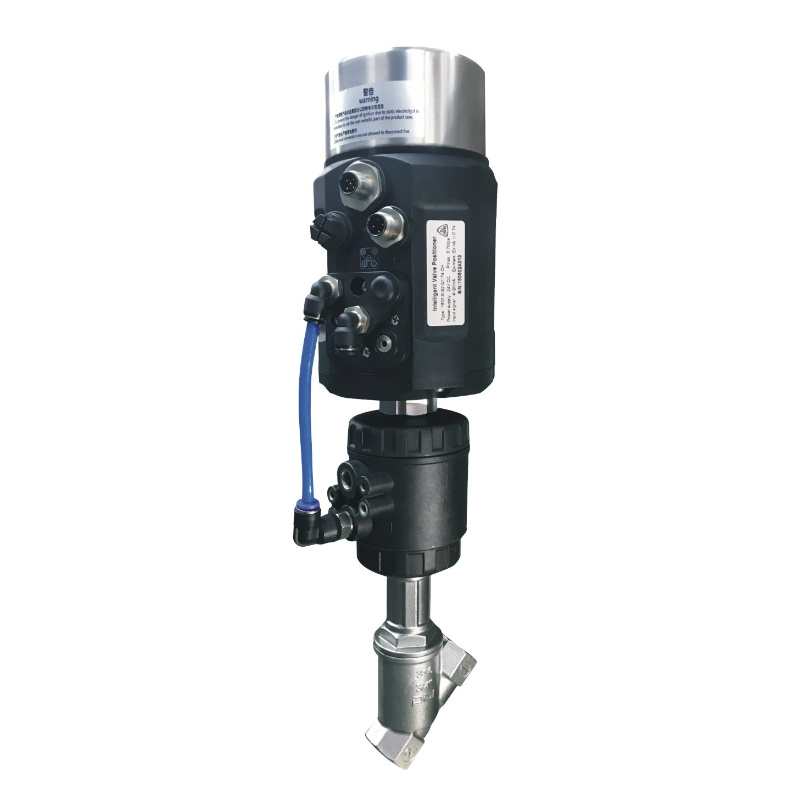
Pneumatic angle seat valves offer rapid actuation, critical for applications requiring:
Quick shut-off in emergency situations
Precise dosing in batch processing
Rapid cycling in automated systems
Typical opening/closing times range from 0.1 to 2 seconds, depending on actuator size and air pressure. Konte's adjusting pneumatic threaded angle seat valves feature adjustable stroke limiters for optimizing response characteristics.
Maximum performance specifications for angle seat piston valves:
Operating Pressure: Up to 16 bar (232 psi)
Operating Temperature: -10°C to +180°C (depending on materials)
Actuator Air Pressure: 4-8 bar (58-116 psi)
Modern sanitary regulating angle seat valves achieve tight shutoff through:
Self-centering piston design ensuring optimal seal alignment
Spring-loaded return mechanism providing consistent sealing force
Conical seat geometry creating line contact for reliable sealing
Typical leak rate: <0.01% of Cv (Class VI shutoff capability)
Sanitary angle seat valves excel in hygienic applications due to:
Smooth, crevice-free internal surfaces preventing bacterial growth
CIP/SIP compatibility for automated cleaning and sterilization
FDA-compliant materials ensuring product safety
Dead-leg-free design minimizing contamination risk
Common applications include: dairy processing, brewing, soft drink production, juice manufacturing, and bottling lines.
The pharmaceutical sector demands the highest purity standards, making stainless steel angle seat valves with electropolished finishes essential for:
WFI (Water for Injection) systems
Pure steam generation and distribution
API manufacturing processes
Fermentation and cell culture systems
Konte Valve's quality control ensures compliance with cGMP requirements and validation protocols.
Angle seat valves handle aggressive chemicals safely through:
Chemically resistant materials (PVDF, PTFE, Hastelloy)
High-temperature capability for reaction vessels
Ability to handle both liquid and gaseous media
Resistance to thermal shock and cycling
High-temperature steam applications benefit from:
Excellent thermal expansion compatibility
Minimal thermal stress on sealing components
Rapid condensate removal preventing water hammer
Extended service life in cyclic temperature conditions
Konte offers multiple connection options:
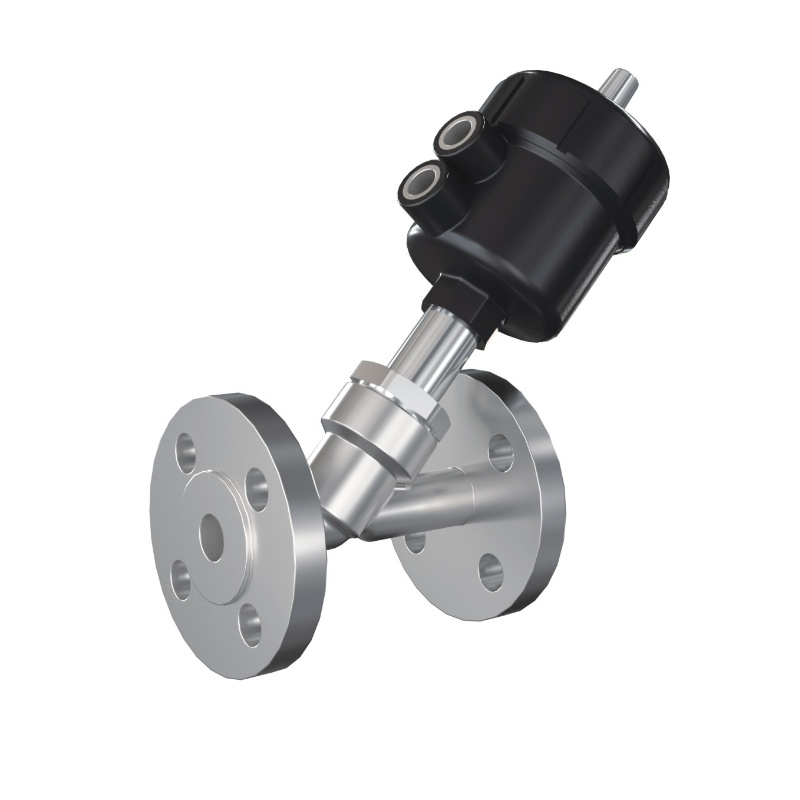
Threaded Connections: NPT, BSP - ideal for smaller sizes (DN8-DN50), easy installation
Flanged Connections: DIN, ANSI, JIS standards - for larger sizes and high-pressure applications
Welded Connections: Hygienic applications requiring permanent, leak-free joints
Proper valve sizing ensures optimal performance:
Calculate required Cv based on flow rate and pressure drop
Consider future capacity needs (20-30% margin recommended)
Account for viscosity effects on flow coefficient
Verify actuator sizing for operating pressure and safety factors
Modern pneumatic angle seat valves supplier offerings include:
On/Off Control: Simple two-position operation
Modulating Control: Proportional positioning for flow regulation
Position Feedback: Integrated sensors for process monitoring
Fail-Safe Configurations: NC (normally closed) or NO (normally open)
Quality angle seat piston valves offer extended service life:
Typical cycle life: 500,000 to 2,000,000 cycles
Seal replacement interval: 1-3 years depending on application
Actuator maintenance: Minimal - periodic lubrication of moving parts
Expected service life: 10-15 years with proper maintenance
To maximize performance and longevity:
Regular Inspection: Check for leaks, unusual noise, or sluggish operation
Seal Replacement: Replace seals at recommended intervals or when leakage occurs
Actuator Maintenance: Ensure proper air pressure and lubrication
System Cleaning: Utilize CIP/SIP capabilities to prevent buildup
Documentation: Maintain service records for regulatory compliance
Konte's service team provides comprehensive support including maintenance training, spare parts supply, and technical consultation.
Angle seat valves represent a sophisticated solution for industrial fluid control, combining superior flow characteristics, versatile material options, and reliable performance across demanding applications. Their unique design offers tangible benefits including reduced pressure drop, faster actuation, excellent cleanability, and extended service life—all contributing to improved process efficiency and lower total cost of ownership.
When selecting valves for your application, partnering with an experienced angle seat valves manufacturer like Konte ensures access to quality products, technical expertise, and comprehensive support. With proper selection, installation, and maintenance, these valves will deliver years of dependable service while optimizing your process performance.
As industries continue to evolve toward greater automation, efficiency, and sustainability, pneumatic angle seat valves will remain at the forefront of fluid control technology, offering the performance and reliability that modern manufacturing demands.
For more information about valve selection or to explore Konte's complete product range, contact their team of valve specialists who can provide tailored solutions for your specific application requirements.
Q1: What is the main advantage of angle seat valves over globe valves?
Angle seat valves offer significantly higher flow coefficients (Cv) and lower pressure drops due to their streamlined flow path. They also provide faster actuation speeds and are better suited for high-temperature applications, making them more efficient for steam, hot water, and high-flow processes.
Q2: Can angle seat valves be used for regulating flow, or only on/off control?
While primarily designed for on/off applications, sanitary regulating angle seat valves with positioner-equipped actuators can provide effective modulating control. They offer good rangeability (typically 10:1 to 20:1) and precise flow adjustment for processes requiring variable flow rates.
Q3: How do I choose between stainless steel and plastic angle seat valves?
Choose stainless steel angle seat valves for general industrial applications, high temperatures (up to 180°C), steam service, and hygienic food/pharma applications. Select plastic valves (PVDF/PP) for highly corrosive chemicals, ultra-pure water systems, or when chemical compatibility with stainless steel is limited.
Q4: What maintenance is required for pneumatic angle seat valves?
Maintenance is minimal but should include: periodic inspection for leaks, seal replacement every 1-3 years or after 500,000+ cycles, ensuring proper actuator air pressure (4-8 bar), and regular CIP/SIP cleaning in sanitary applications. Most failures involve seal wear, which is easily remedied with replacement kits.
Q5: What certifications should I look for when purchasing angle seat valves?
For sanitary applications, look for FDA compliance, 3A sanitary standards, and EHEDG certification. For pressure equipment, ensure CE marking and PED compliance. Konte's certificates demonstrate compliance with international quality and safety standards, providing assurance of product reliability and regulatory conformance.


