

Views: 0 Author: Site Editor Publish Time: 2026-10-30 Origin: Site


Electric butterfly valves combine a compact valve structure with automated operation, making them useful in modern fluid control systems. However, different valve designs and actuator functions serve different operating requirements. Understanding electric butterfly valve types, connection options, and industrial applications helps engineers and buyers select the right configuration for their pipelines.
This guide explains the main types of electric butterfly valves, their industrial applications, and the key factors to consider before purchasing, helping you make a more informed selection for your industrial system.
What Is an Electric Butterfly Valve?
Main Types of Electric Butterfly Valves
Electric Butterfly Valve Types Comparison
Applications in Industrial Systems
How to Choose the Right Electric Butterfly Valve
Common Selection Mistakes to Avoid
Conclusion
FAQ
Core Keywords: Butterfly Valve, Motorized Butterfly Valve, Electric Actuated Butterfly Valve, Flow Control, Wafer Type Butterfly Valve, Electric Wafer Butterfly Valve.
An electric butterfly valve is a quarter-turn valve operated by an electric actuator. It consists of a valve body, disc, stem, sealing seat, and actuator. When the actuator rotates the stem, the disc changes position to allow, restrict, or stop fluid flow.
The main advantage of electric actuation is automated operation. Instead of requiring an operator to turn a handle manually, the valve can receive electrical commands from a control panel or industrial automation system.
Depending on the actuator design, an electric butterfly valve may support:
On/off control: The valve moves between fully open and fully closed positions.
Modulating control: A compatible actuator adjusts the valve opening according to a control signal.
Remote operation: Operators can control valve movement from a centralized location.
System integration: Compatible actuators can work with programmable logic controllers (PLCs), building management systems (BMS), or other automation equipment.
Not every electric actuator supports proportional positioning or continuous modulation. Buyers should confirm the required control mode before choosing a valve.
For a broader product overview, explore KONTE's industrial butterfly valve range.

Electric butterfly valves can be classified by actuator function, valve body structure, and pipeline connection method. These categories describe different aspects of the valve and should be evaluated together.
An on/off electric butterfly valve is designed primarily for opening and closing a pipeline. The actuator moves the disc to a designated end position in response to an electrical command.
This configuration is suitable for applications such as:
Water pipeline isolation
Pump inlet and outlet control
Cooling water circulation
Automated equipment isolation
General industrial fluid transfer
On/off control is often sufficient when the process requires isolation rather than continuous flow adjustment. It can simplify the control strategy and reduce the need for more advanced positioning functions.
When selecting this type, verify the actuator torque, operating time, power supply, and required duty cycle.
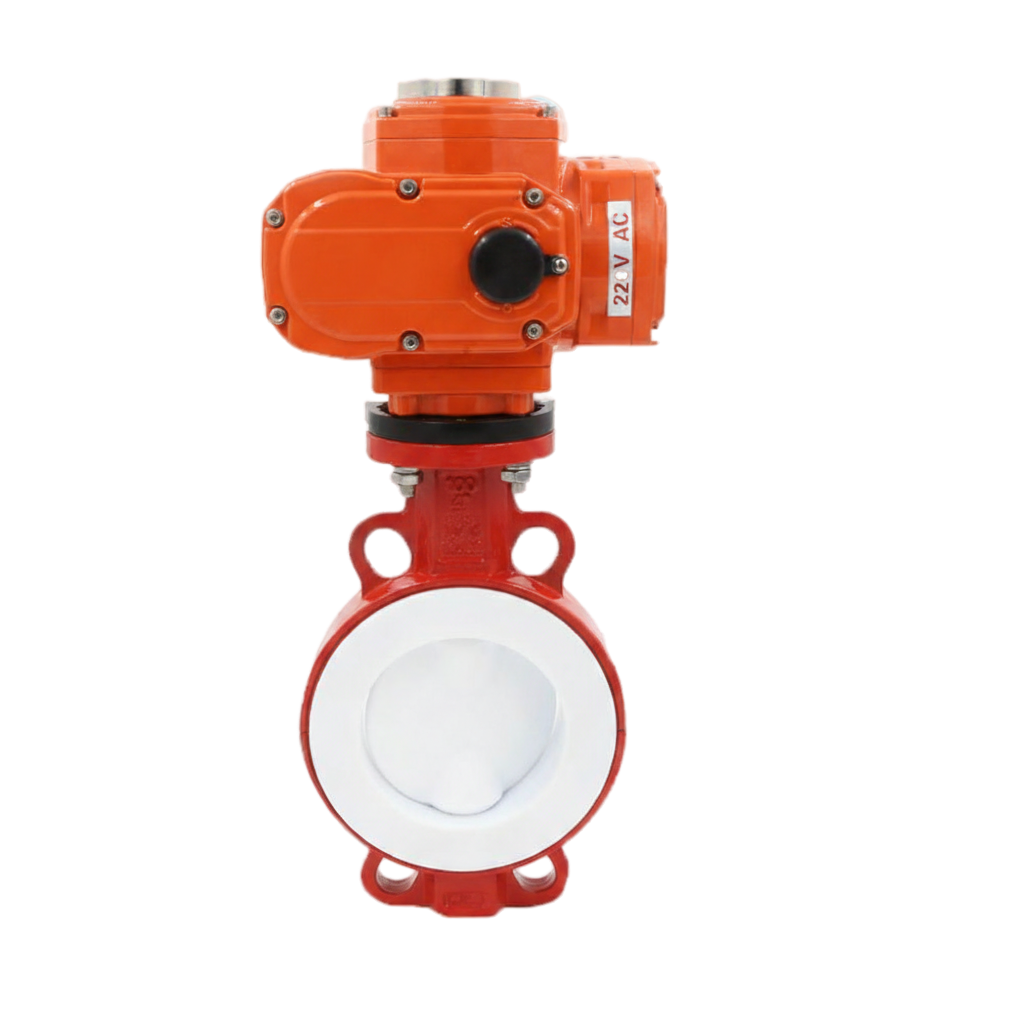
A modulating electric butterfly valve is designed to adjust the disc position in response to a control signal. Depending on the actuator, common control signals may include 4–20 mA or 0–10 V.
This function is useful when the system needs to adjust flow according to changing operating conditions, rather than simply opening or closing a line.
Typical applications include:
HVAC water circulation
Industrial cooling systems
Process water distribution
Automated fluid handling
Systems requiring coordinated flow adjustment
However, valve opening percentage does not necessarily correspond directly to the same percentage of flow. Actual flow depends on valve characteristics, differential pressure, pipeline conditions, and the properties of the medium.
Choose a modulating actuator only when its positioning capability and control characteristics match the process requirements.
For actuator options, see KONTE Electric Actuators.
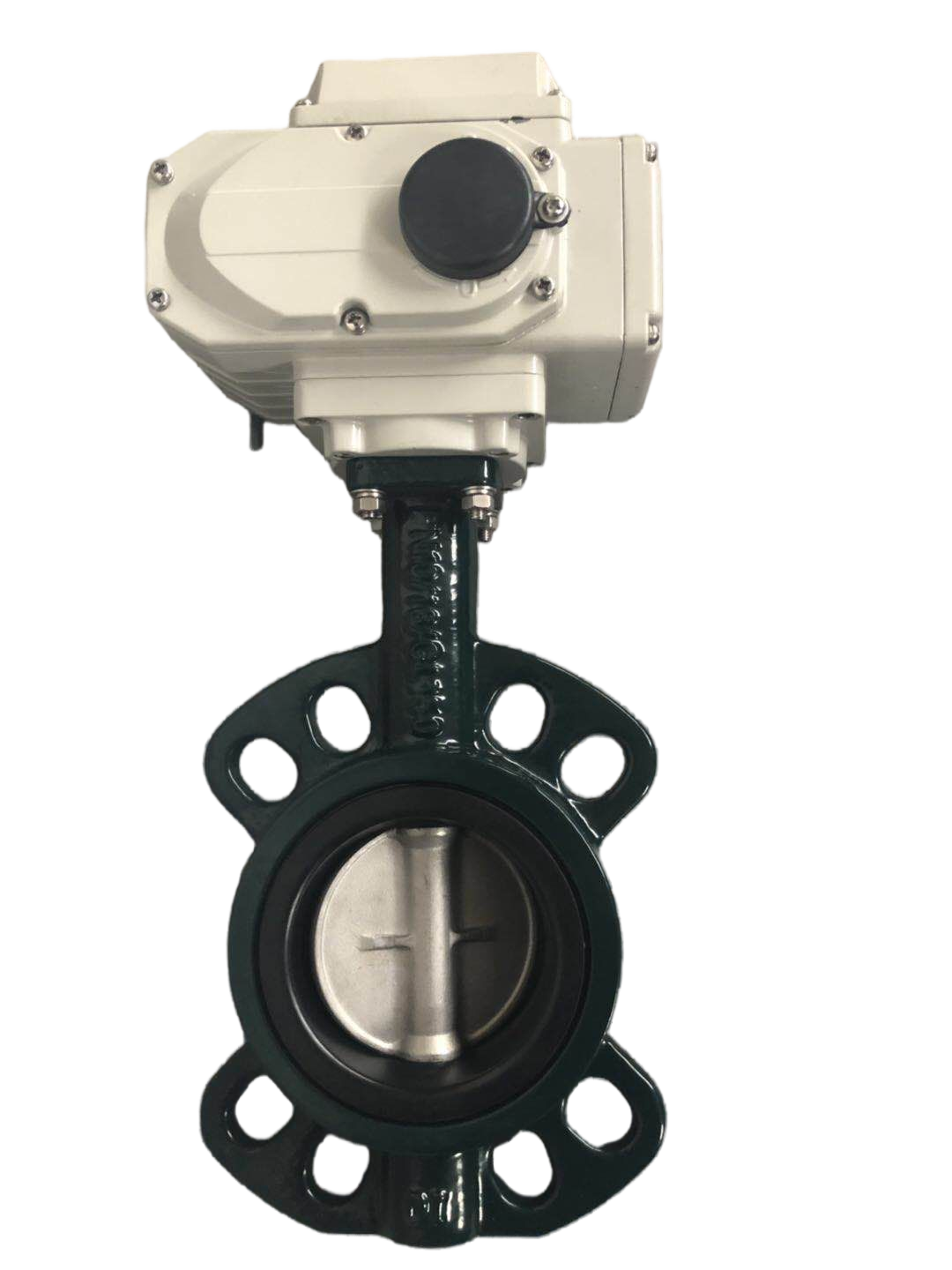
High-performance butterfly valves are designed for applications that require specific sealing, pressure, or operating characteristics beyond those of a basic valve configuration.
For example, KONTE offers an Electric Double Eccentric High Performance Butterfly Valve. Its published specifications list nominal diameters from DN50 to DN1200 and nominal pressure options of PN10, PN16, and Class 150.
These specifications apply to the listed product and should not be assumed to apply to every electric butterfly valve.
When evaluating a high-performance model, buyers should review:
Valve size and pressure rating
Seat material and required leakage performance
Operating temperature and process medium
Actuator torque and control requirements
Connection type and installation dimensions
The appropriate design depends on the actual service conditions, not simply the term “high performance.”
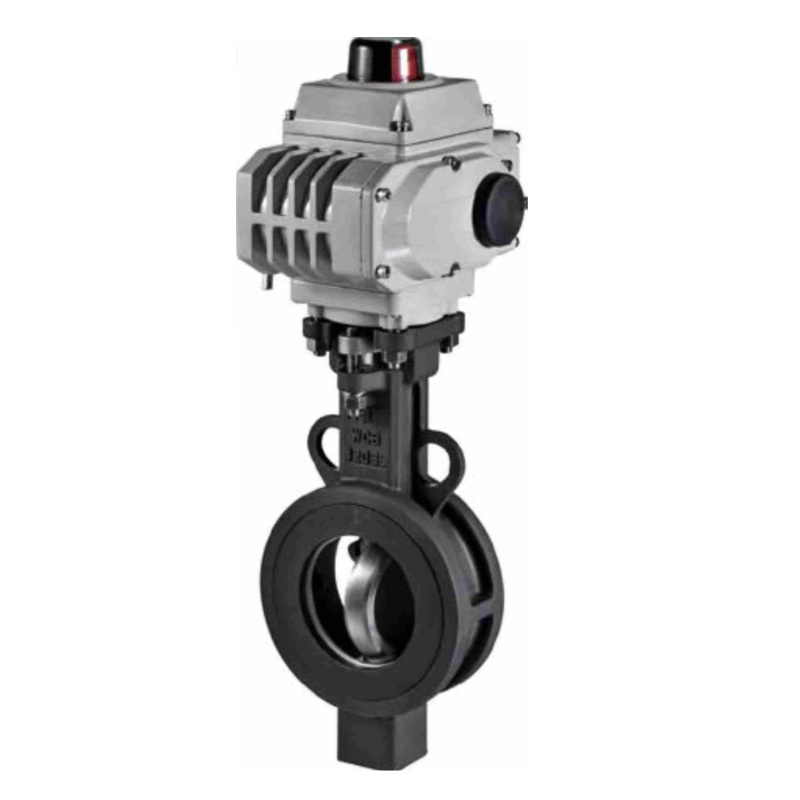
A wafer butterfly valve is installed between compatible pipeline flanges. Its compact face-to-face structure can help reduce installation space, making it useful in piping systems where available room is limited.
When combined with an electric actuator, a wafer-type butterfly valve may provide automated isolation or flow control, provided the selected valve and actuator are designed to work together.
Buyers should verify:
Flange standards and dimensions
Nominal diameter and pressure rating
Valve body and seat materials
Actuator mounting compatibility
Available control functions
KONTE lists a Wafer Type Centerline Rubber Butterfly Valve and an electric high-performance butterfly valve as separate products. If an electric wafer configuration is required, confirm the exact connection and actuation combination with the supplier rather than assuming every wafer model is electrically actuated.
The following table summarizes common configurations and their typical selection considerations.
| Valve Type | Main Function | Typical Applications | Key Selection Considerations |
|---|---|---|---|
| On/Off Electric Butterfly Valve | Automated opening and closing | Water distribution, equipment isolation | Operating torque, closure time, duty cycle |
| Modulating Electric Butterfly Valve | Adjustable valve positioning | HVAC, process water control | Control signal, positioning accuracy, flow characteristics |
| Electric High-Performance Butterfly Valve | Application-specific sealing and operating performance | Industrial process pipelines | Pressure rating, seat design, media compatibility |
| Electric Wafer Butterfly Valve | Automated control with a compact wafer connection | Space-limited industrial piping | Flange compatibility, body design, actuator mounting |
| Motorized Butterfly Valve | General term for an electrically operated butterfly valve | Automated industrial systems | Control mode, power supply, actuator specifications |
These categories are not mutually exclusive. A valve may be both wafer-type and electrically actuated, for example. The first describes the connection structure, while the second describes the operating method.
A suitable selection should therefore account for both the mechanical valve design and the required automation functions.
Electric butterfly valves are useful when remote operation, automated control, or coordinated equipment operation is important. Their suitability depends on the specific medium, pressure, temperature, and control requirements.
Water supply networks use valves to isolate sections of pipelines, manage distribution, and support maintenance activities.
An electric butterfly valve can provide remote opening and closing at pump stations, distribution branches, and other suitable pipeline locations. Where automatic flow adjustment is required, a compatible modulating actuator and control strategy should be specified.
For these systems, consider:
Pipeline diameter and operating pressure
Water quality and material compatibility
Required shut-off performance
Actuator closing speed
Potential pressure surges or water hammer
Unexpected or excessively rapid closure can create pressure transients. The valve and control sequence should therefore be selected with the complete hydraulic system in mind.
KONTE provides solutions for Water Treatment Systems, including butterfly valves and automated control equipment.
Heating, ventilation, and air conditioning systems commonly use valves in chilled-water circulation, cooling-water networks, and heat-exchange equipment.
Electric actuation allows valve operation to be coordinated with the building's control system, reducing the need for manual intervention at frequently operated locations.
Potential applications include:
Chilled-water distribution
Cooling tower circulation
Heat exchanger isolation
Automated mechanical-room pipelines
Water-flow adjustment where compatible modulation is available
When selecting an electric butterfly valve for HVAC, verify the water temperature, pressure drop, valve sizing, actuator protection rating, and control signal.
A valve designed only for on/off operation should not be specified for continuous modulation without confirming that the actuator and valve are suitable for that duty.
KONTE's Manual Wafer Butterfly Valve with EPDM Seat illustrates a compact wafer design intended for water, HVAC, and general industrial pipelines. It is a manual model, so electric actuation must be specified separately when required.
Industrial facilities may use butterfly valves for circulating water, cooling utilities, equipment isolation, and other compatible fluid-handling duties.
Electric actuation is especially useful where valves need to be operated remotely or coordinated with multiple process stages. This can improve operational convenience and reduce the need for personnel to access individual valves.
Before choosing a model, evaluate the medium, pressure, temperature, operating frequency, and required leakage performance.
For more demanding conditions, a high-performance butterfly valve may be worth evaluating. However, corrosive, abrasive, high-temperature, or otherwise challenging media require a detailed compatibility review rather than a general assumption that all butterfly valves are suitable.
Browse KONTE Industrial Butterfly Valves to compare available designs.
Chemical processing plants may handle corrosive liquids, solvents, process water, and other media with specific material requirements.
Material compatibility is the first consideration when selecting a butterfly valve for chemical service. The body, disc, seat, stem, and other wetted components must be suitable for the actual chemical composition, concentration, temperature, and pressure.
Electric actuation may be appropriate where remote control or automated process sequencing is needed. However, the actuator's environmental protection and any hazardous-area requirements must also be reviewed.
For applications involving flammable or explosive atmospheres, verify whether the specified actuator has the required protection and certification for the installation area.
KONTE's Chemical Industry solutions provide a starting point for reviewing relevant industrial valve options.
Selecting an electric butterfly valve requires more than matching the nominal pipe size. The valve, actuator, connection, and control system must work together under the actual operating conditions.
Identify the fluid or gas being handled and provide the supplier with relevant information about its composition, concentration, and operating temperature.
Material and seal compatibility directly affect service life and sealing performance. Do not assume that a valve suitable for clean water will automatically be suitable for every chemical or process medium.
Specify the normal and maximum operating pressure, operating temperature, nominal diameter, and required flow rate.
The selected valve must remain within its rated operating limits. For high-pressure or high-temperature service, confirm the complete valve specification rather than relying on the actuator's capabilities alone.
Determine whether the process needs simple on/off operation or modulating control.
For remote isolation, an on/off actuator may be sufficient. For flow adjustment, verify that the actuator supports the required positioning signal and that the valve's flow characteristics are appropriate for the process.
Confirm whether the pipeline requires wafer, lug, or flanged connections. Review the applicable flange standard, dimensions, pressure class, and available installation space.
Correct connection matching helps prevent installation problems and costly modifications.
The actuator must provide sufficient torque to operate the valve under the specified differential pressure and service conditions.
Confirm the power supply, control signal, operating time, enclosure protection, and feedback requirements. If the system uses PLC or BMS control, ensure that the actuator's electrical interface is compatible with the control architecture.
Evaluate replacement seat availability, actuator servicing, expected operating cycles, and access for maintenance.
The lowest initial price is not always the lowest-cost solution over the valve's service life. A correctly specified valve can help reduce avoidable maintenance and operational interruptions.
Before requesting a quotation, prepare a technical specification containing the medium, nominal diameter, pressure, temperature, connection type, actuator function, and applicable standards.
Several common mistakes can lead to incorrect valve selection or poor system performance.
Choosing by size alone: Nominal diameter does not confirm that the valve meets flow, pressure, or sealing requirements.
Confusing connection type with actuation method: Wafer describes a connection design, while electric describes how the valve operates.
Assuming every actuator supports modulation: Confirm the specific control function before purchasing.
Overlooking material compatibility: The seat and other wetted parts must suit the process medium.
Ignoring installation conditions: Check flange dimensions, actuator clearance, electrical connections, and maintenance access.
Assuming all butterfly valves provide the same shut-off performance: Leakage performance depends on the valve design, materials, and operating conditions.
Providing complete operating information at the quotation stage helps the supplier recommend a configuration that matches the actual application.
Electric butterfly valves offer practical solutions for automated fluid control across water distribution, HVAC, chemical processing, and general industrial pipelines. The right choice depends on the combined requirements of valve structure, connection type, actuator function, sealing materials, and operating conditions.
By distinguishing on/off from modulating control and verifying the valve's technical limits before purchase, buyers can reduce selection errors and improve system reliability.
KONTE offers a range of industrial butterfly valves and electric actuators for different applications. Contact the KONTE team with your operating conditions and technical requirements to discuss a suitable valve configuration for your project.
Both terms generally describe a butterfly valve operated by an electric actuator. The exact control capabilities depend on the actuator model.Some configurations support only on/off operation, while others provide modulating control or additional feedback functions. Always confirm the product specification.
Yes, a suitably specified electric wafer butterfly valve can be used in compatible HVAC pipelines. Selection should account for the operating pressure, water temperature, required control mode, flange compatibility, and actuator rating.The complete valve and actuator combination should be verified before installation.
They can be suitable for certain chemical applications when the valve materials, seals, pressure rating, and actuator protection match the operating conditions.For aggressive or hazardous media, obtain confirmation of chemical compatibility and any required hazardous-area certification before purchase.
Choose on/off control when the valve only needs to open or close a pipeline. Choose modulating control when the system requires intermediate positioning to adjust flow.The actuator must support the intended function, and the valve must be appropriate for the required operating range.
Provide the nominal diameter, process medium, operating pressure and temperature, connection type, required control mode, power supply, and applicable standards.For automated systems, also specify whether PLC or BMS integration, position feedback, or special actuator protection is required.


