

Views: 0 Author: Site Editor Publish Time: 2026-07-09 Origin: Site


An Electric PVC Valve automates flow control in corrosive or water-based systems without the weight and maintenance of metal valves. This guide compares the two most common types—ball valve and butterfly valve—explains the working principles, advantages, limitations, and applications of Electric PVC Valves, and helps you choose the right PVC electric valve for your specific industrial needs.
What Is an Electric PVC Valve?
Types of Electric PVC Valves
Work Principle
Electric PVC Ball Valve vs Electric PVC Butterfly Valve
Advantages and Limitations of Electric PVC Valves
Typical Applications
How to Choose the Right Electric PVC Valve
FAQ
Core keyword: Electric PVC Valve , Electric PVC Ball Valve , Electric Actuator PVC Ball Valve, Electric PVC Butterfly Valve, Electric PVC Valve Typical Applications
An Electric PVC Valve pairs a plastic valve body—typically UPVC, CPVC, PP, or PVDF—with an electric actuator that opens, closes, or modulates the valve automatically. The plastic body resists corrosion from acids, alkalis, and salts that would damage metal valves over time, making it a preferred choice for aggressive fluid handling.
Instead of a manual handle, the actuator receives a signal from a control panel, PLC, or building management system and drives the valve stem to the required position. This removes the need for on-site manual operation, which matters most in remote, hazardous, or high-cycle installations.
KONTE's PVC valve range covers both ball and butterfly designs, built for chemical dosing, water treatment, and acid-alkali applications.
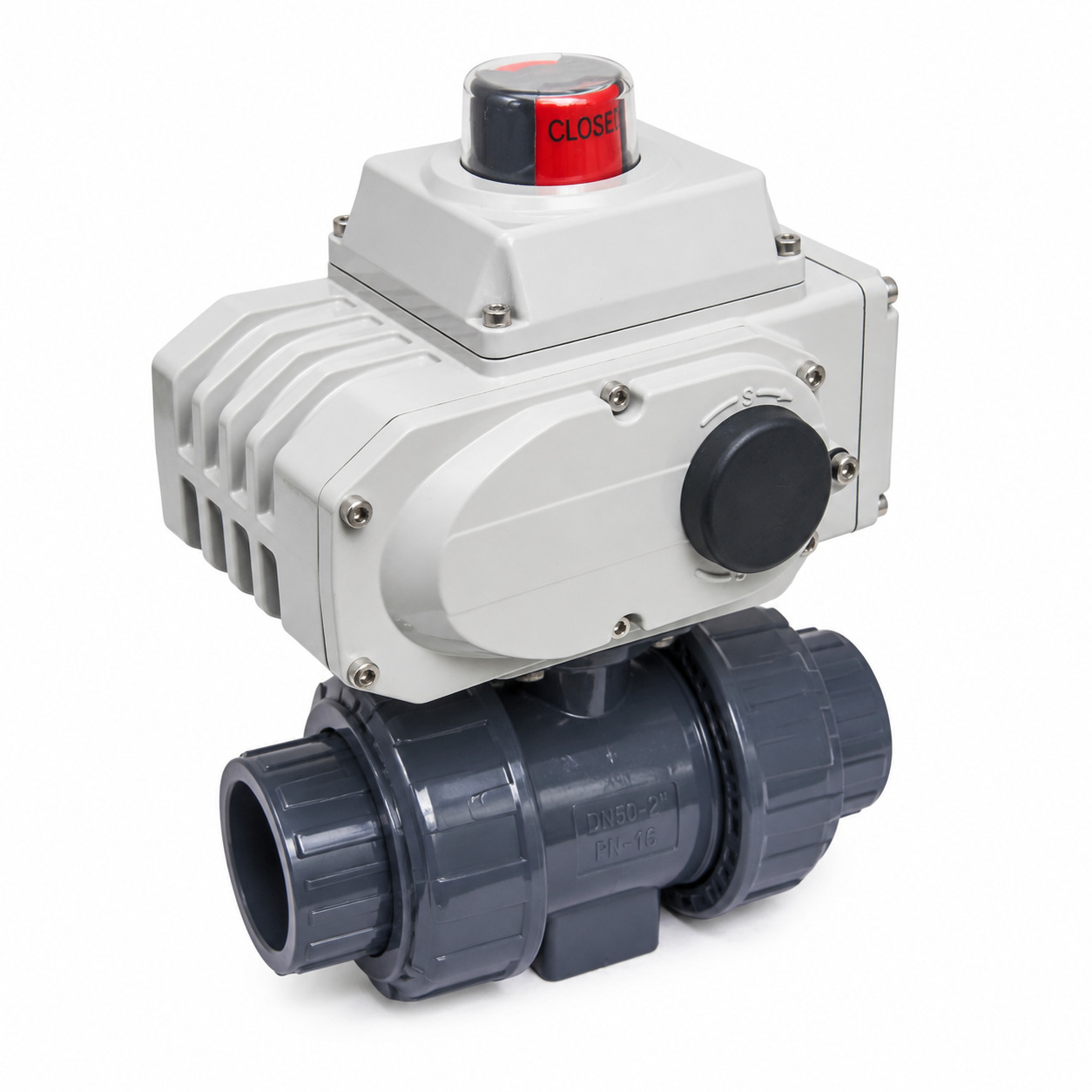
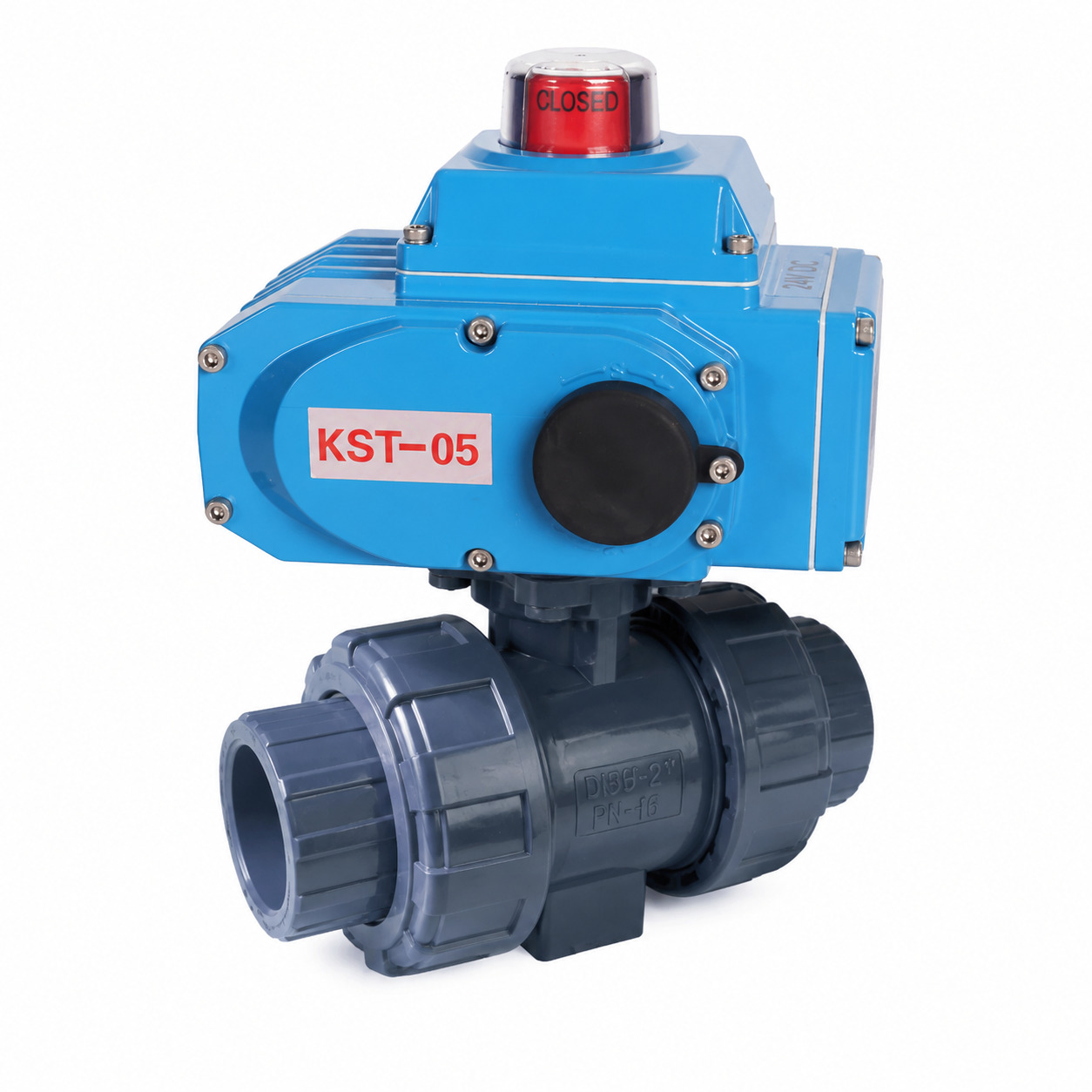
An Electric PVC Ball Valve uses a hollow, perforated ball that rotates 90° inside the valve body. When the bore aligns with the pipe, flow passes freely; when rotated a quarter turn, the solid part of the ball blocks flow completely.
This design delivers a tight, near-zero-leakage seal and handles higher pressure than most plastic butterfly designs, which is why it suits precision dosing and shut-off duty. The ball rests on seats made from durable elastomers, and the disc or ball itself is available in UPVC or plastic-coated stainless steel for extra strength.
See the full specification on the Pneumatic Actuated PVC (or UPVC) Ball Valve product page — the same body architecture is available with an electric actuator on request.
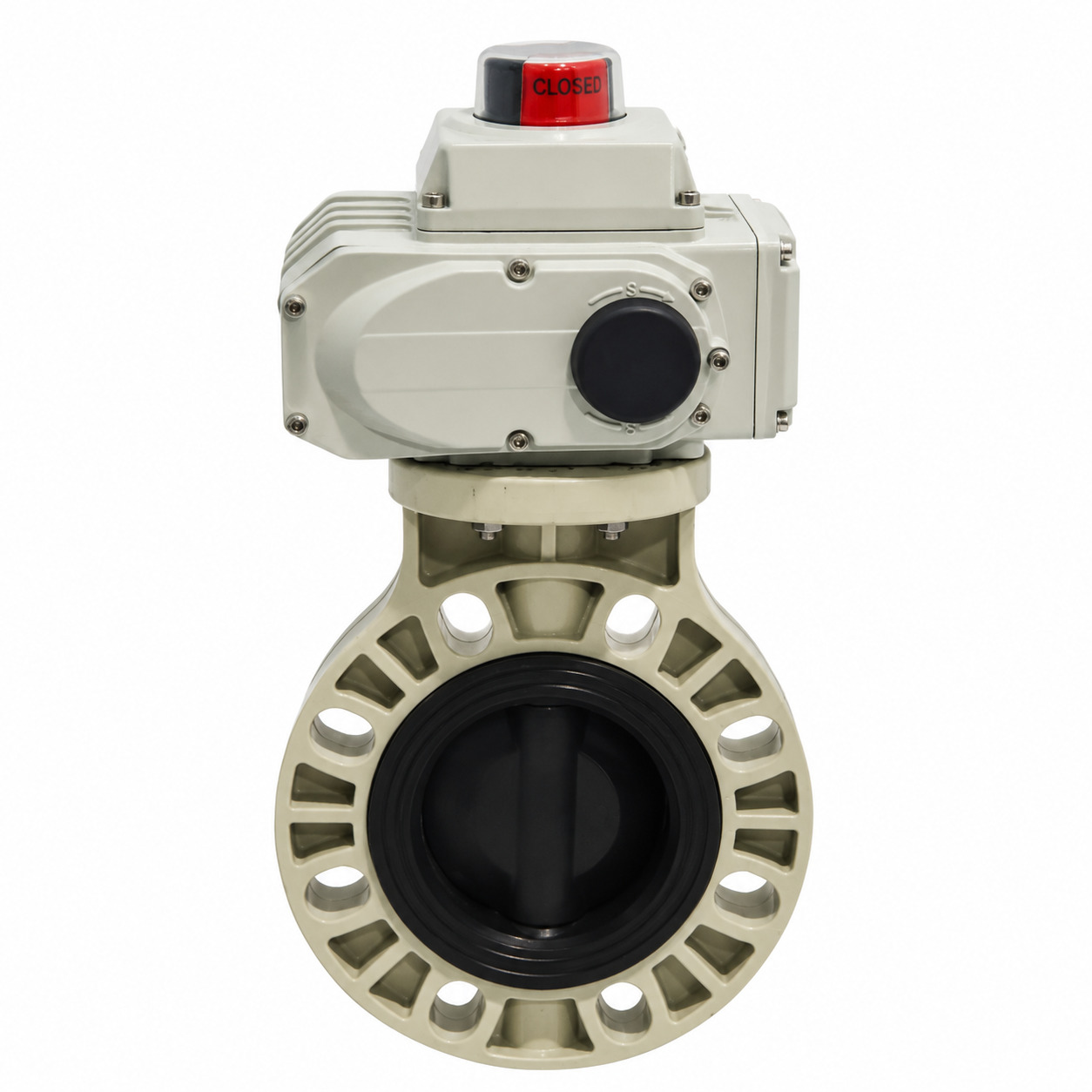
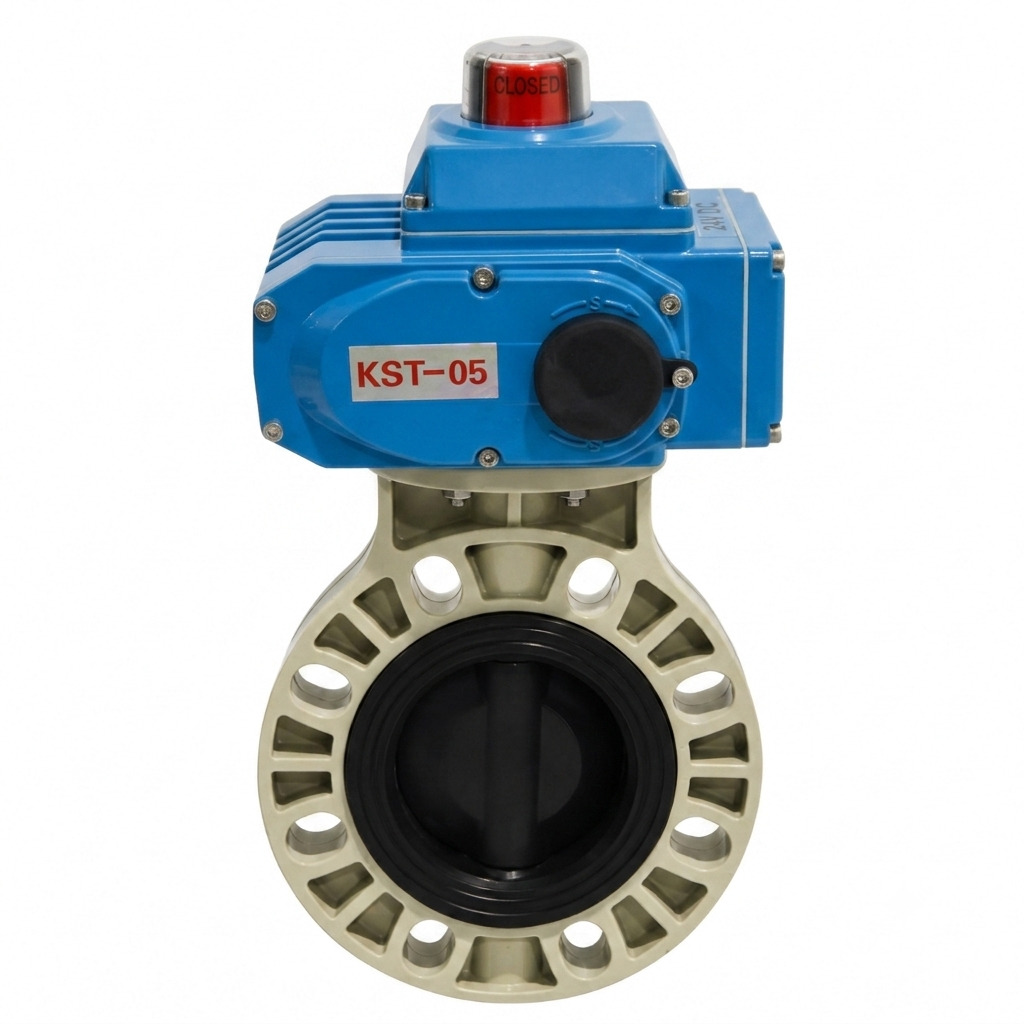
An Electric PVC Butterfly Valve uses a flat disc mounted on a central shaft. The disc rotates 90° from a position parallel to the flow (open) to perpendicular (closed).
Because the disc and body use less material than a ball valve of equivalent size, this valve stays lightweight and compact even at larger diameters, reducing pipe support requirements and installation cost. Wafer-type connections make it compatible with ANSI, JIS, and DIN flanges.
Full technical details are available on the Pneumatic UPVC Wafer Butterfly Valve page, which shares the same PVC/CPVC body options used in electric-actuated variants.
Every Electric PVC Valve follows the same basic control sequence, regardless of whether it's a ball or butterfly design.
Signal input – The actuator receives a command from a controller, either a digital on/off signal or an analog signal (commonly 4-20mA) for modulating control.
Motor rotation – An internal electric motor spins at high speed to generate rotational force.
Gearbox reduction – A gear train reduces motor speed while multiplying torque, since raw motor output alone lacks the force to turn a valve stem under pressure.
Stem rotation – The gearbox output rotates the valve stem 90°, moving the ball or disc to the commanded position.
Position feedback – Limit switches or position sensors confirm the valve has reached fully open, fully closed, or a specific modulating position, and report status back to the control system.
This motor-gearbox-feedback sequence is what allows an Electric PVC Valve to deliver repeatable, remote-controlled positioning without manual intervention. Power supply options typically include 110V AC, 220V AC, 24V DC, and 380V AC, so the valve can integrate into almost any existing control network.
| Comparison | Electric PVC Ball Valve | Electric PVC Butterfly Valve |
Sealing performance | Tight, near-zero leakage | Adequate for on/off, less reliable at high pressure |
Installation space | Larger footprint | Compact, space-saving |
Cost at large diameters | Higher | More economical |
Best pressure range | Suited to higher pressure duty | Best at low to moderate pressure |
Flow control type | On/off and modulating | Mainly on/off, limited throttling |
Actuator torque required | Higher for large sizes | Lower, smaller actuator possible |
Typical diameter sweet spot | Small to mid-size lines | Mid to large diameter lines |
In short, choose the ball valve when tight shut-off and precise dosing matter most, and choose the butterfly valve when pipe size, weight, and budget are the priority.
Advantages:
Corrosion resistance across acids, alkalis, and saline media without the coating or lining metal valves require
Lightweight construction that simplifies installation and reduces pipe support needs
Remote and automated operation compatible with PLC and SCADA systems
Low maintenance compared with manual valves in high-cycle service
Flexible control types — on/off, modulating, and solenoid-assisted options
Limitations:
Operating range is generally capped around -20°C to +80°C and up to 10 bar, so it is not suited to high-temperature steam or high-pressure oil and gas lines
Large-diameter butterfly valves need torque and pressure-drop calculations before installation
Plastic bodies, while chemical-resistant, have lower mechanical strength than steel under impact or heavy external loads
Understanding these limits upfront prevents oversizing the actuator or specifying the valve outside its safe operating window.
Water Treatment Systems
Electric PVC ball and butterfly valves regulate flow in filtration, dosing, and distribution lines where corrosion resistance and reliable automation are essential.
Chemical Processing
The corrosion-resistant PVC/CPVC body handles acids, alkalis, and other aggressive chemicals during transfer and metering, reducing the risk of leaks or material failure.
Irrigation & Agriculture Systems
Automated valves control water distribution across irrigation networks, cutting down on manual valve operation across large field areas.
HVAC Systems
Electric PVC valves regulate water flow in cooling and heating loops, supporting building automation systems that need remote, precise control.
Industrial Corrosive Fluid Control
In processes handling acid-alkali fluids or seawater, PVC valves protect downstream equipment while maintaining consistent flow control.
These five sectors share one requirement: dependable automated flow control in fluids that would corrode standard metal valves over time. See more industry-specific examples on the KONTE Solutions page.
Selecting the right valve comes down to five practical checks:
Media compatibility – Confirm the body and seal materials (UPVC, CPVC, EPDM, FPM) resist the specific chemical or fluid.
Pressure and temperature – Match your system's operating range against the valve's rated limits (commonly 0–10 bar, -20°C to +80°C).
Pipe diameter – Ball valves suit smaller lines requiring tight sealing; butterfly valves suit larger lines where weight and cost matter.
Control precision – Choose modulating control for dosing accuracy, or simple on/off for basic isolation duty.
Power supply – Confirm the actuator's voltage matches your site's available power (24V DC, 110V, 220V, or 380V AC).
Matching these five factors to your process conditions avoids premature valve failure and unnecessary downtime. With over 30 years of manufacturing experience, KONTE supports custom configurations for both ball and butterfly PVC valves — learn more on the Company Profile page or visit the KONTE homepage to request a quote.
1. What is the difference between an electric PVC ball valve and a pneumatic PVC ball valve?
Both use the same valve body, but an electric valve is driven by an electric motor and gearbox, while a pneumatic valve relies on compressed air. Electric versions suit sites without an air supply.
2. Can electric PVC valves handle high-pressure systems?
Most electric PVC valves are rated up to around 10 bar. For higher pressure duty, a metal-bodied valve is generally recommended instead.
3. What is the maximum temperature an electric PVC valve can withstand?
Typical ratings run from -20°C to +80°C, depending on the seal material used. EPDM and FPM seals affect the upper limit.
4. Is an electric PVC butterfly valve suitable for chemical dosing?
It works for basic on/off isolation in dosing lines, but a ball valve offers tighter shut-off and better modulating accuracy for precise dosing.
5. What power supply options are available for electric PVC valves?
Common options include 110V AC, 220V AC, 24V DC, and 380V AC, allowing integration into most existing electrical systems.


