

Views: 0 Author: Site Editor Publish Time: 2026-08-27 Origin: Site


Maintaining strict hygiene in pharmaceutical processing demands contamination-free fluid isolation and reliable shutoff. Diaphragm valves achieve this through a pocketless structure that prevents cross-contamination and enables seamless CIP/SIP. This article explains their suitability, main applications, pneumatic advantages, selection criteria, and maintenance requirements, helping engineering and procurement teams choose safer and more reliable valve solutions.
Why Are Diaphragm Valves Suitable for the Pharmaceutical Industry?
Main Applications of Diaphragm Valves in Pharmaceutical Processing
Advantages of Pneumatic Diaphragm Valves in Pharmaceutical Production
How to Choose a Diaphragm Valve for Pharmaceutical Applications?
Installation and Maintenance of Pharmaceutical Diaphragm Valves
FAQ
Core keywords: diaphragm valves, pharmaceutical diaphragm valve, sanitary diaphragm valve, pneumatic diaphragm valve, hygienic diaphragm valve
Pharmaceutical production requires precise control of purified water, active ingredients, buffer solutions, cleaning media, steam, and other sensitive fluids. Any stagnant area, external leakage path, or difficult-to-clean surface can increase the risk of cross-contamination. Diaphragm Valves address these concerns by separating the process medium from the valve operating mechanism with a flexible diaphragm. Unlike many conventional valves, the fluid does not contact the stem, actuator spring, or threaded operating components. The diaphragm forms a hermetic barrier between the process line and the external environment, helping reduce leakage, particle generation, and contamination risks in hygienic processing systems.
A weir-type Pharmaceutical Diaphragm Valve also has a smooth internal flow path with fewer cavities in which liquid can remain after draining. When the valve is installed at the correct orientation and drain angle, it can support self-draining pipeline design and help minimize dead legs. This is especially important in systems designed around ASME BPE principles and strict hygienic production requirements. The valve body is commonly manufactured from stainless steel, while the internal wetted surface may be mechanically polished or electropolished. A controlled surface roughness reduces microscopic irregularities where residues and microorganisms could accumulate. For high-purity applications, a smooth, traceable, and cleanable wetted surface is as important as the valve’s shutoff performance.
Diaphragm valves are also well suited to Clean-in-Place (CIP) and Sterilize-in-Place (SIP) procedures. CIP solutions can flow over the weir and through the valve body without requiring routine disassembly, while suitable diaphragm materials can withstand repeated exposure to elevated SIP temperatures. However, actual performance depends on the diaphragm material, steam temperature, exposure time, operating pressure, and thermal cycle frequency. Another advantage is the absence of a traditional packing gland around the stem, which eliminates an additional potential wear and leakage point. The combination of process isolation, drainable geometry, cleanability, and material traceability makes diaphragm valves particularly suitable for pharmaceutical fluid handling.
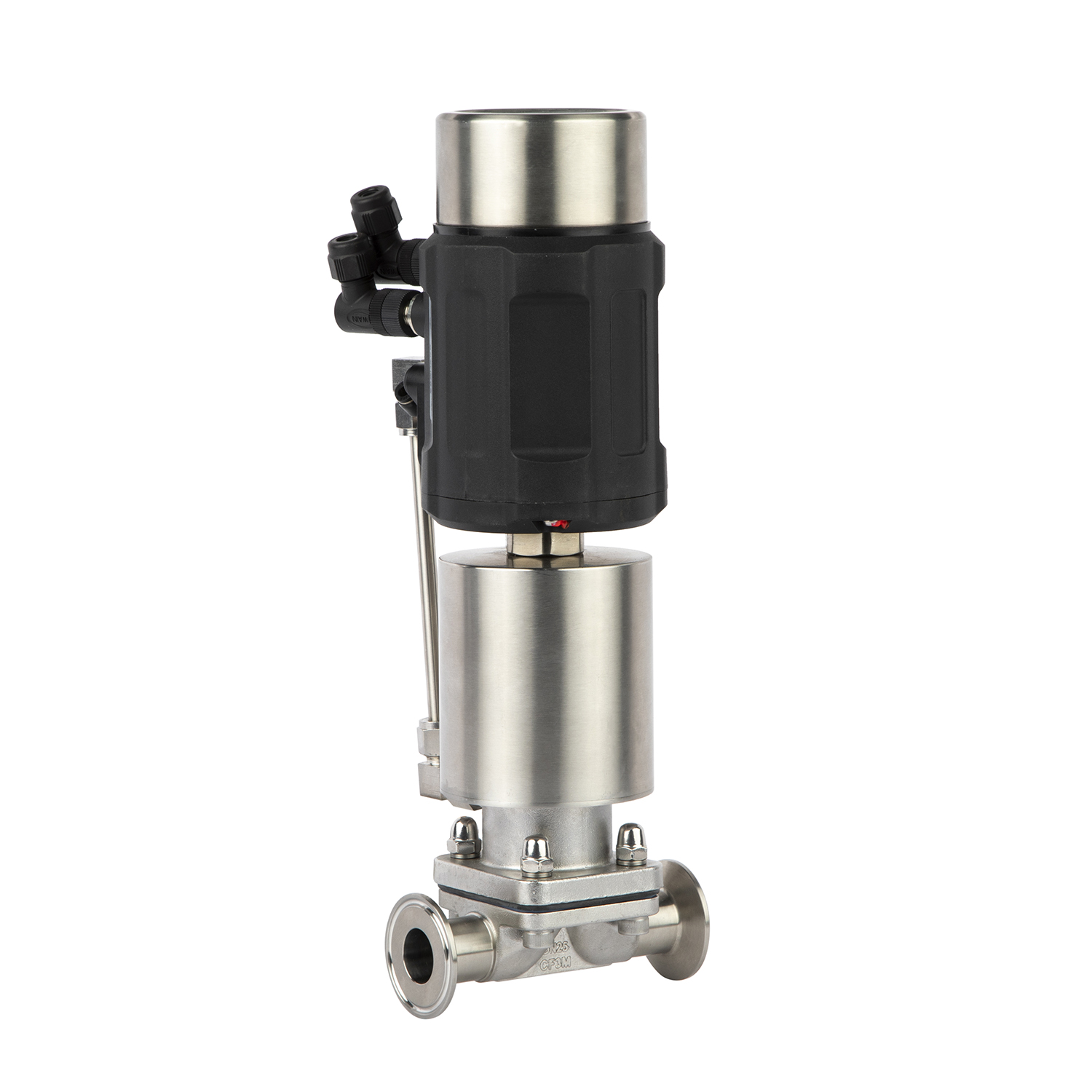
Diaphragm valves can be installed throughout pharmaceutical and bioprocessing facilities. Their exact configuration varies according to the medium, cleanliness level, pressure, temperature, required flow rate, and automation strategy.
Purified Water and Water for Injection distribution loops require hygienic components that do not introduce contamination or create stagnant zones. A Sanitary Diaphragm Valve can be used for loop isolation, point-of-use control, sampling branches, return lines, and equipment connections. Correct valve orientation and low-dead-leg installation help maintain continuous circulation and effective drainage.
Bioreactors use valves to manage culture media, nutrients, gases, cleaning solutions, harvest streams, and waste discharge. These operations often require repeatable sequencing and reliable separation between process stages.
Multi-port diaphragm valve blocks may reduce piping volume and the number of field welds around a vessel. Compact valve arrangements can also shorten hold-up areas and simplify automated cleaning. This makes them particularly valuable in biopharmaceutical systems where minimizing product retention and contamination risks is essential.
Buffer and media preparation systems need accurate routing between mixing vessels, holding tanks, filters, and filling or processing equipment. Diaphragm valves are commonly used for isolation and diversion duties because the wetted pathway can be designed for hygienic cleaning.
Where gradual flow adjustment is required, a properly sized valve with an appropriate positioner may also provide modulating flow control. Correct sizing is essential because an oversized valve can make precise low-flow control difficult.
API processes may involve aggressive chemicals, solvents, or high-value fluids, making material compatibility a critical selection factor. PTFE-faced diaphragms are often considered for chemically demanding media, while suitable elastomer-backed structures provide mechanical support.
The diaphragm and all wetted materials must be evaluated against the actual chemical concentration, temperature, pressure, and exposure duration. A material that performs well under ambient conditions may behave differently during elevated-temperature cleaning or sterilization.
Filtration and chromatography systems require controlled routing and minimal product retention. Diaphragm valves can isolate filters, direct cleaning fluids, manage buffer flow, and support controlled transfer between process stages.
In filling systems, they may be used in upstream product lines where hygienic shutoff and effective cleaning are essential. Pneumatic actuation can also help coordinate filling, cleaning, and product-changeover sequences.
CIP and SIP systems use diaphragm valves to direct cleaning chemicals, rinse water, hot water, and pure steam to different process circuits. Valves used in these services must tolerate repeated chemical and thermal exposure.
A valve suitable for the process fluid is not automatically suitable for every cleaning chemical or sterilization cycle. Both production conditions and cleaning conditions must therefore be included in the valve specification.
| Pharmaceutical application | Typical media | Primary valve requirement | Common configuration |
|---|---|---|---|
| PW and WFI distribution | High-purity water | Drainability and low contamination risk | Weir-type sanitary valve |
| Bioreactor processing | Media, nutrients, harvest fluids | Automated sequencing and hygienic isolation | Pneumatic or multi-port valve |
| Buffer preparation | Buffers and process solutions | Reliable routing and cleanability | Two-way or diversion valve |
| API production | Chemicals, solvents, API fluids | Chemical compatibility | PTFE-faced diaphragm valve |
| Filtration and chromatography | Product and buffer streams | Low hold-up volume and flow control | Positioned pneumatic valve |
| CIP and SIP systems | Detergent, rinse water, pure steam | Thermal and chemical resistance | Hygienic pneumatic valve |
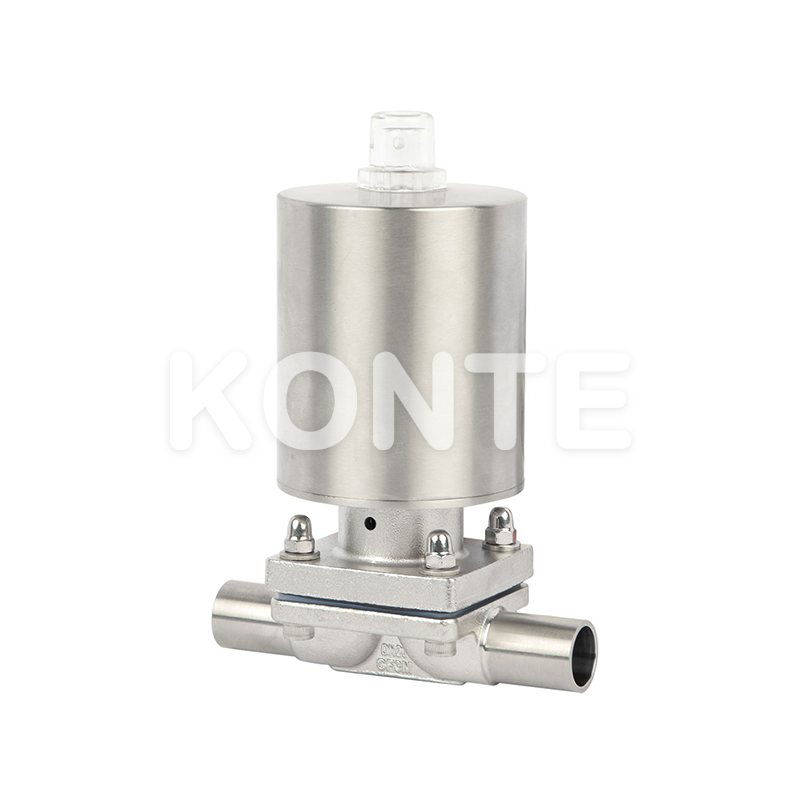
Manual valves remain practical for laboratory equipment, sampling points, and infrequently operated utility lines. Large pharmaceutical facilities, however, may need hundreds of valves to operate in a validated sequence. A Pneumatic Sanitary Diaphragm Valve can connect to PLC or DCS architecture through solenoid valves, position indicators, limit switches, or smart positioners. Automation improves repeatability by ensuring that every validated production, cleaning, and sterilization sequence follows the programmed order. It also reduces dependence on manual intervention and helps prevent mistakes such as opening the wrong flow path or failing to isolate a vessel.
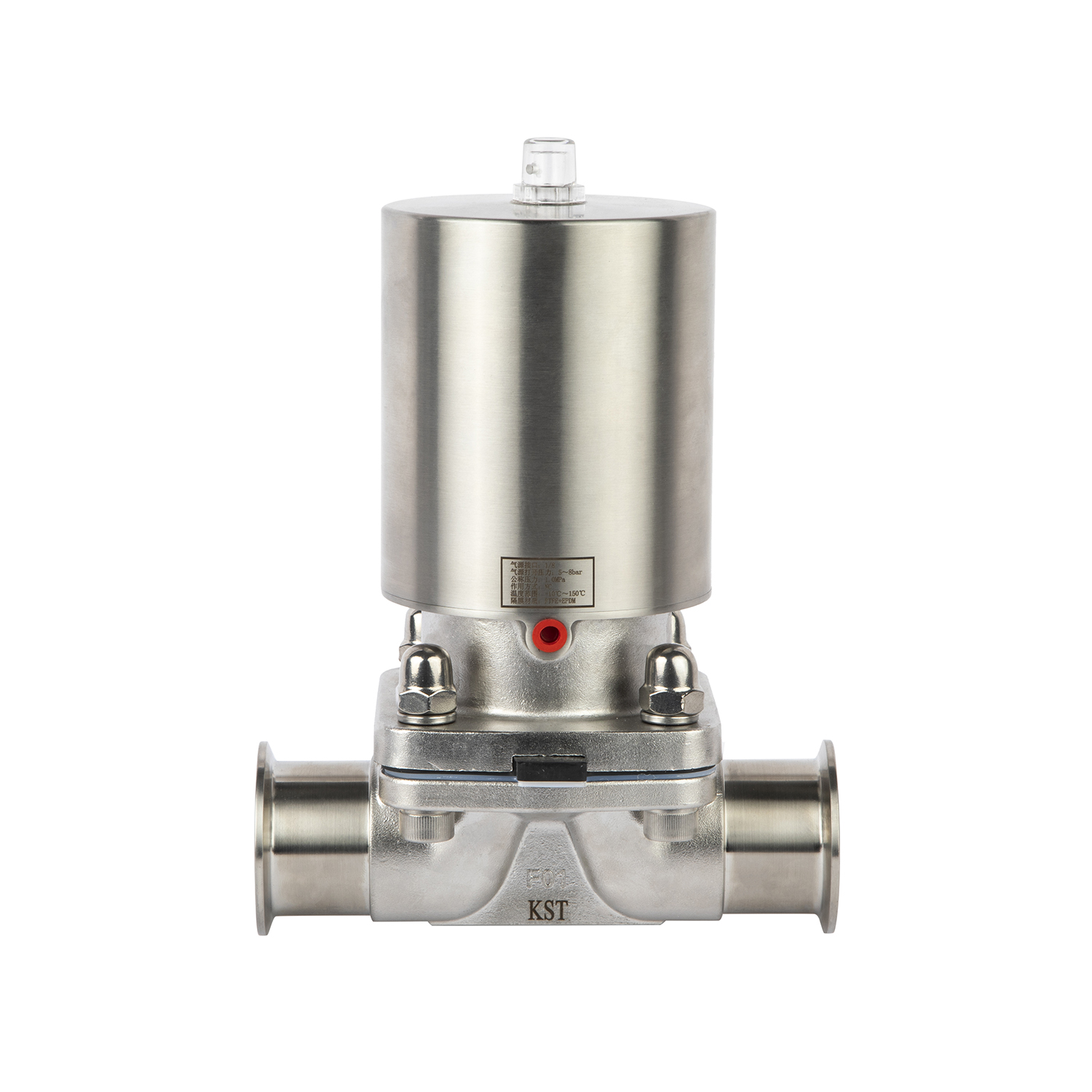
Pneumatic actuators can be specified as Normally Closed, Normally Open, or Double Acting, and the correct fail-safe state should depend on the process risk assessment. A pure-steam supply valve may need to close if instrument air fails, while a cooling or pressure-relief-related pathway may require a different response. Fail-safe selection should be based on the safest process condition, not merely on actuator availability or purchase price. A Pneumatic Diaphragm Valve also provides a more consistent closing force than a manually operated handwheel. Operators may over-tighten manual valves in an attempt to stop minor leakage, which can over-compress or damage the diaphragm. A correctly sized actuator with calibrated travel stops applies repeatable force and may extend diaphragm service life, reducing operator-related variation and supporting more stable valve performance.
Position feedback gives the control system verifiable information about valve status. Basic switches confirm open or closed positions, while an electropneumatic positioner can support proportional flow control for applications such as water-loop balancing, chromatography, controlled dosing, and filtration where intermediate valve positions are required. Automation also makes condition-based maintenance more practical because the control system can record operating cycles, alarm events, stroke times, and position deviations. A gradual increase in stroke time may indicate air-supply problems, actuator wear, or diaphragm resistance. Digital operating data helps maintenance teams move from reactive repair toward planned valve servicing.
| Comparison factor | Manual diaphragm valve | Pneumatic diaphragm valve |
| Operation | Local handwheel operation | Remote or automatic operation |
| Repeatability | Depends on the operator | Consistent actuator movement |
| Fail-safe function | Generally unavailable | NC, NO, or Double Acting options |
| Position feedback | Visual inspection | Switches or smart positioners |
| Process integration | Limited | PLC and DCS compatible |
| Best-fit use | Sampling or infrequent isolation | Automated production, CIP, and SIP |
 |  |
Valve selection should begin with process conditions rather than a generic catalog model. Engineering teams should define the medium, flow requirement, line size, pressure, temperature, cleaning method, sterilization profile, and required automation before requesting a quotation.
Weir-type bodies are widely used because they offer short diaphragm travel, reliable shutoff, and good drainability when installed correctly.Straight-through designs may provide a less restricted flow path for viscous media or fluids containing solids. However, they can require more diaphragm movement and may be less suitable for certain high-purity layouts.
Multi-port and zero-static valve bodies can reduce fittings, welds, and dead legs in complex manifolds. They are often installed around process vessels, sampling points, and distribution loops where several flow paths must be controlled within a compact space.The body design should match both process performance and hygienic layout requirements.
No diaphragm material is ideal for every application. EPDM is valued for elasticity and cycle performance in many water-based services, while PTFE offers strong chemical inertness and higher temperature resistance.
FKM may suit oils and selected solvents but can perform poorly in repeated pure-steam service. Supplier compatibility charts are useful screening tools, but they do not replace testing under actual process conditions.
| Diaphragm material | Main strengths | Important limitations | Typical applications |
| EPDM | Elasticity, good cycle life, suitable for many aqueous media | Repeated high-temperature steam may shorten service life | PW, WFI, buffers, and water-based media |
| PTFE-faced | Broad chemical resistance and thermal stability | Higher closing force and potential cold flow | APIs, solvents, aggressive chemicals, SIP lines |
| FKM | Resistance to oils and selected solvents | Limited suitability for pure steam | Specialty chemical and utility services |
Operating conditions should be evaluated across the entire process cycle. This includes normal production, cleaning, sterilization, shutdown, vacuum, and storage conditions.The selected diaphragm must remain compatible with both the pharmaceutical medium and every cleaning or sterilization agent used in the system.
Internal surface roughness should be specified according to the hygienic requirement of the system. Mechanically polished or electropolished stainless steel may be selected, with tighter Ra limits used for critical high-purity services.
Electropolishing can produce a smoother and more passive stainless-steel surface by removing part of the mechanically disturbed outer layer. However, the specified finish should be supported by inspection records and surface-finish documentation.
Procurement documentation may include EN 10204 3.1 material certificates, heat-number traceability, surface-finish reports, and elastomer batch information.
For wetted polymers, relevant FDA requirements and USP Class VI documentation may be required depending on the market and application. Certificates should be reviewed for the exact material grade and production batch rather than accepted as generic marketing claims.
An oversized valve can provide poor controllability, while an undersized valve may create excessive velocity, pressure loss, or cavitation. Engineers should calculate Cv or Kv requirements using normal and peak operating conditions.
For viscous or particulate-containing fluids, the flow model should reflect actual product properties rather than water alone. Pressure during CIP surges and maximum sterilization conditions should also be considered.Correct valve sizing helps balance flow capacity, pressure loss, controllability, and cleaning performance.
Common hygienic connections include orbital-weld ends and sanitary clamp ends. Welded connections reduce the number of removable joints, while clamp connections simplify disassembly where routine access is required.
The actuator specification should cover instrument-air pressure, fail-safe state, control voltage, enclosure protection, feedback devices, and communication protocol. Facilities should also determine whether simple open-and-close confirmation or continuous position feedback is required.
Before placing a bulk order, evaluate the supplier’s quality system, material traceability, Factory Acceptance Test procedures, documentation package, and spare-parts availability.
For critical applications, pilot installation and cleaning validation can confirm that the selected valve performs correctly in the actual system.
Even a well-designed Hygienic Diaphragm Valve can perform poorly if it is installed at the wrong angle, welded incorrectly, or maintained without defined procedures.Installation planning should account for drainability, accessibility, actuator clearance, pipe stress, and the direction of process flow.
For self-draining service, the valve must be positioned according to the manufacturer’s specified drain angle. The adjoining pipework should also maintain the required slope.A drainable valve cannot compensate for a poorly sloped pipeline or an upstream pocket. Incorrect orientation can leave residual product or cleaning solution inside the valve body.Valve orientation and surrounding piping must be evaluated as one hygienic system.
When welding valve bodies into the line, protect sealing surfaces and internal components from heat damage and contamination. The diaphragm and actuator may need to be removed before orbital welding, depending on the manufacturer’s procedure.
Welding records, inspection results, and surface-treatment documentation should become part of the equipment turnover package. The installed valve should also be inspected for discoloration, distortion, weld contamination, or internal surface damage.
Body fasteners must be tightened evenly and to the recommended torque. Uneven or excessive compression may deform the diaphragm, create an improper seal, or reduce service life.After initial thermal cycles, some designs may require inspection or controlled re-torquing because stainless steel and polymer components expand and contract at different rates.
The diaphragm is a planned wear component. Its replacement interval depends on the number of strokes, temperature, pressure, chemical exposure, vacuum conditions, and CIP/SIP frequency.Calendar-based replacement alone may be inadequate. A valve used thousands of times each month may require more frequent maintenance than a valve of the same age that operates only occasionally.
Cycle-count-based maintenance combined with periodic visual inspection provides a more defensible maintenance strategy.
Common warning signs include:
External leakage
Incomplete valve closure
Increasing actuator stroke time
Reduced or unstable flow
Surface cracking
Diaphragm discoloration
Unexplained pressure loss
Inconsistent position feedback
Maintenance teams should also inspect actuator housings for moisture ingress and corrosion after aggressive cleanroom washdowns.
Typical failure causes include:
Over-compression, which can damage the diaphragm or sealing bead.
Chemical incompatibility, which may cause swelling, embrittlement, or cracking.
Excessive SIP exposure, which accelerates thermal aging.
Vacuum inversion, which can pull an unsuitable diaphragm away from its support.
Misalignment or pipe stress, which can distort the valve body and sealing interface.
Moisture inside the actuator, which may corrode springs and internal hardware.
Incorrect installation orientation, which may prevent complete drainage.
Improper actuator sizing, which may apply insufficient or excessive closing force.
Every replacement diaphragm should be traceable to its material batch and installed according to a documented procedure. Following maintenance, the valve should be checked for correct assembly, travel, leakage, and control feedback before the line returns to production. Critical systems may also require cleaning verification or requalification under the facility’s change-control process. Maintenance records should include the valve identification number, diaphragm material, replacement date, operating-cycle count, failure condition, technician information, and replacement component batch number.
Reliable pharmaceutical valve performance depends on three connected decisions: selecting a hygienic design, installing it for complete drainage, and replacing the diaphragm before predictable wear becomes a process risk. Applying these principles helps protect product quality, maintain validated operating conditions, and reduce unplanned shutdowns.
An industrial diaphragm valve is generally designed for corrosion resistance, isolation, or slurry handling without the detailed hygienic controls required in pharmaceutical production.A pharmaceutical valve typically uses a drainable weir geometry, controlled internal surface finish, traceable wetted materials, and documented elastomer compliance.The main difference is not simply stainless-steel construction; it is the complete hygienic design and documentation package.
There is no universal replacement interval. Service life depends on actuation cycles, media compatibility, operating pressure, temperature, steam exposure, and cleaning frequency.Maintenance teams should combine manufacturer guidance with inspection history and actual cycle data. Replacement should occur before performance degrades, based on validated operating experience rather than after leakage appears.
Yes. Although diaphragm valves are commonly used for on/off isolation, they can provide modulating control when equipped with a suitable pneumatic actuator and electropneumatic positioner.Correct valve sizing is essential because an oversized valve may deliver poor control resolution at low flow rates.
Weir-type valves offer short diaphragm travel, effective shutoff, and good self-draining capability when installed at the specified angle.Their smooth internal geometry also supports CIP and SIP procedures. These characteristics help reduce product retention and simplify hygienic system design.
Yes, provided the valve body, diaphragm, seals, actuator arrangement, and installation orientation are compatible with the cleaning chemicals and sterilization conditions.The specification should include maximum steam temperature, holding time, pressure, number of cycles, and cooling method.Both normal production conditions and the more demanding cleaning cycle must be considered during selection.
The best material depends on the process. EPDM may suit high-purity water and many aqueous solutions, while PTFE-faced diaphragms are often preferred for aggressive chemicals and higher-temperature service.FKM may be appropriate for selected oils or solvents. Compatibility documentation and application testing should guide the final decision.
Depending on project requirements, the supplier may need to provide material certificates, heat-number traceability, surface-finish reports, dimensional records, pressure-test results, elastomer compliance documents, welding information, and Factory Acceptance Test records.Documentation should correspond to the supplied valve and material batch, not merely to a general product family.


