

Views: 0 Author: Site Editor Publish Time: 2026-10-02 Origin: Site


Diaphragm valves are widely used in fluid handling systems where reliable shutoff, media isolation, corrosion resistance, or hygienic operation is important. However, different diaphragm valve designs are intended for different operating conditions. A valve used in a pharmaceutical water system may have very different requirements from one handling chemicals, wastewater, or viscous process fluids.
This guide explains the main types of diaphragm valves, their typical applications, and the key factors to consider when choosing a diaphragm valve, helping engineers and procurement teams match the valve design to the actual process.
What Is a Diaphragm Valve and How Does It Work?
Main Types of Diaphragm Valves
Diaphragm Valve Types and Applications Comparison
Where Are Diaphragm Valves Commonly Used?
How to Choose the Right Diaphragm Valve
Manual vs Pneumatic Diaphragm Valves
FAQ
Core Keywords: diaphragm valves, types of diaphragm valves, pneumatic diaphragm valve, sanitary diaphragm valve, industrial diaphragm valve, lined diaphragm valve, straight through diaphragm valve
A diaphragm valve controls fluid flow through a flexible diaphragm positioned between the valve operating mechanism and the process medium.
When the actuator or handwheel pushes the diaphragm downward, the diaphragm contacts the valve seat or weir and stops the flow. When it moves upward, the flow path opens again.
One of the most important characteristics of this design is that the diaphragm separates the process fluid from the stem, actuator, and other operating components. This separation can reduce potential leakage paths and helps prevent contamination of sensitive process media.
For this reason, diaphragm valves are particularly useful in:
pharmaceutical and biotechnology processing;
food and beverage production;
water and wastewater treatment;
chemical dosing;
corrosive chemical handling;
filtration systems;
sterile and high-purity fluid systems.
KONTE offers a dedicated range of Diaphragm Valves for sanitary and automated fluid-control applications.
However, the term “diaphragm valve” covers several configurations. Actuation method, body geometry, lining, connection design, diaphragm material, and hygiene requirements all affect where a valve should be used.
A pneumatic diaphragm valve uses compressed air to operate the valve instead of relying on manual adjustment.
Pneumatic operation is especially useful when valves must open and close frequently, operate as part of an automated sequence, or respond to a central PLC or process-control system.
Typical applications include:
filtration systems;
wastewater treatment;
chemical dosing systems;
automated production lines;
water purification;
pharmaceutical processing;
food and beverage processing.
The actuator can generally be configured for different control strategies, including normally closed, normally open, or double-acting operation, depending on the process and fail-safe requirements.
For hygienic automated pipelines, a product such as the Stainless Steel Pneumatic Tri-Clamped Diaphragm Valve combines pneumatic operation with sanitary pipeline connections.
A pneumatic valve is therefore often preferable when repeatable operation, remote control, reduced manual intervention, and process automation are major priorities.
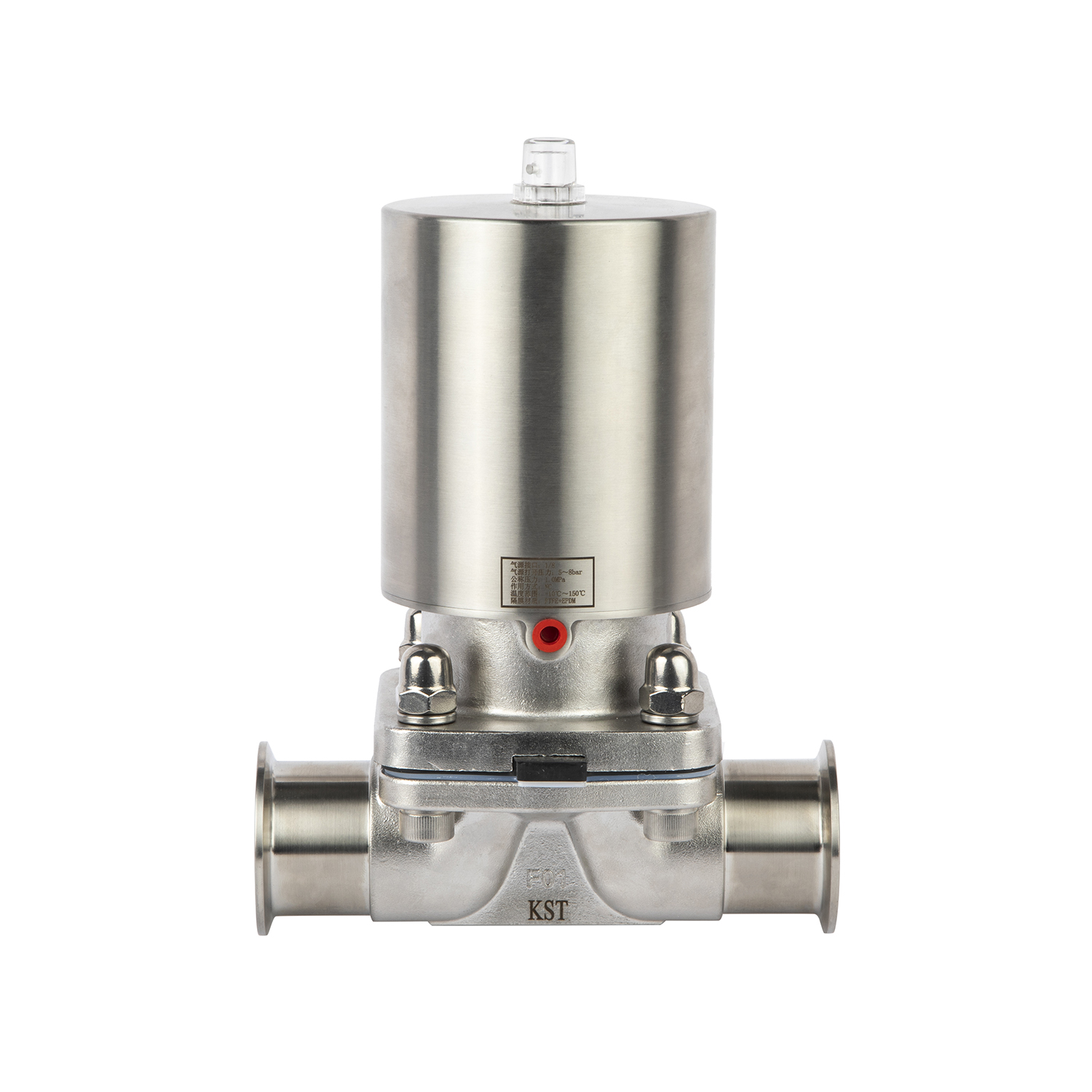
Sanitary diaphragm valves, also known as hygienic diaphragm valves, are designed for processes where contamination control and cleanability are critical.
They are commonly used in:
beverage production;
dairy processing;
food processing;
pharmaceutical production;
biotechnology;
cosmetics;
high-purity water systems.
Unlike a conventional industrial valve selected mainly for pressure and flow conditions, sanitary valves must also consider surface cleanliness, drainability, connection design, cleaning procedures, and the materials contacting the product.
Tri-clamp and welded connections are frequently used because they can simplify sanitary pipeline design. Depending on the application, valves may also need to support CIP (Clean-in-Place) and SIP (Sterilize-in-Place) procedures.
For a broader selection of valves designed for hygienic fluid handling, buyers can also explore KONTE's Sanitary Valves range.
Sanitary diaphragm valves are particularly suitable where product purity is more important than simply achieving basic pipeline isolation.
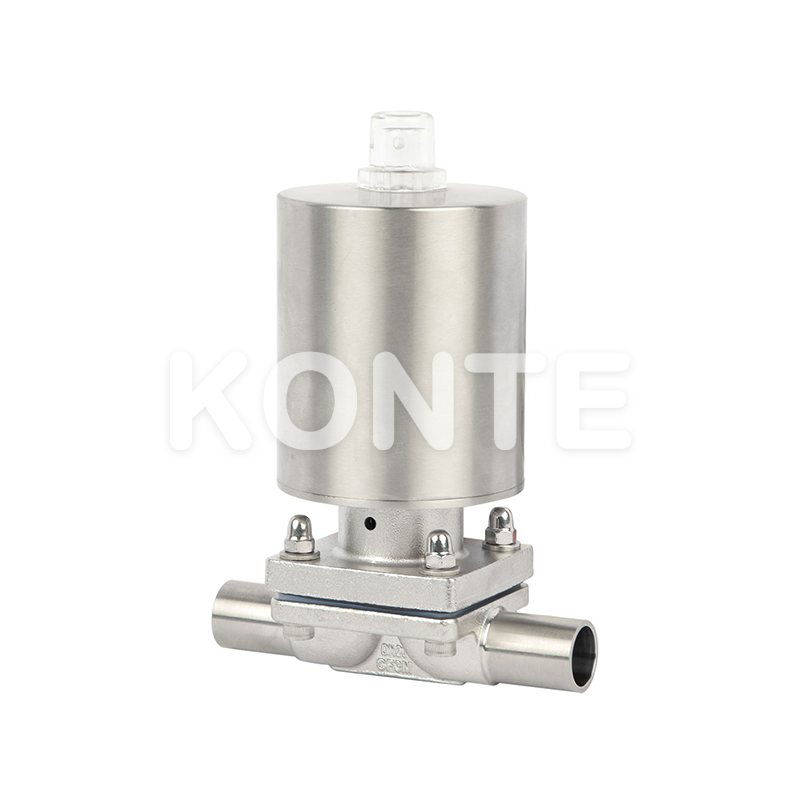
The term industrial diaphragm valve generally refers to diaphragm valves designed for process and utility applications outside strictly hygienic production environments.
These valves can be used in:
industrial water treatment;
chemical processing;
filtration equipment;
dosing systems;
wastewater treatment;
utility pipelines;
process fluid isolation.
Compared with a sanitary design, an industrial valve may place greater emphasis on chemical compatibility, mechanical durability, operating pressure, maintenance requirements, and cost efficiency.
Valve body and diaphragm materials must be selected according to the actual fluid.
For example, a valve handling clean water has very different compatibility requirements from one exposed to acids, alkaline solutions, solvents, or abrasive suspended solids.
KONTE's broader Industrial Valves range provides additional options when the process requires industrial rather than hygienic flow-control equipment.
A lined diaphragm valve uses a chemically resistant lining between the process medium and the structural valve body.
This design can be useful when handling:
corrosive chemicals;
acids;
alkalis;
aggressive industrial liquids;
chemical dosing media;
selected solvents.
Materials such as PTFE, PFA, or other fluoropolymer linings may be considered depending on the chemical, concentration, temperature, and pressure.
The advantage of a lined design is that the structural strength of the valve body can be combined with a corrosion-resistant wetted surface.
However, “corrosion resistant” should never be treated as a universal specification. Material compatibility must be checked against the actual medium because chemical concentration, operating temperature, pressure, and exposure duration can significantly affect material performance.
For processes where corrosion resistance is the primary concern, KONTE also provides a dedicated Lined Valves category for aggressive chemical service.
A straight through diaphragm valve has a relatively direct internal flow path compared with the raised-weir design commonly used in hygienic diaphragm valves.
This structure can provide:
lower flow restriction;
easier passage of viscous fluids;
improved handling of suspended solids;
reduced obstruction in certain slurry services.
Straight-through diaphragm valves may therefore be considered for viscous liquids, slurries, suspended solids, wastewater, and selected chemical-processing applications.
If corrosive media are involved, the valve may also require an appropriate body lining and chemically compatible diaphragm.
One important distinction is that “straight through” describes the valve's flow-path geometry, while “lined” describes the material protection of the wetted surface. A valve can therefore incorporate more than one of these characteristics.
| Diaphragm Valve Type | Main Characteristics | Typical Applications | Key Selection Priority |
|---|---|---|---|
| Pneumatic Diaphragm Valve | Automated air-operated control | Filtration, dosing, wastewater, automated process systems | Actuation mode and fail-safe position |
| Sanitary Diaphragm Valve | Hygienic, cleanable fluid path | Food, dairy, beverage, pharmaceutical and biotech processing | Hygiene, drainage and CIP/SIP requirements |
| Industrial Diaphragm Valve | General-purpose process isolation and control | Water treatment, chemical processing and utility systems | Pressure, temperature and media compatibility |
| Lined Diaphragm Valve | Corrosion-resistant wetted surface | Acids, alkalis and aggressive chemicals | Lining and diaphragm chemical compatibility |
| Straight Through Diaphragm Valve | Less restricted flow passage | Slurry, wastewater, viscous fluids and suspended solids | Flow characteristics and solids content |
There is no single diaphragm valve type that is ideal for every system. The correct design depends on the relationship between the process medium, operating conditions, hygiene requirements, automation strategy, and maintenance environment.
Diaphragm valves are commonly used for filtration, chemical dosing, treatment chemicals, process-water isolation, and sludge-related applications.
Automated pneumatic valves are particularly useful where treatment processes require repeated valve sequencing.
For fluids containing suspended solids, the internal flow path should be evaluated carefully to reduce clogging and unnecessary pressure loss.
Pharmaceutical production requires strict control over contamination, product retention, and cleaning.
Sanitary diaphragm valves can be installed in:
purified water systems;
Water for Injection systems;
fermentation equipment;
bioreactors;
buffer preparation;
filtration;
CIP and SIP systems.
KONTE also uses a three-port design in its Stainless Steel Pneumatic Three-Way T-Type Diaphragm Valve, which is intended for applications requiring flow diversion or merging within an automated sanitary pipeline.
In food-contact applications, the major concerns include cleanability, contamination prevention, material compatibility, and efficient production changeover.
Sanitary diaphragm valves may be used for:
dairy products;
beverages;
sauces;
liquid ingredients;
purified process water;
cleaning circuits.
The connection and internal geometry should be selected so that the valve can be adequately cleaned between batches.
Chemical plants may handle highly different media within the same facility.
A valve exposed to dilute process water cannot automatically be assumed suitable for concentrated acid or alkaline solutions.
For chemical applications, buyers should evaluate:
body material + lining material + diaphragm material + temperature + pressure + chemical concentration.
This combination is usually more important than selecting a valve simply according to its nominal diameter.
Diaphragm valves are frequently used around filters, dosing pumps, treatment skids, and chemical injection systems.
Their isolated operating mechanism can be beneficial when the process requires reliable shutoff while reducing direct contact between the fluid and mechanical operating components.
Pneumatic operation can also integrate the valve into automatic dosing or filtration sequences.
The first question should not be “Which valve model do I need?” but rather:
What fluid will actually pass through the valve?
Define:
chemical composition;
concentration;
viscosity;
suspended solids;
abrasiveness;
cleanliness requirements;
possible crystallization or sedimentation.
These properties affect both valve geometry and material selection.
Both normal and maximum operating conditions should be specified.
Consider:
normal operating pressure;
maximum pressure;
possible pressure surges;
normal temperature;
cleaning temperature;
sterilization temperature.
A sanitary valve used in a room-temperature production process may still experience substantially higher temperatures during SIP or hot-water cleaning.
Selection should therefore cover the most demanding condition the valve will experience, not only the normal production condition.
The diaphragm is a critical wetted and moving component.
Material selection may depend on:
chemical resistance;
temperature;
flexibility;
expected operating cycles;
food or pharmaceutical compliance requirements.
PTFE-based materials are commonly considered for demanding chemical environments, while elastomeric materials may offer different flexibility and cycle-life characteristics.
Always evaluate the diaphragm against the actual medium and operating cycle, rather than choosing it from a generic material description alone.
If the valve is installed in pharmaceutical, food, dairy, beverage, biotechnology, or other product-contact applications, sanitation requirements become a major part of the specification.
Check:
internal surface requirements;
drainability;
dead-leg reduction;
connection type;
CIP requirements;
SIP requirements;
material documentation.
A conventional industrial valve and a sanitary diaphragm valve may perform the same basic opening and closing function, but their hygienic suitability can be very different.
Manual diaphragm valves can be appropriate for:
infrequently operated lines;
simple utility systems;
sampling or maintenance points;
installations where automation is unnecessary.
Pneumatic valves are more suitable for:
automatic production lines;
frequent cycling;
remote operation;
PLC-controlled systems;
programmed CIP/SIP sequences;
fail-safe applications.
Common connection options can include:
tri-clamp;
welded;
flanged;
threaded connections, depending on design.
Connection selection should match both the existing pipeline and the process requirements.
For example, sanitary clamps allow convenient disassembly, while welded connections can reduce removable joints in high-purity systems.
Neither actuation method is automatically better.
A manual diaphragm valve offers a simple design and may be sufficient where operators only need to change the valve position occasionally.
A pneumatic diaphragm valve, by contrast, is better suited to systems requiring automatic sequencing, remote operation, or repeatable opening and closing.
| Requirement | Manual Valve | Pneumatic Valve |
|---|---|---|
| Occasional operation | Suitable | Suitable |
| Frequent cycling | Less convenient | Recommended |
| Remote control | No | Yes |
| PLC integration | Limited | Yes |
| Fail-safe control | Limited | Available depending on actuator design |
| Simple system | Good choice | May add unnecessary complexity |
| Automated production | Limited | Good choice |
The decision should therefore be based on process automation requirements rather than assuming that pneumatic operation is necessary for every application.
Common classifications include pneumatic diaphragm valves, sanitary diaphragm valves, industrial diaphragm valves, lined diaphragm valves, and straight-through diaphragm valves. Diaphragm valves can also be classified by body geometry, number of ports, connection type, diaphragm material, and actuation method.
A sanitary diaphragm valve focuses on cleanability, hygienic internal geometry, product-contact materials, drainability, and compatibility with cleaning procedures. Industrial diaphragm valves are more commonly selected around pressure, corrosion resistance, flow characteristics, mechanical durability, and general process requirements.
Pneumatic diaphragm valves are commonly used in automated filtration, water treatment, dosing systems, pharmaceutical processing, food production, chemical handling, and other automatic process-control systems.
Yes, provided the valve body, lining, diaphragm, and other wetted materials are compatible with the chemical. Chemical concentration, temperature, pressure, and exposure time should all be checked before selection.
Straight-through diaphragm valves provide a relatively unrestricted flow path and can be suitable for viscous liquids, wastewater, slurries, and fluids containing suspended solids. Actual suitability still depends on valve material and process conditions.
Yes. Although diaphragm valves are frequently used for on/off isolation, some designs can also provide throttling or modulating control. For precise automated control, correct valve sizing and an appropriate actuator and positioner are important.
Start by defining the medium, pressure, temperature, flow requirement, solids content, hygiene level, connection standard, diaphragm material, and actuation method. For sanitary applications, also consider CIP/SIP conditions and drainability. For chemical service, place additional emphasis on lining and diaphragm compatibility.
Different diaphragm valve types solve different fluid-control problems. Pneumatic diaphragm valves support automation, sanitary diaphragm valves prioritize cleanability, lined valves help manage aggressive chemicals, and straight-through designs can improve handling of viscous or solids-containing media.
The most reliable selection process begins with the actual operating conditions rather than the valve name alone. Buyers should evaluate media compatibility, pressure, temperature, hygiene requirements, flow characteristics, actuation, and connection type as one complete system.
For applications requiring sanitary or automated diaphragm valve solutions, explore KONTE's Diaphragm Valves range or contact the KONTE team to discuss specific pipeline and operating requirements.


