

Views: 0 Author: Site Editor Publish Time: 2026-11-06 Origin: Site


Flanged ball valves are widely used in industrial pipelines where reliable shut-off, secure connections, and automated operation are essential. However, different pipeline conditions require different valve structures, materials, and actuation methods.
This guide explores floating and trunnion-mounted designs, stainless steel construction, and pneumatic and electric actuation options, helping engineers and procurement professionals select suitable flanged ball valves for demanding industrial applications.
Understanding Flanged Ball Valve Designs
Floating vs. Trunnion Mounted Flanged Ball Valves
Stainless Steel Flanged Ball Valve: Material and Sealing Considerations
Pneumatic vs. Electric Flanged Ball Valves
Applications Across Five Major Industrial Sectors
How to Select the Right Flanged Ball Valve
Conclusion
FAQ
Core Keywords: Flange Ball Valve, Stainless Steel Flanged Ball Valve, Pneumatic Flanged Ball Valve, Electric Flanged Ball Valve, Floating Flanged Ball Valve, Trunnion Mounted Flanged Ball Valve.
A Flanged Ball Valve is an industrial quarter-turn valve that uses a rotating spherical ball to control fluid flow. The ball contains a central bore that allows fluid to pass when aligned with the pipeline. Rotating the ball approximately 90 degrees closes the passage and stops the flow.
Unlike threaded or welded connections, flanged connections use bolted joints between matching pipe and valve flanges. This construction provides stable mechanical connections and makes valve removal more convenient during maintenance.
A typical flanged ball valve consists of several essential components:
Valve Body: Houses the internal components and withstands pipeline pressure.
Ball: Controls fluid movement through its internal flow passage.
Stem: Transfers rotational movement from the actuator or handle to the ball.
Valve Seats: Provide sealing contact between the ball and the valve body.
Stem Packing: Helps prevent external leakage around the valve stem.
Flange Ends: Connect the valve to the pipeline using bolts and suitable gaskets.
Actuator: Provides manual, pneumatic, or electric operation.
For large-scale industrial installations, flanged ball valves offer several practical advantages.
First, bolted connections provide a secure installation suitable for many industrial pressure and temperature conditions when correctly specified. Second, technicians can remove the valve for inspection or replacement without cutting the pipeline. Third, standardized flange dimensions help simplify equipment integration and replacement procurement.
However, flange standards must match the pipeline specification. Depending on the project, connections may follow GB/T, ASME, ANSI, or EN standards. Engineers should verify flange dimensions, pressure-temperature ratings, facing types, and gasket compatibility before ordering.
KONTE offers different industrial ball valve configurations through its Ball Valve Product Category, including pneumatic and electric flanged models for different pipeline requirements.
One of the most important design considerations is how the ball is supported inside the valve body.
Floating and trunnion-mounted structures are designed for different pressure conditions, valve sizes, and operating requirements. Choosing the correct configuration helps reduce sealing stress, operating torque, and maintenance frequency.
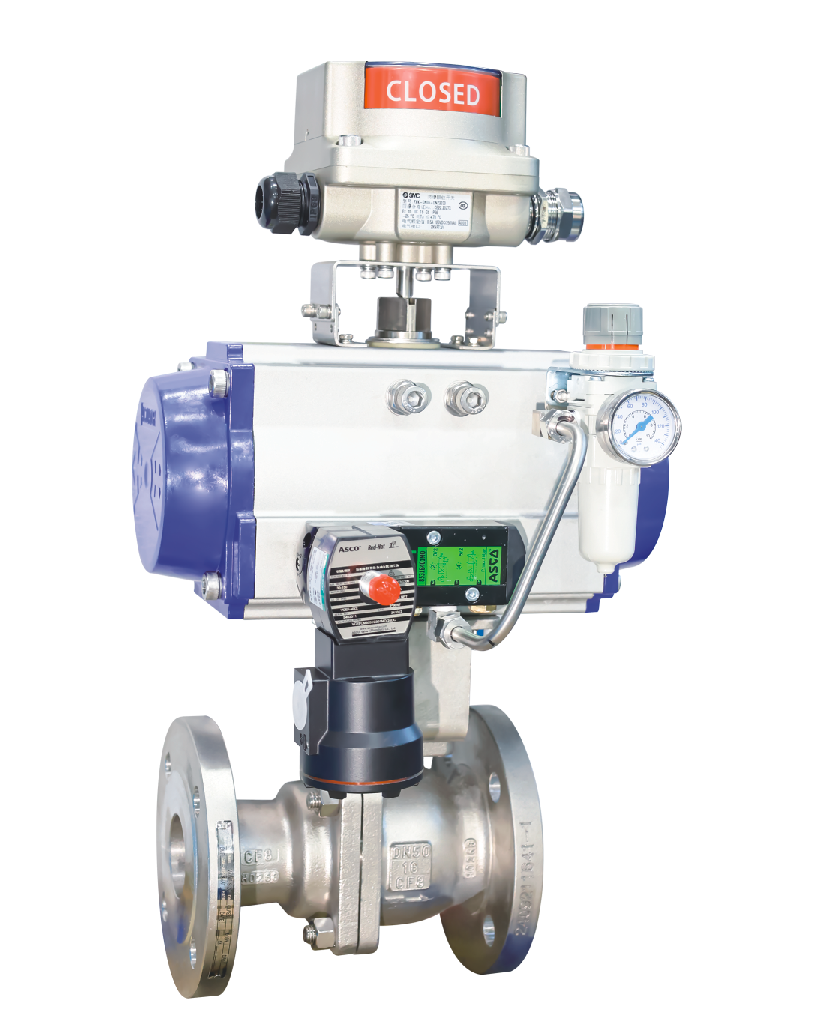
A Floating Flanged Ball Valve uses a ball that is not mechanically fixed by upper and lower trunnion supports. Instead, the ball is held in position by the valve seats and stem connection.
When pipeline pressure acts on the upstream side, the ball moves slightly toward the downstream seat. This movement increases contact pressure between the ball and the seat, creating a tight sealing effect.
Key characteristics include:
Simple Internal Structure: Fewer supporting components make the design relatively straightforward.
Reliable Sealing: Pipeline pressure helps push the ball against the downstream seat.
Compact Construction: Suitable for many small- and medium-diameter pipeline applications.
Flexible Automation: Can be equipped with pneumatic or electric actuators.
Practical Maintenance: Seat and sealing component inspection can be incorporated into maintenance planning.
However, as valve diameter and differential pressure increase, the force acting on the downstream seat can become significant. This may increase operating torque and seat loading.
Therefore, floating designs are commonly considered for low- and medium-pressure services, subject to the manufacturer's pressure and size ratings.
For aggressive chemical applications, KONTE provides a Pneumatic PTFE-Lined Floating Ball Valve. Its construction combines a floating ball structure with F46 or PFA lining options to help handle corrosive media.
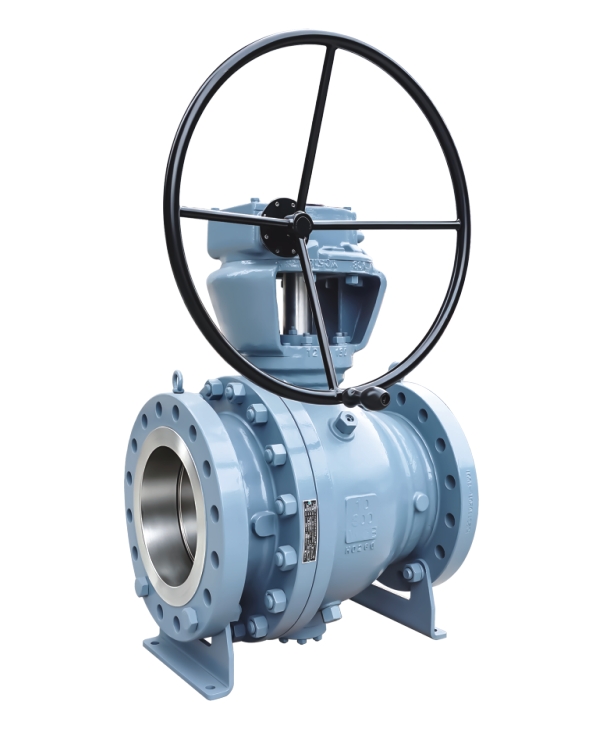
A Trunnion Mounted Flanged Ball Valve uses additional mechanical supports at the top and bottom of the ball.
Unlike a floating design, the ball remains mechanically supported by trunnions rather than moving freely toward the downstream seat. The seats are designed to move against the ball under the action of springs or pipeline pressure, depending on the valve construction.
This arrangement provides several important benefits:
Reduced Operating Torque: The supported ball reduces the load transferred directly to the seats.
High-Pressure Capability: Suitable designs can handle demanding high-pressure pipeline services.
Larger Diameter Options: Often preferred for larger pipeline sizes where ball support becomes important.
More Stable Operation: The supported structure helps maintain reliable ball positioning under demanding conditions.
Automation Compatibility: Lower operating torque can simplify actuator sizing for certain applications.
Trunnion-mounted designs are particularly relevant to oil and gas transmission, high-pressure process pipelines, and large industrial isolation systems.
| Comparison | Floating Ball Valve | Trunnion Mounted Ball Valve |
|---|---|---|
| Ball Support | Supported by seats and stem | Mechanically supported by trunnions |
| Sealing Principle | Ball moves toward downstream seat | Seats move against the supported ball |
| Operating Torque | Generally increases with pressure and size | Generally lower for comparable demanding services |
| Typical Applications | Small- and medium-size pipelines | Larger and higher-pressure pipelines |
| Construction | Relatively simple | More complex support structure |
| Maintenance Focus | Seat wear and sealing condition | Seat system, trunnion support, and sealing components |
The best choice depends on actual operating pressure, pipeline diameter, differential pressure, and required operating torque. Neither structure is universally superior.


Material selection is another important factor when specifying a Stainless Steel Flanged Ball Valve.
Industrial pipelines may transport water, oil, gas, solvents, acids, alkalis, and other process fluids. Each medium has different corrosion characteristics, operating temperatures, and sealing requirements.
Selecting the wrong material can lead to premature corrosion, seat deterioration, leakage, and unexpected maintenance costs.
Stainless steel is widely used in industrial ball valve manufacturing because of its corrosion resistance, mechanical strength, and durability.
Two common material options are SS304 and SS316.
(1)SS304 Stainless Steel
SS304 is suitable for many general industrial applications involving water, air, and compatible process fluids.
Its advantages include:
Good general corrosion resistance.
Reliable mechanical properties.
Good fabrication and machining characteristics.
Cost-effective material selection for many standard applications.
(2)SS316 Stainless Steel
SS316 contains molybdenum, which generally improves resistance to pitting and crevice corrosion, particularly in chloride-containing environments.
It is often considered for:
Chemical processing systems.
Industrial water containing higher chloride concentrations.
Marine and coastal installations.
Process lines requiring enhanced corrosion resistance.
However, neither 304 nor 316 is universally suitable for every chemical or operating condition. Actual compatibility depends on fluid concentration, temperature, pressure, and exposure conditions.
The valve seat directly affects shut-off performance and service life.
Common seat materials include:
| Seat Material | Main Characteristics | Typical Considerations |
|---|---|---|
| PTFE | Excellent chemical resistance and low friction | General chemical and industrial services |
| RPTFE | Improved mechanical strength compared with standard PTFE | Higher mechanical loading requirements |
| PEEK | High mechanical strength and temperature capability | More demanding industrial conditions |
| FKM | Good resistance to many oils and chemicals | Requires media compatibility verification |
| EPDM | Suitable for many water-based applications | Not suitable for every oil or hydrocarbon |
Seat material must be selected according to the actual fluid, temperature, pressure, and required leakage performance.
For example, a stainless steel ball valve used in a general water pipeline may have different sealing requirements from a valve handling concentrated chemical solutions.
For highly corrosive services, a lined design may be more appropriate than relying on stainless steel alone. KONTE's PTFE-Lined Floating Ball Valve provides an alternative construction for compatible aggressive chemical applications.
Industrial automation has increased the demand for remotely operated pipeline valves.
Both Pneumatic Flanged Ball Valves and Electric Flanged Ball Valves can provide automatic opening and closing, but they use different power sources and offer different operational characteristics.
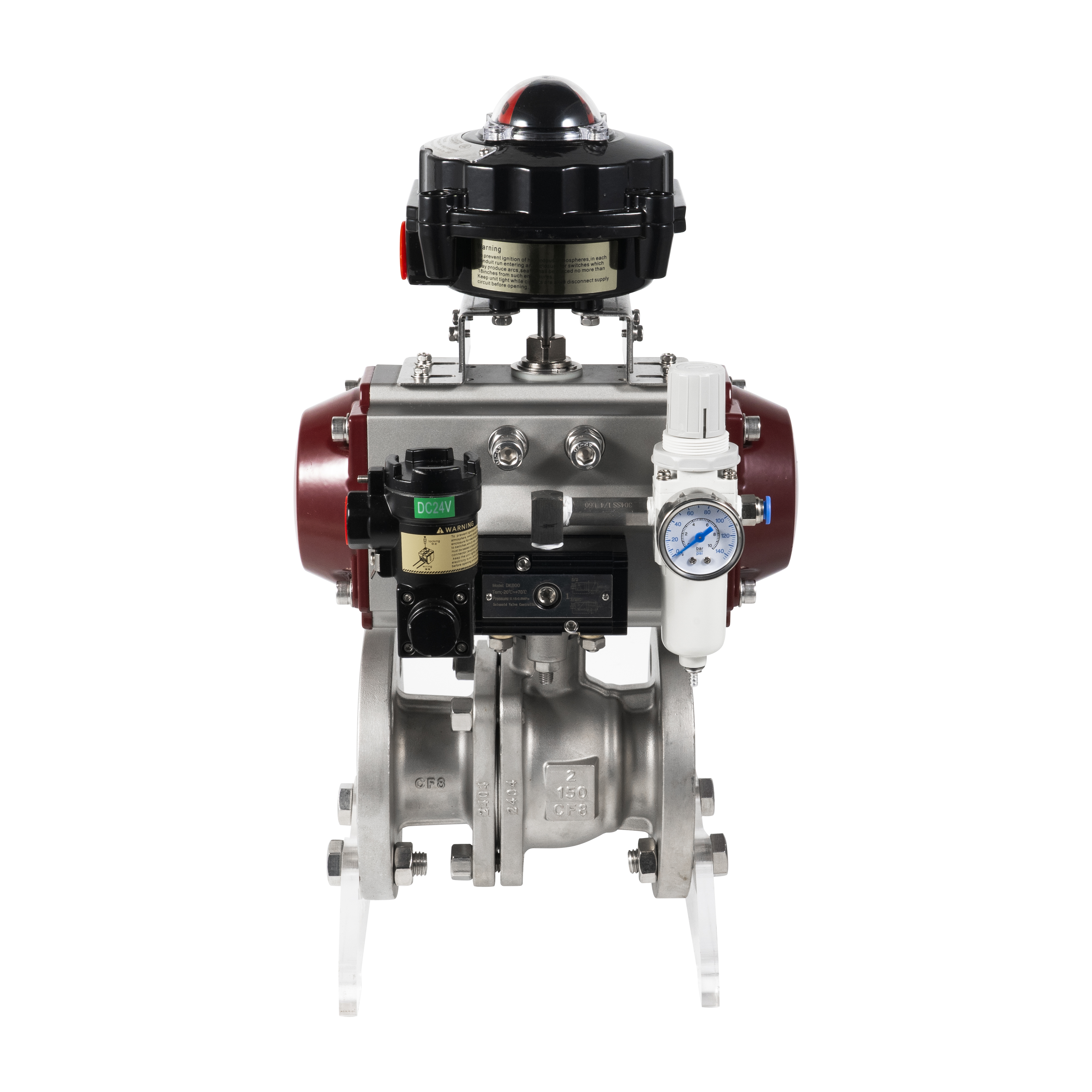
A pneumatic flanged ball valve uses compressed air to drive an actuator connected to the valve stem.
When the control system sends a signal to the solenoid valve, compressed air enters the actuator and generates the torque required to rotate the ball.
Pneumatic actuation is particularly suitable for high-cycle applications requiring fast and repeatable operation.
Its main advantages include:
Fast Response: Suitable for frequent opening and closing cycles.
Simple Mechanical Construction: Pneumatic actuators generally have fewer complex electrical components.
Fail-Safe Options: Spring-return actuators can move the valve to a preset position when the air supply is interrupted.
Automation Integration: Can work with solenoid valves, limit switches, and control systems.
Hazardous-Area Flexibility: Pneumatic actuation avoids the need for electrical power at the actuator itself, although the complete assembly and accessories must still meet the relevant hazardous-area requirements.
However, pneumatic systems require a reliable compressed-air supply. Air quality, supply pressure, and actuator sizing must be considered during installation.
For a practical product example, KONTE's Pneumatic National Standard Flange Ball Valve offers DN15–DN200 configurations and PN16–PN40 pressure ratings. The product page also describes spring-return and double-acting actuator configurations.
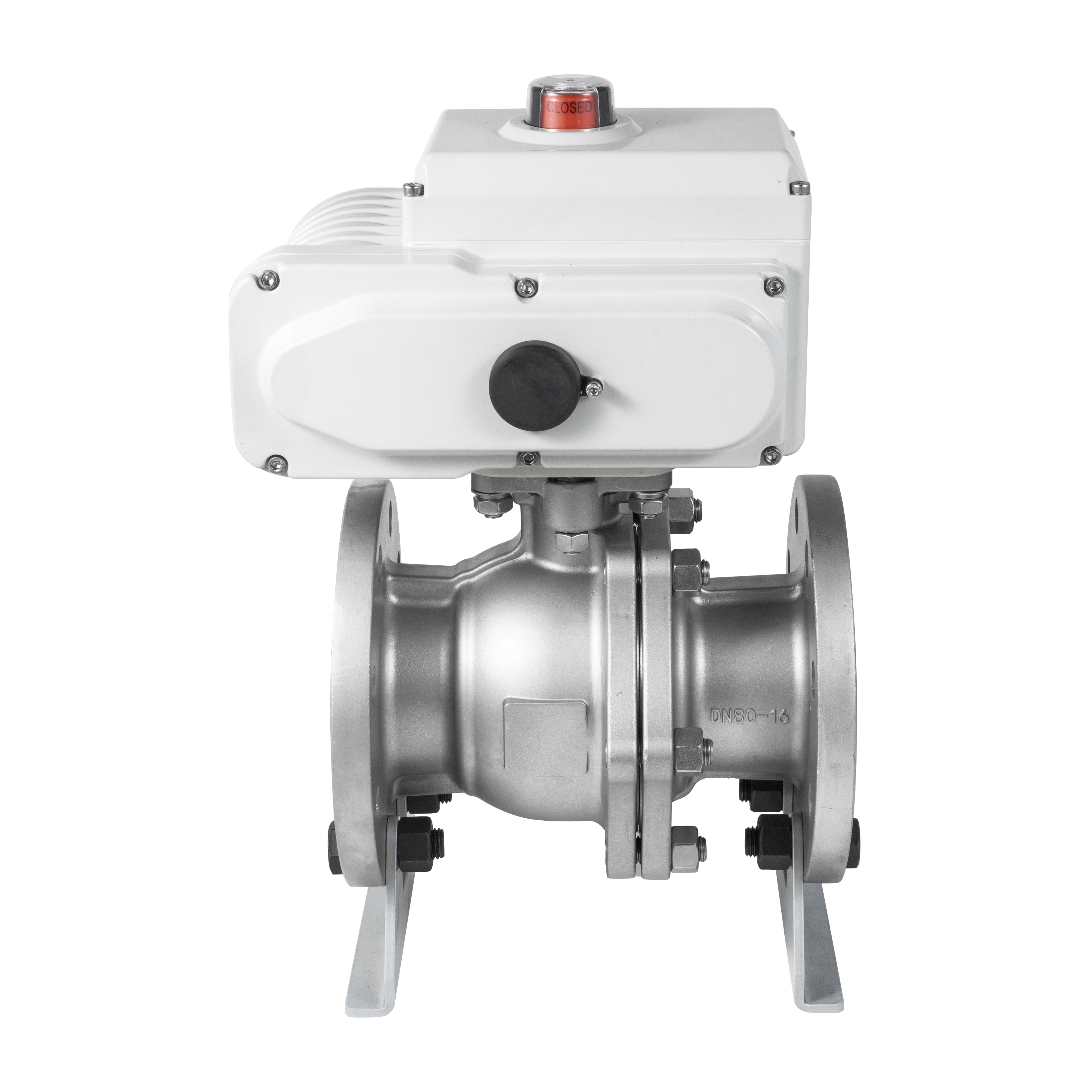
An Electric Flanged Ball Valve uses an electric motor actuator to rotate the valve stem.
The actuator receives electrical control signals and converts motor movement into the rotational torque needed for valve operation.
Electric actuation is especially useful where compressed air is unavailable or where remote operation and control-system integration are priorities.
Its advantages include:
Remote Operation: Supports centralized valve control from control rooms.
Electrical Integration: Can be connected to PLC, DCS, and other industrial automation systems.
Position Feedback: Suitable configurations can provide valve position indication.
No Compressed Air Requirement: Reduces dependence on pneumatic infrastructure.
Flexible Control Options: Available configurations can support on/off or modulating operation.
One important consideration is the availability of electrical power and the actuator's protection rating. Engineers should also evaluate operating time, torque output, duty cycle, ambient temperature, and emergency operation requirements.
KONTE's Electric German Standard Flange Ball Valve is an example of a motorized flanged ball valve designed for remote operation in industrial process pipelines.
| Selection Factor | Pneumatic Flanged Ball Valve | Electric Flanged Ball Valve |
|---|---|---|
| Power Source | Compressed air | Electrical power |
| Operating Speed | Generally fast | Depends on actuator design |
| Control | Solenoid valve and pneumatic accessories | Electrical control signals |
| Fail-Safe Options | Spring-return configurations | Requires suitable backup or fail-safe arrangements |
| Maintenance | Air supply and actuator components | Motor, gearbox, electrical components |
| Typical Applications | High-cycle automated processes | Remote and centralized pipeline control |
| Main Consideration | Compressed-air availability | Electrical supply and protection rating |
The correct actuator should be selected according to operating frequency, required response time, available utilities, safety requirements, and control-system architecture.
Flanged ball valves are used in many industries because they combine reliable shut-off performance with practical pipeline connections.
However, different sectors place different demands on valve materials, sealing structures, pressure ratings, and automation systems.
The Oil and Gas Industry involves demanding pipeline conditions, including high pressure, hydrocarbon exposure, temperature variations, and potentially hazardous operating environments.
Flanged ball valves are used in applications such as:
Crude oil transportation.
Natural gas distribution.
Refinery process pipelines.
Fuel storage and transfer systems.
Petrochemical processing facilities.
For these applications, engineers should pay particular attention to pressure ratings, fire-safe construction, anti-static design, anti-blowout stem structures, and fugitive emission requirements.
Trunnion-mounted designs are often considered for large-diameter and high-pressure pipeline isolation, while suitable floating designs may serve lower-pressure applications.
Actuator selection also matters. Pneumatic or electric configurations should match the site's hazardous-area classification and emergency shutdown requirements.
Explore KONTE's Oil & Gas Industry Solutions for additional industrial valve and actuator applications.
Chemical plants handle a wide range of corrosive and potentially hazardous fluids.
These include acids, alkalis, organic solvents, and other process chemicals that can damage unsuitable valve materials.
A Stainless Steel Flanged Ball Valve can be appropriate for compatible chemical media, while lined valve designs provide another option for more aggressive services.
Important selection factors include:
Chemical compatibility of body and internal materials.
PTFE or other suitable seat material.
Corrosion resistance of wetted components.
Operating temperature and pressure.
External and internal leakage prevention.
For particularly aggressive chemicals, material selection should be based on the complete wetted-fluid path rather than the valve body alone.
KONTE provides industrial solutions for chemical applications, including stainless steel and fluorine-lined valve configurations. More information is available on its Chemical Industry Solutions page.
Water treatment facilities require dependable valves for water distribution, filtration, chemical dosing, and wastewater management.
Common applications include:
Raw water intake pipelines.
Filter and treatment equipment.
Chemical dosing lines.
Wastewater transfer systems.
Pumping and distribution networks.
Corrosion resistance, reliable shut-off, and convenient automation are important considerations in these installations.
For example, an electric flanged ball valve can support remote operation in centralized water treatment facilities. Pneumatic versions may be preferred in installations where compressed air is readily available.
When handling chlorinated water or other chemically treated fluids, engineers should evaluate chloride concentration, material compatibility, seat performance, and potential corrosion risks.
KONTE's Water Treatment Industry Solutions include ball valves, butterfly valves, and automated control systems.
Power generation facilities contain complex pipeline networks supporting cooling water, fuel delivery, auxiliary systems, and other process operations.
Valve selection must consider pressure, temperature, operating frequency, and the characteristics of the transported medium.
For example, stainless steel flanged ball valves may be considered for compatible auxiliary water or chemical lines, while higher-temperature services require careful verification of seat and sealing material limits.
Electric actuators are useful where centralized operation and remote monitoring are required. Pneumatic configurations can also be applied where compressed-air infrastructure and operating conditions support their use.
A key consideration is to match the valve's pressure-temperature rating and sealing materials to the specific pipeline duty. Standard soft-seated ball valves should not automatically be selected for every high-temperature steam application.
Learn more about KONTE's Power Generation Industry Solutions.
Beyond specific industries, flanged ball valves are widely used in general industrial pipeline systems.
Their bolted connections make them practical for equipment installations where inspection, replacement, and routine maintenance are expected.
Typical applications include:
Manufacturing process pipelines.
Industrial gas distribution.
Cooling and circulation systems.
Fluid transfer equipment.
Automated production facilities.
For these installations, pipeline compatibility and long-term maintainability should be considered alongside the initial purchase price.
Selecting the correct flange standard, pressure class, valve size, body material, and actuator configuration helps ensure that the valve integrates properly into the existing system.
Choosing the right flanged ball valve requires more than matching the nominal pipe diameter.
A valve that performs well in one application may be unsuitable for another because of differences in pressure, fluid characteristics, temperature, and automation requirements.
The following checklist can help engineers and procurement teams evaluate potential configurations.
| Selection Factor | What to Check | Why It Matters |
|---|---|---|
| Valve Structure | Floating or trunnion mounted | Determines ball support, sealing arrangement, and torque characteristics |
| Valve Size | DN or NPS | Ensures compatibility with the pipeline |
| Pressure Rating | PN or Class | Must meet the system's design pressure and temperature |
| Body Material | SS304, SS316, carbon steel, or lined construction | Determines compatibility with the operating medium |
| Seat Material | PTFE, RPTFE, PEEK, FKM, EPDM, etc. | Influences sealing performance and service life |
| Flange Standard | GB/T, ANSI/ASME, EN, or project-specific standard | Ensures correct connection dimensions |
| Actuator Type | Manual, pneumatic, or electric | Determines the operating method |
| Control Requirements | On/off or modulating | Ensures compatibility with the control system |
| Safety Requirements | Fire-safe, anti-static, anti-blowout, hazardous-area protection | Supports safe operation in demanding environments |
| Maintenance | Seat replacement, actuator access, and spare parts | Helps reduce long-term maintenance costs |
Before purchasing a flanged ball valve, buyers should confirm several technical details with the manufacturer.
1. What medium will the valve handle?
Provide the fluid name, concentration, and any relevant chemical properties. This information helps determine suitable body, ball, stem, and seat materials.
2. What are the operating pressure and temperature?
Specify normal operating conditions, maximum pressure, minimum and maximum temperature, and any pressure fluctuations.
3. Which flange standard does the pipeline require?
Confirm flange dimensions, pressure class, facing type, bolt pattern, and gasket requirements. A valve with an incompatible flange standard may require costly pipeline modifications.
4. Is automatic operation required?
If remote control is needed, determine whether a pneumatic or electric actuator is more suitable. Also specify the required fail-safe position, feedback signals, and control interface.
5. What certifications or testing requirements apply?
For critical industrial projects, confirm the applicable design standards, inspection procedures, pressure testing requirements, and any project-specific fire-safe or fugitive emission standards.
Providing these details before quotation helps manufacturers recommend a more accurate valve configuration and reduces the risk of procurement errors.
Selecting the right flanged ball valve is an important part of maintaining reliable industrial pipeline operation. Floating and trunnion-mounted structures address different pressure and size requirements, while pneumatic and electric actuators provide different automation advantages.
Material compatibility, seat selection, flange standards, and operating conditions must also be evaluated before purchasing.
Whether the application involves oil and gas transportation, chemical processing, water treatment, or power generation, the most effective solution is one that matches the valve structure and configuration to the actual operating requirements.
KONTE provides industrial ball valves, pneumatic and electric actuators, and customized flow control solutions for different industrial applications. Contact the KONTE team to discuss your pipeline specifications and find a suitable flanged ball valve solution.
The main difference is the pipeline connection.
A Flanged Ball Valve uses bolted flange connections and is commonly selected for industrial pipelines requiring secure connections and convenient maintenance access.A threaded ball valve uses threaded ends and is generally more suitable for smaller pipe sizes and applications with compatible pressure and installation requirements.
A Trunnion Mounted Flanged Ball Valve is generally considered for larger-diameter or higher-pressure applications where a supported ball structure helps reduce operating torque and seat loading.The final selection should be based on valve size, pressure rating, differential pressure, and the manufacturer's design specifications.
Yes, provided the stainless steel grade and sealing materials are compatible with the chemical medium.SS316 may offer improved resistance to certain chloride-related corrosion conditions compared with SS304. For more aggressive acids, alkalis, and solvents, fluoropolymer-lined valve designs may be more appropriate.
Neither is universally better.Pneumatic Flanged Ball Valves are suitable for fast, frequent operation where compressed air is available. Electric Flanged Ball Valves are useful for remote operation and centralized control without requiring a compressed-air supply.The choice depends on the operating environment, control requirements, power availability, and safety considerations.
Standard ball valves are primarily designed for on/off isolation.
Although some configurations can operate at intermediate positions, continuous throttling may cause uneven flow, seat wear, or reduced service life.For applications requiring precise flow regulation, an appropriately designed control valve or characterized ball valve should be considered.
To receive an accurate recommendation, provide:
Valve size and quantity.
Required flange standard.
Operating pressure and temperature.
Fluid type and chemical properties.
Body and seat material requirements.
Floating or trunnion-mounted structure preference, if specified.
Manual, pneumatic, or electric actuation requirements.
Applicable standards and certifications.
Providing complete technical information helps the manufacturer evaluate the application and recommend a suitable configuration.


