

Views: 0 Author: Site Editor Publish Time: 2025-12-25 Origin: Site


Introduction
Understanding Sanitary Butterfly Valves
How Sanitary Butterfly Valves Work
Types of Sanitary Butterfly Valves
Key Components and Materials
Applications in Hygienic Industries
Advantages and Limitations
Selection Criteria
Installation and Maintenance
Industry Standards and Compliance
FAQ
Sanitary butterfly valves are essential flow control devices designed specifically for hygienic applications in food, beverage, pharmaceutical, and biotechnology industries. These sanitary stainless steel butterfly valves feature smooth, crevice-free designs that prevent bacterial growth and facilitate thorough cleaning. This comprehensive guide explores the construction, operation, types, and applications of sanitary butterfly valves, providing industry professionals with the knowledge needed to select and maintain these critical components. Whether you're considering a sanitary manual butterfly valve or a sanitary pneumatic butterfly valve, understanding their functionality ensures optimal performance in sterile processing environments.
In hygienic processing industries, maintaining product purity and preventing contamination are paramount concerns. The sanitary butterfly valve has emerged as a preferred solution for flow control in applications requiring strict sanitary standards. Unlike conventional industrial valves, sanitary butterfly valves are specifically engineered to meet stringent hygiene requirements, featuring smooth surfaces, minimal dead spaces, and materials that comply with food-grade and pharmaceutical regulations.
As a leading sanitary butterfly valve manufacturer, the industry has witnessed significant advancements in valve design, automation, and manufacturing processes. Modern sanitary butterfly valves combine efficient flow control with ease of cleaning, making them indispensable in production lines where product integrity cannot be compromised.
This article provides an in-depth examination of sanitary butterfly valves, covering their design principles, operational mechanisms, various types available in the market, and best practices for selection and maintenance in hygienic applications.
A sanitary butterfly valve differs from standard industrial butterfly valves through several critical design features:
Hygienic Design Elements:
Smooth, polished surfaces with Ra values typically ≤0.8μm to prevent bacterial adhesion
Minimal dead spaces that could harbor contaminants
Crevice-free construction eliminating areas where product residue might accumulate
Drainable design ensuring complete product removal during cleaning cycles
Food-grade elastomer seals that resist chemical degradation and meet FDA regulations
Material Specifications: The most common material for sanitary butterfly valves is stainless steel 316L, which offers excellent corrosion resistance, durability, and compliance with food and pharmaceutical standards. Alternative materials like 304 stainless steel may be used for less demanding applications.
The fundamental principle behind sanitary valve design is the "3-A Sanitary Standards" concept, which emphasizes:
Cleanability: All product-contact surfaces must be easily accessible for cleaning
Bacteriological performance: Design must prevent bacterial growth and biofilm formation
Material compatibility: Components must be compatible with cleaning agents and process fluids
Manufacturers like Konte incorporate these principles throughout their product lines, ensuring compliance with international hygienic standards.
A sanitary butterfly valve operates through a simple yet effective mechanism involving a circular disc (the "butterfly") mounted on a rotating shaft. The disc pivots within the valve body to control flow:
Open Position (90° rotation):
The disc aligns parallel to the flow direction
Fluid passes around the disc with minimal restriction
Full flow capacity is achieved
Closed Position (0° rotation):
The disc rotates perpendicular to the flow
The disc presses against the valve seat, creating a seal
Flow is completely stopped
Throttling Position (partial rotation):
The disc can be positioned at any angle between 0° and 90°
Flow rate is modulated based on disc angle
Provides variable flow control
The sealing effectiveness of a sanitary butterfly valve depends on several factors:
Seat Design Options:
| Seat Type | Configuration | Best Application | Sealing Performance |
|---|---|---|---|
| Single Seat | Elastomer ring on valve body | Standard flow control | Good for low-pressure applications |
| Double Seat | Seals on both disc and body | High-purity processes | Superior leak-tightness |
| Metal Seat | Stainless steel contact surfaces | High-temperature applications | Suitable for steam sterilization |
| Tri-clamp Seat | Captured gasket design | Frequent disassembly needs | Easy maintenance access |
Manual Operation: A sanitary manual butterfly valve features a lever or handwheel connected directly to the valve stem. Operators physically rotate the disc to the desired position. This simple, reliable method requires no external power and is ideal for applications with infrequent adjustment needs.
Pneumatic Actuation: A sanitary pneumatic butterfly valve utilizes compressed air to drive an actuator mechanism, which rotates the disc. Pneumatic actuation offers:
Rapid opening and closing cycles
Remote operation capability
Integration with automated control systems
Consistent, repeatable positioning
Electric Actuation: Electric actuators provide precise positioning and are commonly used in automated processing systems requiring exact flow control and data logging capabilities.
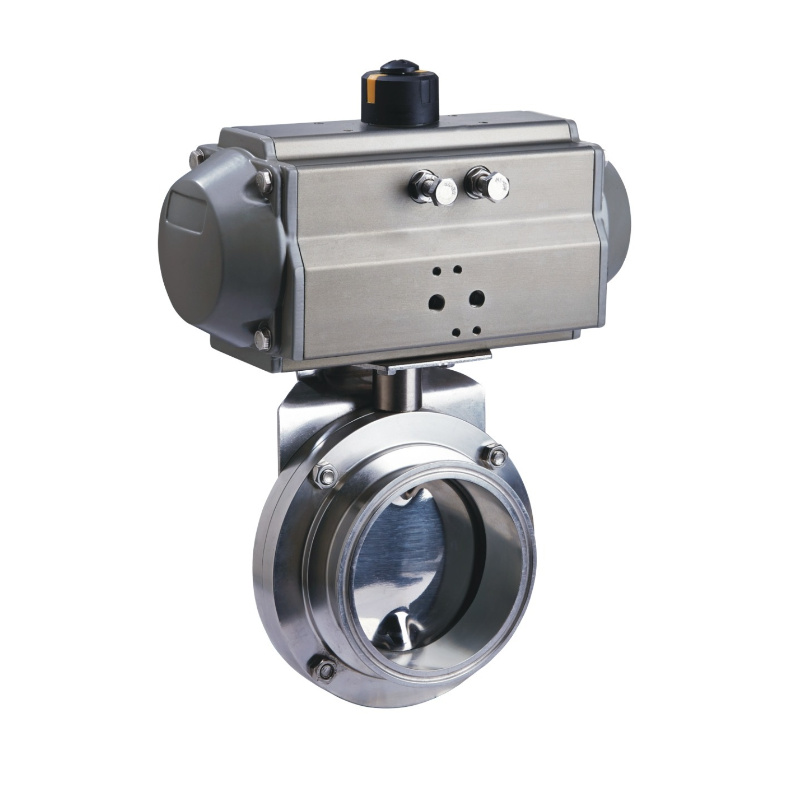
The Tri-clamped Sanitary Butterfly Valve is the most common configuration in hygienic applications. It features:
Design Characteristics:
Tri-clamp ferrule connections on inlet and outlet
Quick assembly and disassembly without tools
Captured gasket design preventing contamination
Easy inspection and maintenance access
Typical Applications:
Dairy processing lines
Beverage production systems
Pharmaceutical transfer operations
Cosmetic manufacturing
This design excels in applications requiring frequent cleaning, inspection, or product changeovers.
Pneumatic Flange Sanitary Butterfly Valves utilize bolted flange connections instead of tri-clamps. This configuration offers:
Advantages:
Higher pressure rating capability
Permanent installation suitability
Reduced connection points in large-diameter applications
Compatible with ASME/ANSI and DIN flange standards
Best Use Cases:
Large-scale production facilities
High-pressure processing systems
Permanent installation requirements
Main process line applications
For the most permanent installations, welded-end sanitary butterfly valves are integrated directly into process piping through orbital welding:
Benefits:
Eliminates potential leak points
Smoothest possible flow path
Maximum hygienic integrity
No gaskets to replace
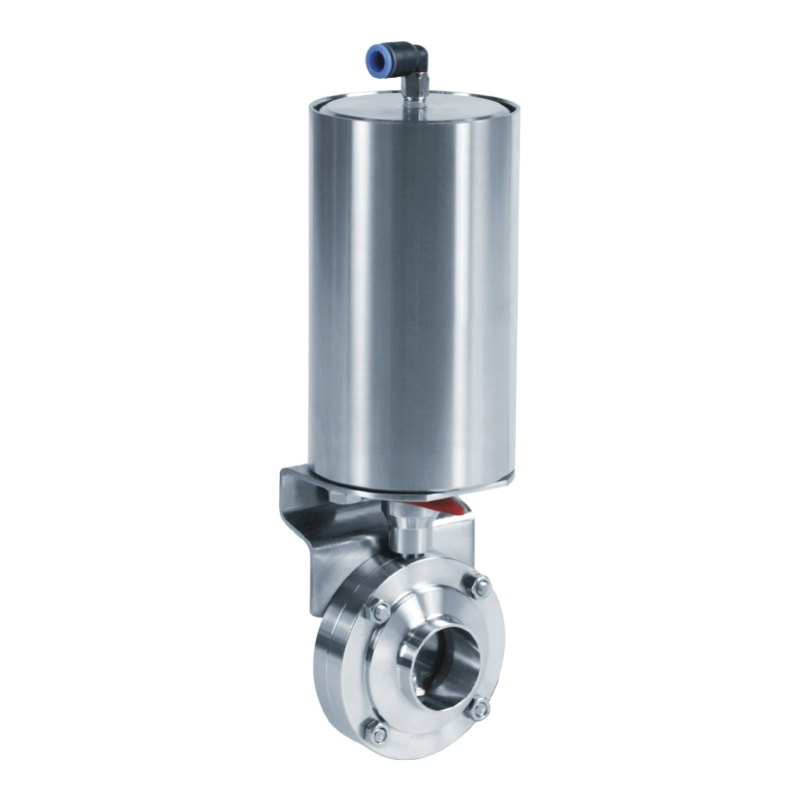
The Vertical Remote Controlled Sanitary Butterfly Valve features specialized design for applications where:
Unique Features:
Vertical installation orientation
Extended stem for mounting actuators away from process areas
Remote operation from control panels
Ideal for tank bottom applications
Positioning Butterfly Valves: Equipped with positioners and feedback systems for precise flow regulation
Multi-port Butterfly Valves: Designed for diverting or mixing flows in complex process configurations
A complete sanitary stainless steel butterfly valve assembly consists of:
Primary Components:
| Component | Function | Material Options | Key Considerations |
|---|---|---|---|
| Valve Body | Houses disc and provides flow path | 316L SS, 304 SS | Surface finish Ra ≤0.8μm |
| Butterfly Disc | Controls flow through rotation | 316L SS | Balanced design to reduce torque |
| Valve Stem | Transmits actuation force to disc | 316L SS | Sealed to prevent contamination |
| Seat/Seal | Provides shutoff seal | EPDM, Silicone, Viton, PTFE | FDA/USP compliance required |
| Actuator | Provides operating force | Pneumatic cylinder, Electric motor | Sized for valve torque requirements |
| Connection Ends | Interfaces with piping | Tri-clamp, Flange, Weld | Match existing system standards |
Stainless Steel Grades:
316L Stainless Steel:
Lowest carbon content minimizes carbide precipitation
Superior corrosion resistance in acidic environments
Preferred for pharmaceutical and food contact
Complies with FDA 21 CFR 177.2600
304 Stainless Steel:
Cost-effective alternative for neutral pH applications
Adequate corrosion resistance for many food processes
Not recommended for high-chloride environments
Elastomer Selection:
EPDM (Ethylene Propylene Diene Monomer):
Excellent water and steam resistance
Temperature range: -40°C to +140°C
Ideal for dairy and beverage applications
FDA compliant
Silicone:
Wide temperature range: -60°C to +180°C
Excellent flexibility and sealing properties
Common in pharmaceutical applications
USP Class VI certified
Viton (FKM):
Superior chemical resistance
Suitable for aggressive cleaning agents
Temperature range: -20°C to +200°C
Higher cost but extended service life
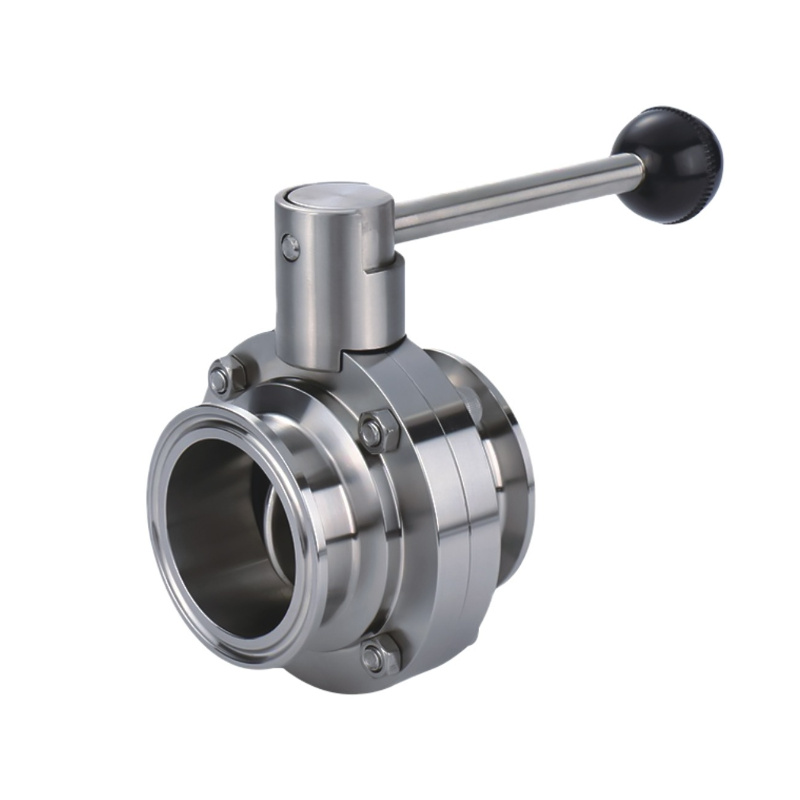
Sanitary butterfly valves play critical roles throughout food and beverage production:
Dairy Industry:
Milk reception and transfer systems
Cream separation processes
Cheese and yogurt production lines
CIP (Clean-in-Place) circuit control
Beverage Manufacturing:
Juice processing and blending
Soft drink production lines
Brewery fermentation and transfer
Wine making operations
Food Processing:
Sauce and condiment production
Edible oil processing
Confectionery manufacturing
Prepared food production
The pharmaceutical sector demands the highest purity standards, making sanitary valves essential:
Applications:
Active Pharmaceutical Ingredient (API) production
Sterile fill-finish operations
Bioreactor systems
WFI (Water for Injection) systems
Buffer preparation and transfer
Compliance Requirements:
USP Class VI elastomer certification
FDA 21 CFR Part 11 for automated systems
cGMP (current Good Manufacturing Practice) compliance
Validation documentation and material traceability
Cosmetic manufacturing requires sanitary conditions similar to food processing:
Lotion and cream production
Shampoo and conditioner manufacturing
Makeup formulation systems
Fragrance blending operations
Modern biotechnology facilities utilize sanitary butterfly valves in:
Cell culture media preparation
Fermentation processes
Downstream purification
Buffer exchange systems
Operational Benefits:
Compact Design: Shorter face-to-face dimensions compared to gate or ball valves reduce installation space requirements
Fast Operation: Quick quarter-turn operation enables rapid process changes and emergency shutoff
Cost-Effectiveness: Lower initial cost compared to other sanitary valve types, particularly in larger sizes
Flow Characteristics: When fully open, the streamlined disc creates minimal pressure drop
Maintenance Accessibility: Simple construction with fewer moving parts reduces maintenance complexity
Cleanability: Smooth internal surfaces and minimal crevices facilitate thorough CIP cleaning
Versatility: Available in manual, pneumatic, and electric configurations to suit various automation requirements
Application Constraints:
Throttling Performance: Not ideal for precise flow modulation due to non-linear flow characteristics
Pressure Drop in Throttling: Partially open positions create significant turbulence and pressure loss
Bi-directional Sealing: Standard designs may not provide equal sealing performance in both flow directions
Cavitation Risk: High-velocity applications may cause cavitation damage at partial openings
Seat Wear: Elastomer seats may wear over time, particularly in abrasive service or with frequent cycling
When selecting a sanitary butterfly valve, consider these critical factors:
Process Parameters:
Flow Characteristics:
Flow rate requirements (both normal and maximum)
Fluid viscosity and density
Presence of suspended solids or particles
Temperature range during operation and cleaning
Pressure Considerations:
Maximum operating pressure
Pressure drop tolerance across the valve
Vacuum service requirements
Pressure spikes during pump starts
Material Compatibility:
Evaluate compatibility between valve materials and:
Process fluids (products)
Cleaning chemicals (caustic, acid, sanitizers)
Sterilization methods (steam, chemical, radiation)
Operating temperature extremes
Connection Standards:
Match valve end connections to existing piping infrastructure:
Tri-clamp: Most flexible, ideal for 0.5" to 6" applications
Flange: Better for larger diameters (6" and above)
Weld ends: Permanent installations requiring maximum hygiene
Actuation Requirements:
Choose actuation method based on:
Frequency of valve cycling
Automation system integration needs
Available utilities (compressed air, electrical power)
Safety requirements (fail-safe positioning)
Proper valve sizing ensures optimal performance:
Flow Velocity Guidelines:
Typical velocity: 5-10 feet per second for liquids
Maximum velocity: 15 feet per second to avoid erosion
CIP systems: 5 feet per second minimum for effective cleaning
Cv Calculation: Use the valve flow coefficient (Cv) to determine appropriate size based on flow requirements and acceptable pressure drop.
Mounting Orientation:
Horizontal Piping:
Stem should be horizontal or at 45° angle
Avoid vertical stem position to prevent seal contamination
Ensure disc opens against normal flow direction for balanced torque
Vertical Piping:
Use vertical remote controlled variants
Actuator must be accessible for maintenance
Consider stem seal protection from product drips
Connection Procedures:
Tri-Clamp Installation:
Inspect gasket for damage or contamination
Center gasket between ferrules
Position clamp band evenly
Tighten uniformly to recommended torque (typically 15-25 ft-lbs)
Verify proper sealing and alignment
Flange Installation:
Verify flange face cleanliness and gasket condition
Apply gasket according to manufacturer specifications
Insert bolts and hand-tighten
Torque bolts in star pattern to specified values
Re-torque after initial pressurization
Regular Inspection Schedule:
Daily Checks:
Visual inspection for leaks
Verify proper actuator operation
Check position indication accuracy
Monthly Procedures:
Actuator lubrication (if required)
Seal condition inspection
Operation smoothness verification
Quarterly Maintenance:
Complete valve cycling test
Torque requirement measurement
Seat inspection for wear or damage
Annual Overhaul:
Complete disassembly and cleaning
Elastomer seal replacement
Stem packing renewal
Actuator service and calibration
CIP (Clean-in-Place) Protocols:
Effective CIP requires:
Flow velocity minimum 5 feet per second
Complete valve opening during cleaning cycles
Temperature and chemical concentration per process requirements
Adequate contact time (typically 10-20 minutes per cycle)
CIP Sequence Example:
Pre-rinse: Water flush to remove gross contamination
Caustic wash: Alkaline detergent at 70-80°C
Intermediate rinse: Remove chemical residue
Acid wash: Remove mineral deposits (if required)
Final rinse: Purified water to neutral pH
Sanitization: Steam or chemical sanitizer
SIP (Sterilize-in-Place):
For pharmaceutical applications, SIP using saturated steam:
Steam temperature: 121-134°C
Exposure time: 20-30 minutes minimum
Ensure valve materials can withstand thermal cycling
Use metal seats for repeated steam exposure
Manual Cleaning:
When disassembly cleaning is necessary:
Remove valve from system according to procedures
Disassemble components carefully
Clean all surfaces with appropriate detergents
Inspect for damage or wear
Sanitize before reassembly
Document cleaning and inspection
Sanitary butterfly valve manufacturers must adhere to multiple industry standards:
International Standards:
3-A Sanitary Standards:
Defines hygienic design criteria for dairy equipment
Covers materials, surface finish, and drainability
Widely adopted across food processing sectors
EHEDG (European Hygienic Engineering & Design Group):
Establishes hygienic design guidelines
Certification program for equipment
Emphasizes cleanability and bacterial resistance
ISO Standards:
ISO 14159: Hygiene requirements for equipment design
ISO 2852: Stainless steel fittings dimensions
ISO 1127: Pipe connections for stainless steel
Regional Regulations:
FDA (United States):
21 CFR Part 177: Food contact materials
cGMP regulations for pharmaceutical equipment
Validation and documentation requirements
EC Regulations (European Union):
EC 1935/2004: Materials in contact with food
EC 2023/2006: Good Manufacturing Practice
Material traceability requirements
Leading manufacturers like Konte implement comprehensive quality control measures:
Manufacturing Quality:
Raw material certification and traceability
Surface finish verification (Ra value measurement)
Dimensional inspection to specifications
Pressure testing and leak detection
Material composition verification
Documentation:
Material certificates (3.1 or 3.2 per EN 10204)
Pressure test certificates
Surface finish reports
Assembly and calibration records
Certification Programs: Manufacturers should maintain relevant certificates including:
ISO 9001: Quality management systems
ISO 14001: Environmental management
OHSAS 18001: Occupational health and safety
Industry-specific certifications (3-A, EHEDG)
The sanitary butterfly valve represents a critical component in hygienic processing applications across food, beverage, pharmaceutical, and biotechnology industries. Understanding the design principles, operational characteristics, and proper selection criteria enables engineers and operators to specify the optimal valve configuration for their specific applications.
Whether choosing a sanitary manual butterfly valve for simple on-off control or a sanitary pneumatic butterfly valve for automated process systems, careful consideration of process requirements, material compatibility, and maintenance accessibility ensures long-term performance and compliance with stringent hygiene standards.
Working with reputable sanitary butterfly valve manufacturers who maintain rigorous quality standards and provide comprehensive service support is essential for successful implementation. As processing technologies continue to advance, sanitary butterfly valves will remain fundamental to maintaining product purity and process efficiency in hygienic applications.
For industries seeking reliable solutions backed by experienced manufacturers, partnering with established distributors ensures access to quality products and technical expertise necessary for optimal system performance.
1. What is the difference between a sanitary butterfly valve and a standard butterfly valve?
Sanitary butterfly valves feature polished surfaces (Ra ≤0.8μm), crevice-free designs, FDA-compliant materials, and drainable construction specifically for hygienic applications. Standard industrial butterfly valves lack these specialized features and are unsuitable for food or pharmaceutical use.
2. Can sanitary butterfly valves be used for flow regulation or only on-off control?
While sanitary butterfly valves can throttle flow, they're not ideal for precise modulation due to non-linear flow characteristics. They work best for on-off control or basic flow adjustment. For precise regulation, consider control valves with positioners.
3. How often should sanitary butterfly valve seals be replaced?
Replacement frequency depends on operating conditions, but typically elastomer seals should be inspected quarterly and replaced annually or when showing wear, compression set, or reduced sealing performance. High-cycle or aggressive chemical service may require more frequent replacement.
4. What is the maximum temperature a sanitary butterfly valve can handle?
Temperature limits depend on elastomer type: EPDM handles up to 140°C, silicone up to 180°C, and Viton up to 200°C. For higher temperatures or steam sterilization above 140°C, metal seat designs are recommended.
5. Are tri-clamp or flanged connections better for sanitary butterfly valves?
Tri-clamp connections excel in smaller sizes (0.5"-6"), offering quick disassembly for inspection and cleaning. Flanged connections are preferred for larger diameters (6"+), permanent installations, and higher pressure applications. Choose based on your system requirements and maintenance access needs.


