

Views: 0 Author: Site Editor Publish Time: 2025-12-04 Origin: Site


Executive Summary
Understanding Electric Valve Actuators
Pre-Installation Requirements
Tools and Materials Needed
Step-by-Step Installation Process
Wiring and Electrical Connections
Testing and Commissioning
Maintenance and Troubleshooting
Safety Considerations
FAQ
Installing a Electric Valve Actuator on a ball valve is a critical process that requires careful planning, proper tools, and adherence to safety protocols. This comprehensive guide provides detailed instructions for successfully mounting and configuring electric actuators on ball valves for industrial automation applications. Whether you're working with a compact electric actuator or a multi-turn electric actuator, understanding the proper installation procedures ensures optimal performance, longevity, and safety.
Electric Valve Actuators provide reliable automation for ball valves in demanding industrial environments, offering precise control, high torque output, and weatherproof operation. This guide covers everything from initial preparation through final testing, ensuring your installation meets industry standards and operational requirements.
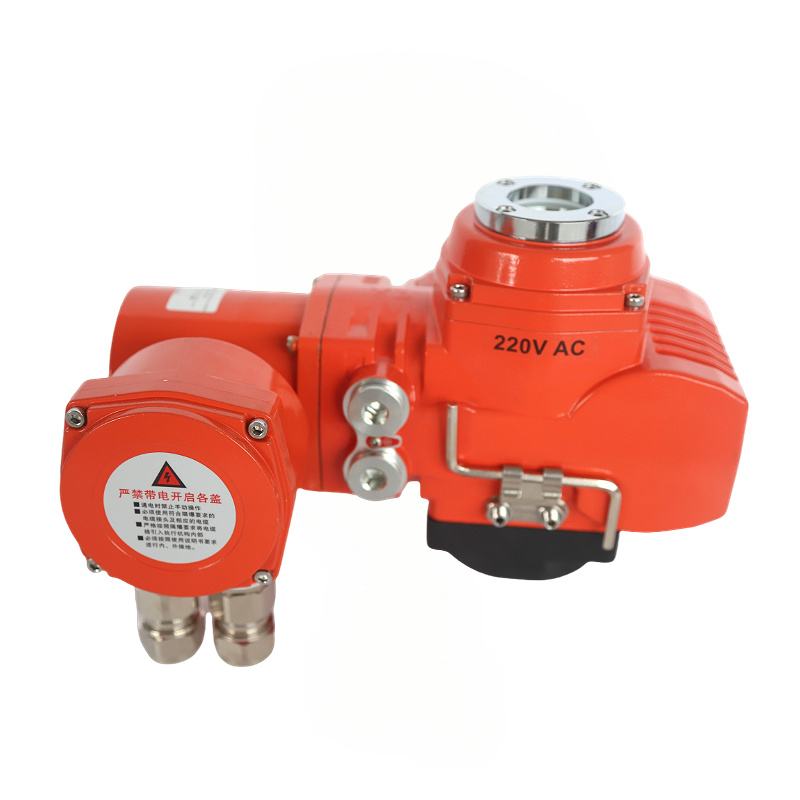
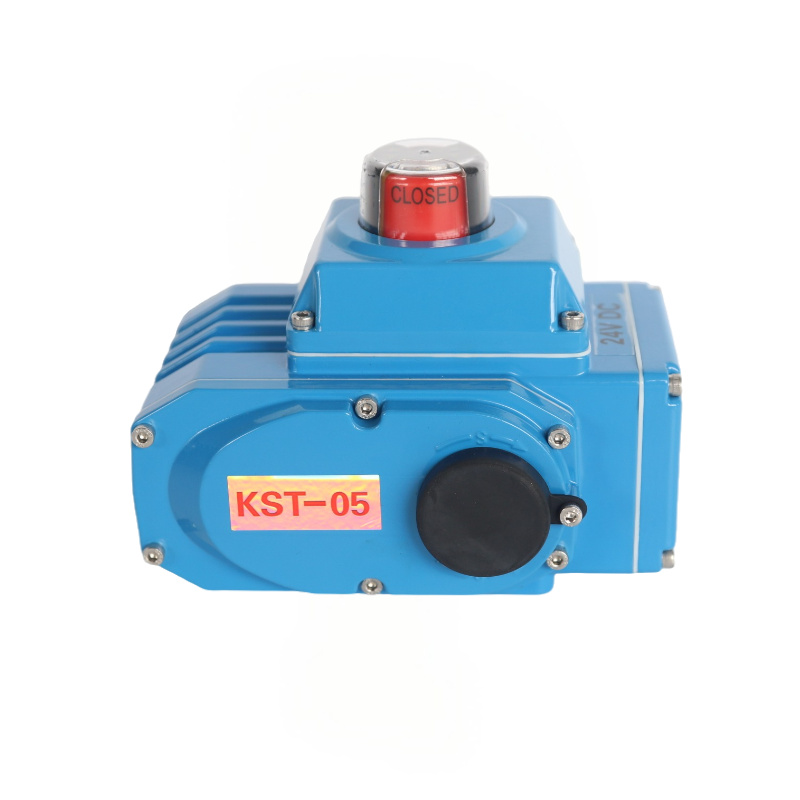
A Electric Valve Actuator is a robust motorized device designed to automate the operation of ball valves in industrial applications. These actuators convert electrical energy into mechanical rotational motion, typically providing quarter-turn (90-degree) operation for ball valves. Heavy duty models are engineered to withstand harsh environmental conditions while delivering consistent performance over extended operational periods.
Modern Electric Valve Actuators offer torque outputs ranging from 347 inch-pounds to over 17,000 inch-pounds, making them suitable for valves of various sizes and pressure ratings. Key features include NEMA 4 watertight housings, corrosion-resistant construction, and thermal overload protection.
Understanding the main components helps ensure proper installation:
Electric Motor: Provides the driving force, typically 120VAC or 24VDC with high starting torque
Gear System: Converts motor speed into high torque output through precision gears
Limit Switches: Automatically stop the motor at fully open and closed positions
Position Indicator: Visual display showing valve position (open/closed)
Housing: Weather-resistant enclosure protecting internal components
ISO 5211 Mounting Interface: Standardized connection between actuator and valve
Electric actuators offer numerous advantages over manual or pneumatic alternatives:
Remote Operation: Control valves from a distance or integrate with automation systems
Precision Control: Accurate positioning for modulating flow control applications
Consistent Performance: Uniform operation regardless of operator variability
No Compressed Air Required: Eliminates need for pneumatic infrastructure
Fail-Safe Options: Can maintain position or move to safe position on power loss
Lower Operating Costs: Minimal maintenance compared to pneumatic systems
Before beginning installation, verify compatibility between your valve and actuator:
| Specification | Requirement | Verification Method |
Mounting Standard | ISO 5211 compliance | Check valve datasheet and actuator specifications |
Torque Rating | Actuator torque > valve breakaway torque | Calculate using valve size and pressure rating |
Voltage Requirements | Match power supply availability | Verify 24VDC, 120VAC, or 240VAC options |
Environmental Rating | NEMA 4/IP67 for outdoor use | Consider installation location conditions |
Valve Size Range | Compatible with actuator output | Refer to manufacturer sizing charts |
Operating Temperature | Within actuator limits (-40°F to 150°F typical) | Review environmental conditions |
The torque capacity must be higher than the required breakaway torque by a certain percentage specified by the ball valve manufacturer. Proper torque selection prevents motor burnout and ensures reliable operation.
Formula for Torque Safety Factor:
Required Actuator Torque = Valve Breakaway Torque × Safety Factor (1.25-1.5)
Complete these preparations before installation:
System Shutdown: Depressurize and drain the pipeline system
Temperature Verification: Allow hot systems to cool to safe handling temperatures
Access Clearance: Ensure adequate space for actuator mounting and future maintenance
Power Availability: Confirm electrical supply meets voltage and amperage requirements
Environmental Protection: Select dry, sheltered location when possible
Documentation Review: Read manufacturer manuals for both valve and actuator
Explore our electric actuators for various industrial applications.
Wrenches: Adjustable wrench and socket set (metric and imperial)
Torque Wrench: For precise fastener tightening (5-25 Nm range typical)
Screwdrivers: Phillips and flathead for terminal connections
Wire Strippers: For preparing electrical connections
Multimeter: For electrical testing and verification
Level: To ensure proper actuator orientation
Thread Sealant: Pipe thread compound or PTFE tape
Electric Valve Actuator (appropriately sized)
Ball valve with ISO 5211 mounting pad
Mounting hardware (bolts, nuts, washers)
Electrical cable (appropriate gauge for voltage and distance)
Conduit and fittings (if required by code)
Wire connectors and terminal blocks
Grounding equipment
Labels and identification tags
Safety glasses
Insulated gloves
Voltage detector/tester
Personal protective equipment (PPE)
Lockout/tagout devices
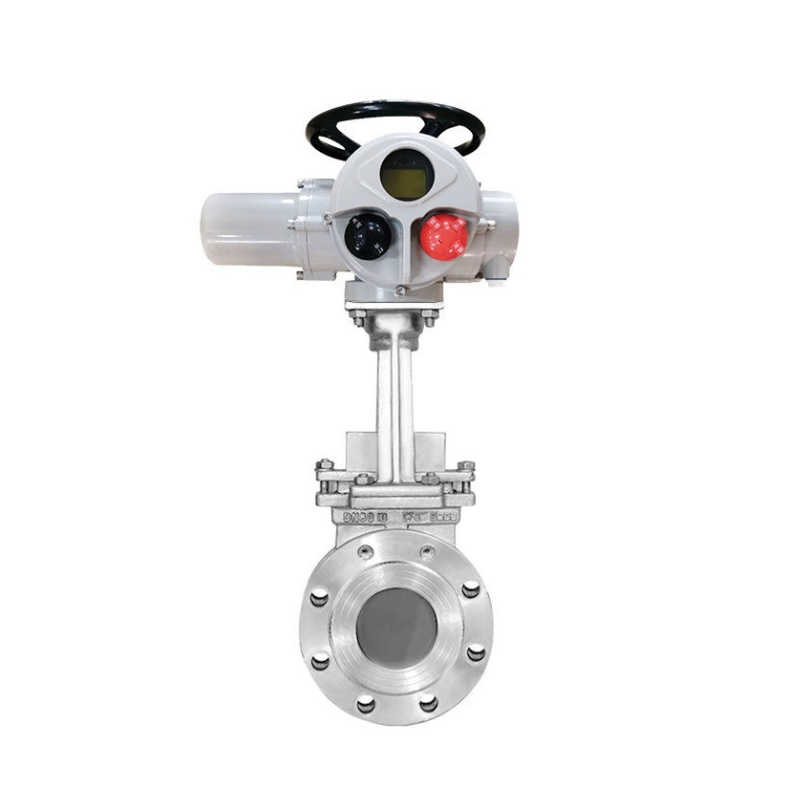 | 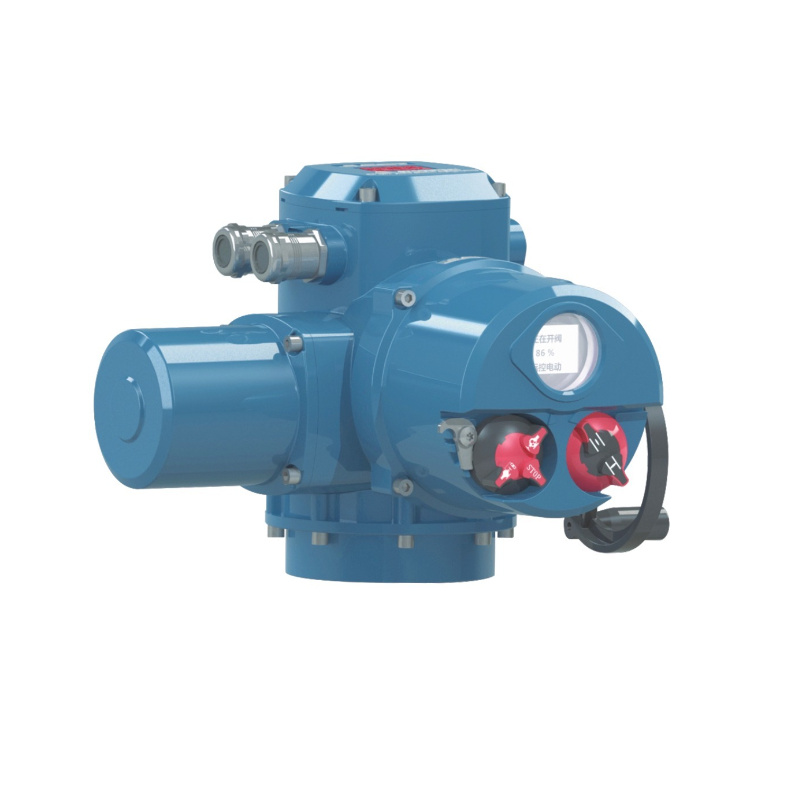 | 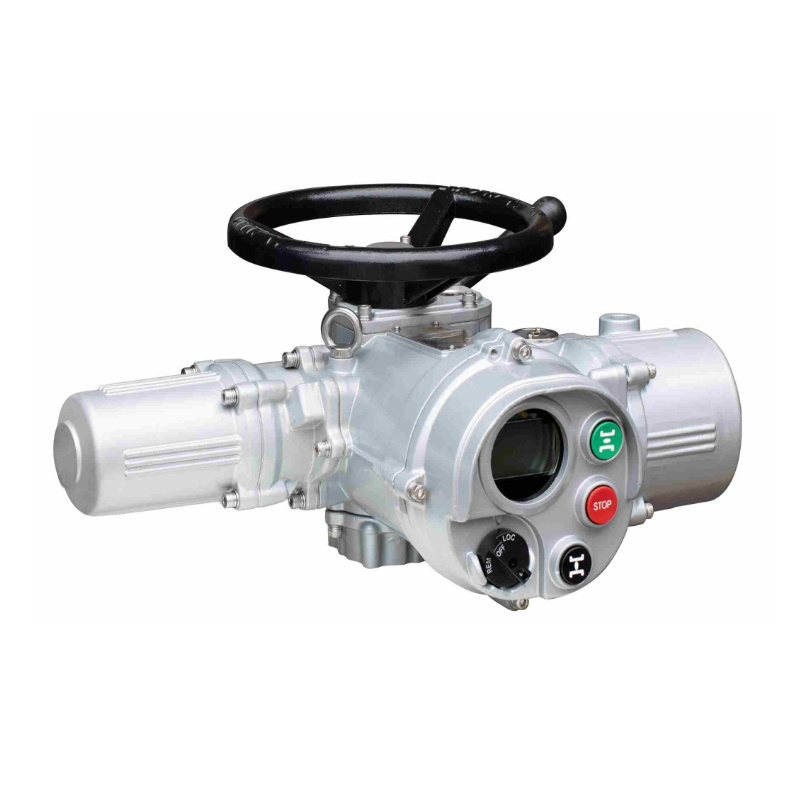 |
Install the ball valve in the pipeline before mounting the actuator:
Position the valve so the actuator faces upward, reducing the risk of moisture collecting in the actuator. If upward mounting isn't possible, the actuator can be oriented up to 90 degrees from vertical.
Installation Procedures:
Inspect valve mounting pad for debris or damage
Verify valve stem position matches actuator requirements
Connect valve to pipeline using appropriate method (threaded, flanged, or welded)
Apply thread sealant to threaded connections, then tighten the valve connections
Confirm valve operates freely by manual handle (if present)
Before mounting, prepare the actuator for installation:
Inspect Actuator Components: Check for shipping damage or missing parts
Verify Electrical Specifications: Confirm voltage matches available power supply
Test Manual Override: Operate manual override mechanism to verify functionality
Position Indicator Check: Ensure position indicator moves freely
Remove Protective Covers: Take off any shipping protection from mounting interface
Proper alignment is critical for optimal performance:
Alignment Process:
Rotate ball valve to known position (typically fully closed)
Align actuator output drive with valve stem
Position actuator so ISO 5211 mounting holes align with valve pad
Insert mounting bolts through actuator into valve mounting pad
Hand-tighten bolts initially to allow minor adjustments
Torque Specifications:
The nut that tightens the actuator to an electric ball valve must not be tightened past its maximum torque. Typical specifications range from 5-15 Nm depending on actuator size.
| Actuator Size | Mounting Bolt Size | Torque Specification |
Small (up to 150 in-lb) | M6 | 5-8 Nm |
Medium (150-600 in-lb) | M8 | 10-12 Nm |
Large (600-2000 in-lb) | M10 | 15-20 Nm |
Heavy Duty (2000+ in-lb) | M12 | 20-25 Nm |
Apply even torque to diagonal bolts in a cross-pattern
Use torque wrench to achieve specified tightness
Verify actuator sits flush against valve mounting pad
Check that no gaps exist between mounting surfaces
Confirm actuator does not rock or move when pressure is applied
Before electrical connection, test mechanical integrity:
Manually operate actuator using override mechanism
Confirm valve moves smoothly through full range of motion
Check position indicator corresponds to actual valve position
Listen for unusual noises indicating misalignment
Verify limit switches engage at correct positions
For multi-turn electric actuators on gate or globe valves, additional yoke assembly may be required to convert rotary motion to linear thrust.
Check our product solutions for application-specific guidance.
Electric actuators require a power source and control signal which can be provided by a manual switch, programmable logic controller (PLC), or process control system.
Typical Wiring Requirements:
Power Lines: Live (L), Neutral (N), and Ground (G/E)
Control Signals: Open, Close, and Common
Position Feedback: Optional for modulating control (4-20mA or 0-10VDC)
Limit Switch Outputs: For remote position indication
Step-by-Step Electrical Installation:
Power Disconnection: Verify power is OFF using voltage tester
Conduit Entry: Remove appropriate knockout plugs from actuator housing
Cable Routing: Route electrical cable through conduit to actuator
Wire Preparation: Strip wire insulation to proper length (typically 10-12mm)
Terminal Connection: Connect wires according to wiring diagram
Standard Wiring Configuration for ON/OFF Control:
| Terminal | Wire Color | Function | Connection |
L or L1 | Black/Brown | Power Live | From power source |
N | Blue | Neutral | From power source |
G or PE | Green/Yellow | Ground | System ground |
COM | White | Common | Control switch |
OPEN | Red | Open Command | Control switch |
CLOSE | Green | Close Command | Control switch |
Lockout/Tagout: Implement proper LOTO procedures before wiring
Code Compliance: Follow national and local electrical codes (NEC, IEC)
Grounding: Ensure proper grounding to prevent electrical shock
Wire Gauge: Use appropriate wire size for voltage and current (typically 14-18 AWG)
Terminal Tightness: Secure all terminal screws to prevent loose connections
Moisture Protection: Seal conduit entries to maintain weatherproof rating
For applications requiring precise flow control, modulating actuators accept analog signals:
Analog Input Configuration:
4-20mA Signal: Two-wire connection (Signal+ and Signal-)
0-10VDC Signal: Three-wire connection (V+, Signal, Common)
Position Feedback: Potentiometer or encoder output for closed-loop control
Consult with a reliable electric actuator manufacturer for specific wiring diagrams for your model.
 |  |  |
Once installation is complete, follow systematic testing protocols:
Pre-Power Checks:
Verify all mounting hardware is tight
Confirm wiring connections match diagram
Check ground connection continuity
Ensure manual override is disengaged
Verify limit switches are properly adjusted
Power-Up Sequence:
Visual Inspection: Verify valve is in known position (typically closed)
Apply Power: Energize system at disconnect or breaker
Observe Indicators: Check power indicator LED illuminates
Test Open Command: Send open signal and observe operation
Monitor Movement: Watch for smooth, continuous motion
Verify Limit Switch: Confirm actuator stops at fully open position
Test Close Command: Send close signal and observe return motion
Confirm Closure: Verify actuator stops at fully closed position
Conduct comprehensive testing to ensure proper operation:
Operating Time Measurement:
Record time required for full stroke (typically 15-45 seconds for quarter-turn). Excessive time may indicate:
Insufficient power supply
Mechanical binding
Incorrect gear ratio
Valve issues requiring attention
Torque Verification:
While difficult to measure in-field, observe these indicators:
Motor completes cycle without tripping overload
No unusual motor noise or vibration
Valve seats firmly without excessive force
Consistent operation through multiple cycles
| Test Item | Expected Result | Pass/Fail |
Power indicator illuminates | LED light shows power present | ☐ |
Open command operates valve | Valve moves to fully open position | ☐ |
Close command operates valve | Valve returns to fully closed position | ☐ |
Position indicator accuracy | Visual indicator matches actual position | ☐ |
Limit switches function | Motor stops at end positions | ☐ |
Manual override operates | Can manually move valve when unpowered | ☐ |
Weatherproof integrity | No moisture in housing | ☐ |
Electrical connections secure | No loose wires or terminals | ☐ |
For automated control systems:
PLC Communication: Verify control signals are received and executed
Position Feedback: Confirm feedback signals match actual position
Alarm Functions: Test any alarm or fault indication circuits
Interlock Verification: Ensure safety interlocks function correctly
Emergency Stop: Test emergency stop functionality if applicable
Regular maintenance extends actuator life and ensures reliability:
Monthly Inspections:
Visual inspection for damage or corrosion
Check position indicator operation
Verify weatherproof seals intact
Listen for unusual operational noises
Quarterly Maintenance:
Clean exterior surfaces and cooling vents
Inspect electrical connections for tightness
Test manual override operation
Verify limit switch adjustment
Record operating times for trend analysis
Annual Service:
Internal inspection (if recommended by manufacturer)
Lubricate gear system per specifications
Test electrical insulation resistance
Calibrate position feedback (if applicable)
Replace worn or damaged components
| Problem | Possible Cause | Solution |
Actuator won't operate | No power supply | Check circuit breaker, verify voltage at terminals |
Motor hums but doesn't move | Mechanical binding | Inspect valve operation, check for debris or damage |
Actuator doesn't reach full travel | Limit switch misadjustment | Adjust limit switch cam positions |
Erratic operation | Loose wiring connections | Tighten all terminal screws, inspect for corrosion |
Motor overheats and trips | Insufficient torque capacity | Verify actuator sizing, check valve for excessive torque |
Position indicator incorrect | Indicator decalibration | Recalibrate or replace position indicator |
Water ingress | Compromised seals | Replace gaskets, check conduit seals |
Slow operation | Low voltage supply | Check voltage at actuator, verify wire gauge adequate |
When problems occur, follow systematic diagnosis:
Document Symptoms: Record specific malfunction details
Check Power Supply: Verify voltage and current availability
Test Manual Operation: Determine if issue is electrical or mechanical
Inspect Connections: Examine all wiring and terminal connections
Review Settings: Confirm limit switches and controls properly configured
Consult Manufacturer: Contact technical support for complex issues
For industrial applications with compact electric actuators, space constraints may require special troubleshooting approaches.
Personnel should always be mindful of working with high voltages and take necessary precautions such as using insulated gloves when applicable.
Critical Safety Practices:
Lockout/Tagout (LOTO): Always implement LOTO before maintenance
Qualified Personnel: Only trained electricians should perform wiring
Arc Flash Protection: Wear appropriate PPE for electrical work
Ground Fault Protection: Use GFCI protection in wet environments
Overcurrent Protection: Ensure proper circuit breaker or fuse sizing
Heavy duty actuators generate significant torque requiring proper precautions:
Pinch Points: Keep hands clear of moving parts during operation
Unexpected Movement: Be aware actuator may move if power is applied
Manual Override Use: Follow procedures when using manual override
Pressure Release: Always depressurize system before valve maintenance
Hot Surfaces: Allow equipment to cool before handling in high-temperature applications
Proper installation procedures prevent injuries and equipment damage:
Proper Lifting: Use appropriate equipment for heavy actuators
Secure Work Area: Establish exclusion zone during installation
Fall Protection: Use safety harnesses when working at heights
Environmental Hazards: Be aware of confined spaces, flammable atmospheres
Emergency Procedures: Have emergency shutdown procedures documented
Ensure installation meets applicable standards:
OSHA Regulations: Follow workplace safety requirements
NEC/IEC Standards: Comply with electrical code requirements
NEMA Ratings: Select appropriate environmental protection level
Industry Standards: Meet API, ANSI, or other relevant specifications
Local Codes: Adhere to municipal electrical and building codes
Installing a Electric Valve Actuator on ball valves is a straightforward process when proper procedures are followed. Success depends on careful planning, correct component selection, precise installation techniques, and thorough testing. By following this comprehensive guide, you can ensure reliable, long-lasting automation of your ball valve systems.
Key takeaways for successful installation:
Proper Sizing: Select actuators with adequate torque and environmental protection
Careful Alignment: Ensure proper mechanical connection between actuator and valve
Correct Wiring: Follow manufacturer diagrams and electrical codes precisely
Comprehensive Testing: Verify all functions before placing system in service
Regular Maintenance: Implement preventive maintenance to extend equipment life
Whether you're working with compact electric actuators for smaller valves or multi-turn electric actuators for complex applications, adherence to industry best practices ensures optimal performance and safety.
For additional support, consult with experienced electric actuator manufacturers who can provide application-specific guidance and technical assistance.
The actuator torque rating should exceed your valve's breakaway torque by 25-50%. Calculate by multiplying the valve manufacturer's stated torque requirement by 1.25-1.5 to provide adequate safety margin. For example, if your valve requires 200 inch-pounds, select an actuator rated for at least 250-300 inch-pounds. Factors affecting torque include valve size, pressure rating, temperature, and service conditions. Always consult valve documentation for specific torque values, as these vary significantly by manufacturer and valve design.
Most modern ball valves are designed for automation with ISO 5211 standardized mounting pads. However, some manual-only valves lack this feature and require retrofit mounting brackets. Before purchasing an actuator, verify your valve has an ISO 5211 mounting pad and determine the mounting size (typically expressed as F05, F07, F10, F12, F14, or F16). The actuator must match both the mounting pad size and provide sufficient torque for the valve size and pressure rating. Older or specialized valves may require custom mounting solutions.
Installation time varies based on valve size and complexity, but typically ranges from 2-4 hours for experienced technicians. Simple installations on smaller valves (2" or less) with accessible wiring may take only 1-2 hours. Larger valves, complex wiring configurations, or challenging installation locations can extend the process to 4-6 hours. Additional time is required for system integration, testing, and documentation. First-time installations generally take longer as familiarity with specific actuator models improves efficiency.
On/off actuators provide simple two-position control (fully open or fully closed) and are used for isolation applications. They're more economical and sufficient for most basic applications. Modulating actuators include electronic positioners that accept analog control signals (4-20mA or 0-10VDC) to position the valve at any point within its range, enabling precise flow control. Modulating actuators cost more but provide superior process control. Choose on/off for simple shutoff applications and modulating when precise flow regulation is required.
Standard electric actuators remain in their last position when power is lost, neither opening nor closing. This "maintain last position" behavior is suitable for many applications. For critical safety applications, spring-return or battery backup options provide fail-safe operation, automatically moving the valve to a predetermined safe position (typically closed) during power failure. When specifying actuators, carefully consider the appropriate fail-safe behavior for your specific application and safety requirements.
About the Author: This guide is provided by experienced automation specialists dedicated to helping industrial professionals successfully implement electric actuator solutions for improved process control and operational efficiency.
Related Resources:


