

Views: 0 Author: Site Editor Publish Time: 2026-07-15 Origin: Site


A Sanitary Butterfly Valve is designed for hygienic flow control in industries that require high cleanliness and reliable performance, such as food, beverage, dairy, and pharmaceutical processing. With a compact structure, excellent sealing performance, and easy cleaning features, it is widely used in sanitary piping systems.
In this guide, you will learn what a sanitary butterfly valve is, how it works, its main components, key benefits, typical applications, and how to choose the right valve for your specific process requirements.
What Is a Sanitary Butterfly Valve?
Main Components of a Sanitary Butterfly Valve
How Does a Sanitary Butterfly Valve Work?
Key Benefits of Sanitary Butterfly Valves
Typical Applications of Sanitary Butterfly Valves
How to Choose the Right Sanitary Butterfly Valve
FAQ
Core keyword: Sanitary Valve , Sanitary Butterfly Valve,Sanitary Motorized Butterfly Valve, Electric Sanitary Butterfly Valve, Hygienic Butterfly Valve, Food Grade Butterfly Valve
A sanitary butterfly valve is a quarter-turn flow control device built from polished stainless steel for hygienic pipelines. Unlike standard industrial valves, a food grade butterfly valve is engineered without dead corners, so bacteria and residue have no place to accumulate.
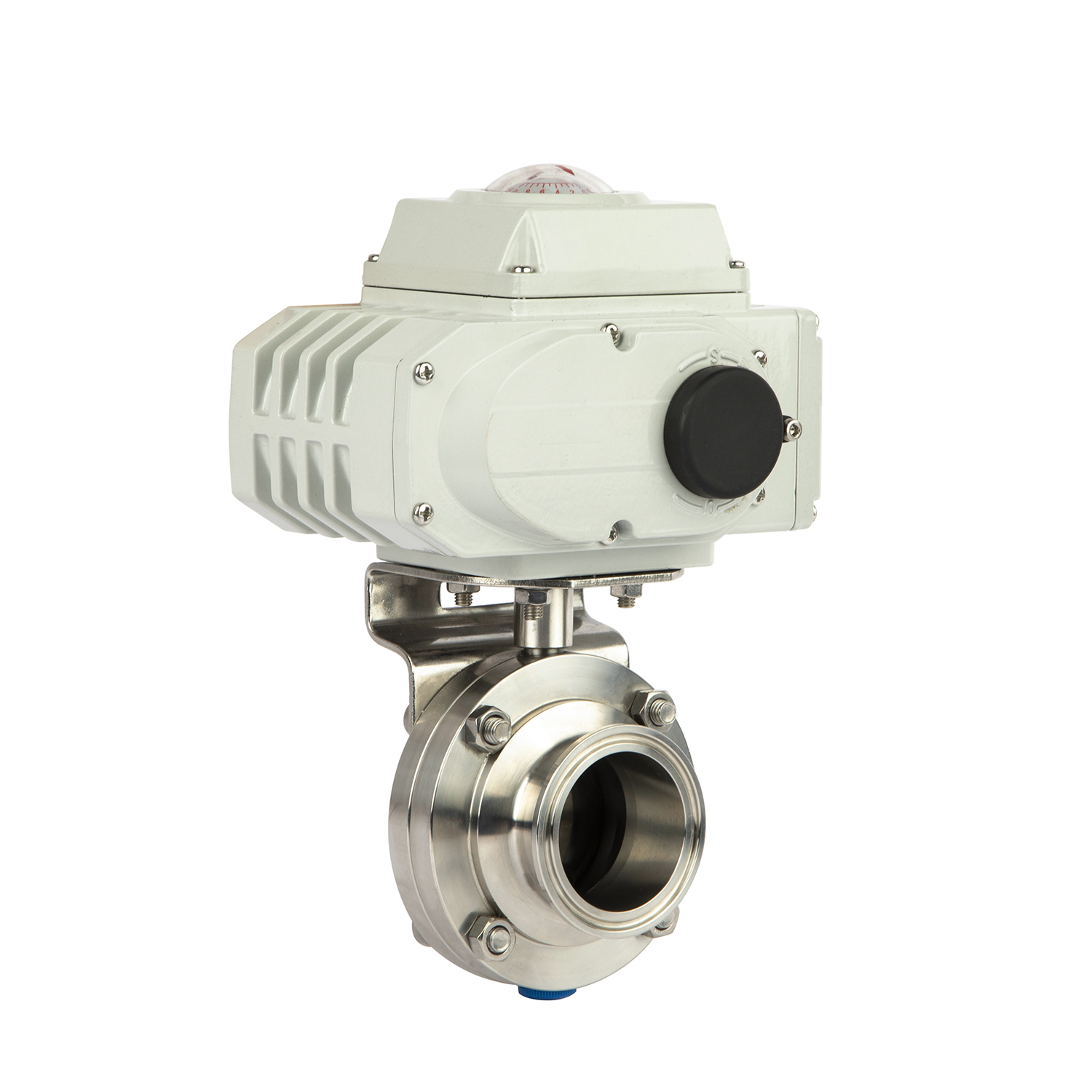
When fitted with an electric actuator, this becomes an electric sanitary butterfly valve — often called a sanitary motorized butterfly valve or hygienic butterfly valve. It replaces manual handles with automated, signal-controlled operation, making it suitable for CIP/SIP-integrated production lines.
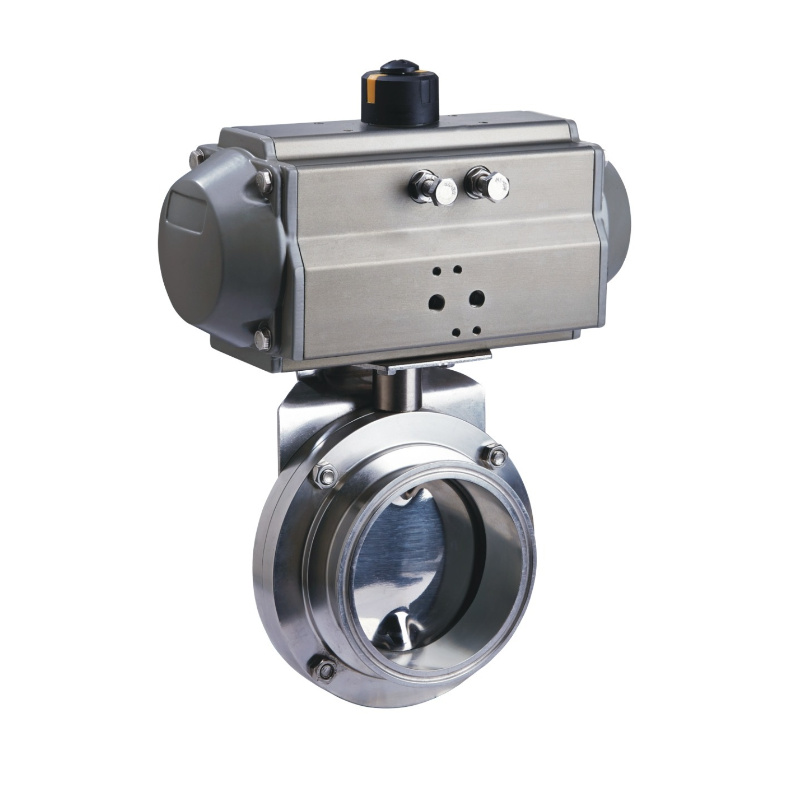
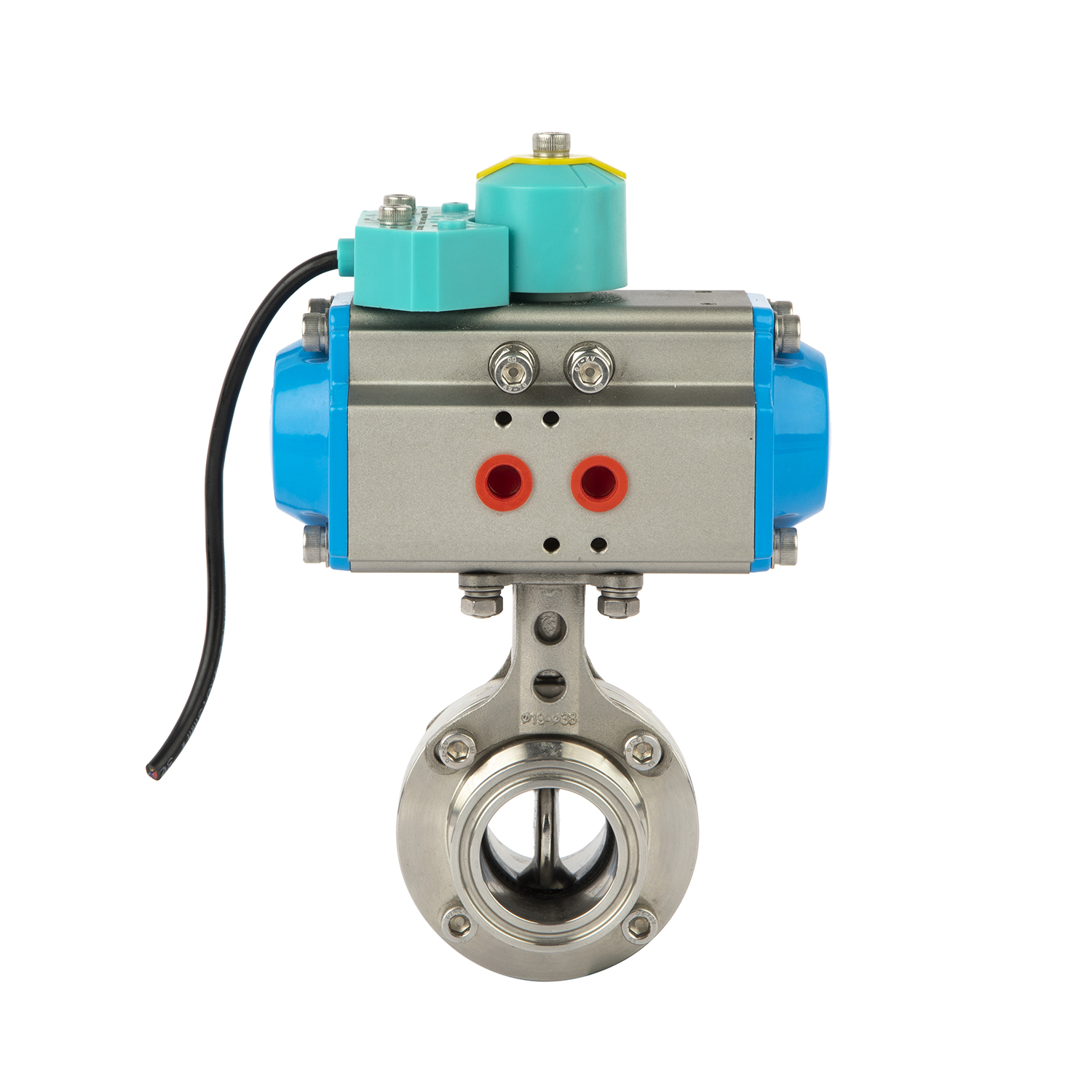
Every sanitary butterfly valve shares a common structure, regardless of actuation type:
| Component | Typical Material | Function |
Valve Body | 304/316L Stainless Steel | Houses the disc; contacts the process fluid |
Disc | 304/316L Stainless Steel | Rotates 90° to open/close flow |
Seal | PTFE, EPDM, FPM, Silicone | Ensures leak-tight shutoff |
Stem | Stainless Steel | Connects actuator to disc |
Actuator | Electric, Pneumatic, or Manual Handle | Drives disc rotation |
The wetted parts are typically finished to Ra ≤ 0.8μm, eliminating microbial harboring points and supporting FDA, 3A, and DIN compliance. Explore the full range of sanitary butterfly valves with different end connections and actuator combinations.
A butterfly valve controls the flow of liquids or gases using a round disk on a rod that turns 90 degrees to open or close. When fully open, the disc sits parallel to flow with minimal resistance; when closed, it seals against the seat.
A motorized butterfly valve operates using an electric actuator (motor) to rotate the valve disc. The actuator receives an electric signal, the motor turns the shaft rotating the disc 0–90 degrees, and limit switches or sensors stop the motor at the desired position. This makes remote and PLC-integrated control possible for automated hygienic lines.
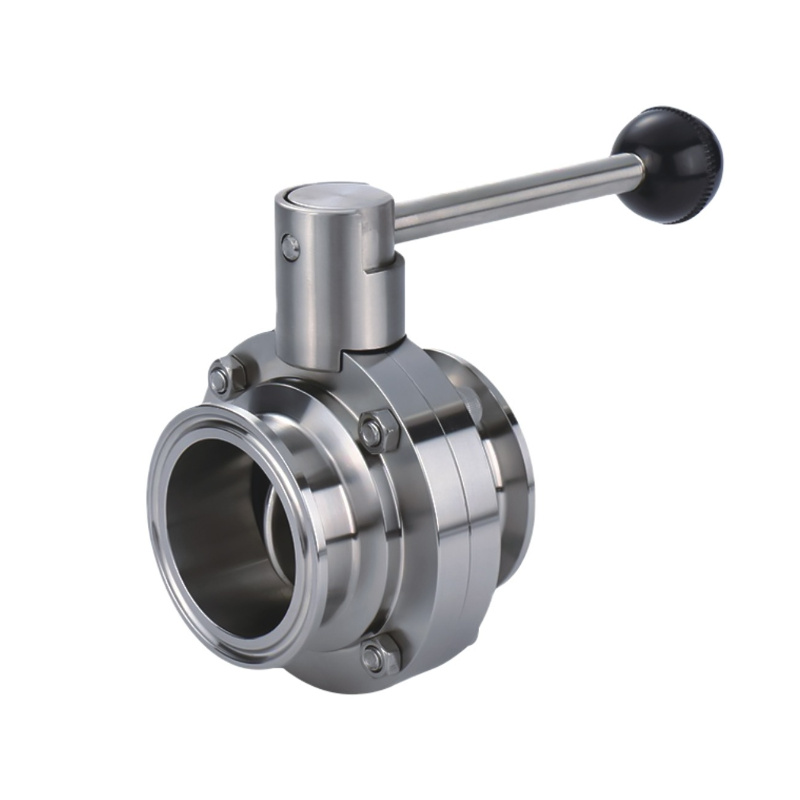
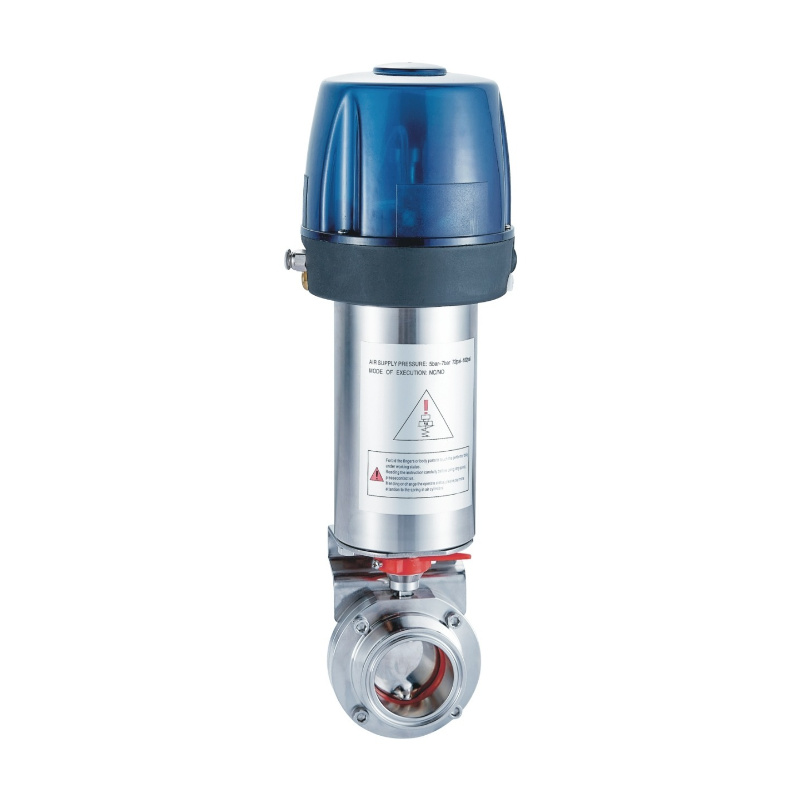
Manual versions use a locking handle for on-site flow adjustment, while pneumatic actuators use compressed air in NO/NC/A-A configurations. KONTE's Pneumatic Vertical Remote Controlled Sanitary Butterfly Valve supports both pneumatic and manual operation on the same platform for flexible system design.
Hygienic and CIP/SIP-Ready: Smooth internal finishes prevent product buildup and support in-line cleaning cycles.
Corrosion Resistant: 316L wetted parts withstand cleaning agents, acids, and CO₂ exposure common in food and pharma processing.
Automation-Friendly: Electric actuated sanitary butterfly valves are known for their excellent performance, ease of automation, and minimal maintenance.
Compact and Cost-Effective: Lightweight construction simplifies installation compared to gate or globe valves, reducing long-term operating costs.
Growing Market Adoption: The global market size for electric actuated sanitary butterfly valves was valued at USD 2.8 billion in 2023, with a projected CAGR of 5.3% between 2024 and 2032. This reflects rising demand for reliable, automated hygienic flow control worldwide.
| Industry | Application Example |
Food, Beverage and Brewing Systems | Bottling lines, mixing tanks, CIP circuits |
Dairy Industry | Milk, cream, and whey transfer |
Pharmaceutical Manufacturing | GMP-compliant, traceable process lines |
Biotechnology | Fermentation and bioreactor fluid handling |
Cosmetic and Personal Care Production | Batch mixing and ingredient transfer |
In the food and beverage industry, these valves are used for processing, brewing, and dairy applications, while in pharmaceuticals they support drug formulation and bioprocessing where contamination risks must be minimized. See KONTE's full industry solutions for tailored valve configurations.
Match the valve to your process conditions before selecting a model:
Media and temperature range — confirm seal material compatibility (EPDM, FPM, Silicone) against working and sterilization temperatures.
Connection type — Tri-clamp, welded, threaded, or flanged ends should match existing piping standards.
Actuation method — manual for occasional use, pneumatic for fast-cycling systems, electric for remote PLC/SCADA control.
Certifications — verify FDA, 3A, DIN, or EN 10204 3.1B traceability requirements for your industry.
Choosing the correct actuation type and material grade prevents downtime and ensures long-term hygienic performance. For manual options, review the Sanitary Stainless Steel Butterfly Valve with Handle, Manual Threaded Sanitary Butterfly Valve, or Manual Welded Sanitary Butterfly Valve.
KONTE, backed by decades of valve manufacturing experience, supports custom configurations across pneumatic, electric, and manual sanitary valve platforms.
Q1: What is the difference between a motorized and pneumatic sanitary butterfly valve?
A motorized valve uses an electric actuator and motor to rotate the disc, ideal for precise, remote-controlled operation. A pneumatic valve uses compressed air and is typically faster for high-cycle applications.
Q2: Is a sanitary motorized butterfly valve suitable for CIP/SIP cleaning?
Yes. Properly designed hygienic butterfly valves with Ra ≤ 0.8μm finishes and FDA-compliant seals support standard CIP and SIP cleaning cycles.
Q3: What materials are used in food grade butterfly valves?
Wetted parts are typically 304 or 316L stainless steel, with seals in PTFE, EPDM, FPM, Silicone, or NBR depending on media compatibility.
Q4: What connection types are available?
Common options include Tri-clamp, welded, threaded, and flanged ends to match various sanitary piping standards.
Q5: Can these valves integrate with PLC or SCADA systems?
Yes. Electric actuators with 24V DC control, position sensors, and solenoid integration allow seamless automation with plant control systems.
Q6: What is the typical working temperature range?
Most sanitary butterfly valves operate between -20°C and +135°C, with short-duration sterilization cycles up to 150°C.


