Views: 0 Author: Lucy Publish Time: 2026-04-10 Origin: Site


As a control valve with a simple structure, rapid opening and closing, and high cost-effectiveness, butterfly valves are widely used in various industrial piping systems. Based on structural design, butterfly valves are mainly categorized into centerline butterfly valves, double eccentric butterfly valves, and triple eccentric butterfly valves. This article briefly analyzes the characteristics of these three structures to help achieve more reasonable selection.
Structural Types and Characteristics of Butterfly Valves
1.1 Centerline Butterfly Valve (Zero Eccentricity)
1.2 Double Eccentric Butterfly Valve
1.3 Triple Eccentric Butterfly Valve
Centerline vs. Double Eccentric vs. Triple Eccentric Butterfly Valves
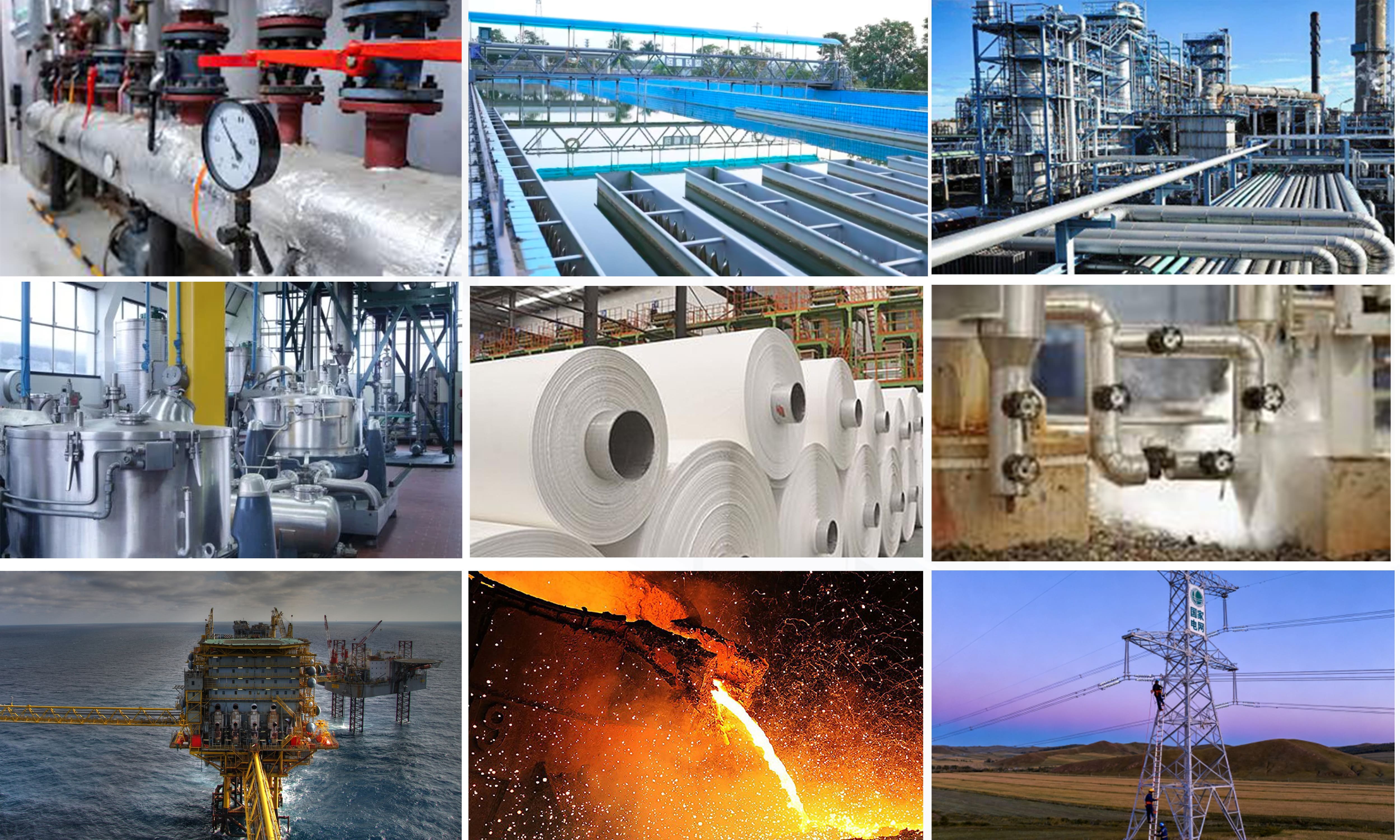
Application Fields of Different Butterfly Valves
3.1 Application Scenarios for Centerline Butterfly Valves
3.2 Application Scenarios for Double Eccentric Butterfly Valves
3.3 Application Scenarios for Triple Eccentric Butterfly Valves
Keywords: Butterfly Valve, Centerline Butterfly Valve, Double Eccentric Butterfly Valve, Triple Eccentric Butterfly Valve, Application
You can watch the following videos to quickly understand:
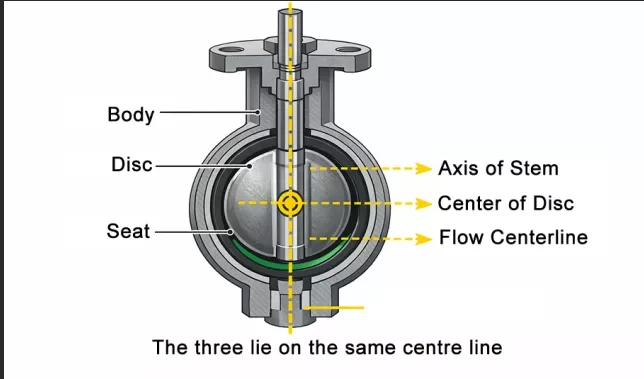
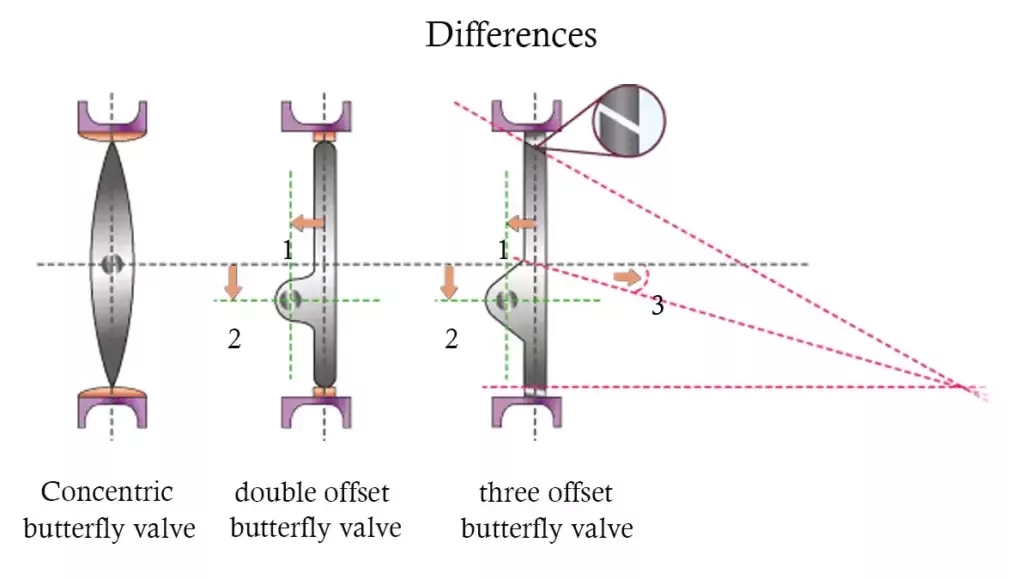
Also known as a "zero-eccentricity" butterfly valve, its defining feature is that the stem axis, the disc center, and the body centerline are all in the same position. This design is simple and relies on the disc squeezing an elastic seat (such as EPDM, PTFE, or NBR) to create an interference fit for sealing.
Characteristics: Because the disc and seat are constantly in a squeezed state, the operating torque is large, and seal wear is relatively fast.
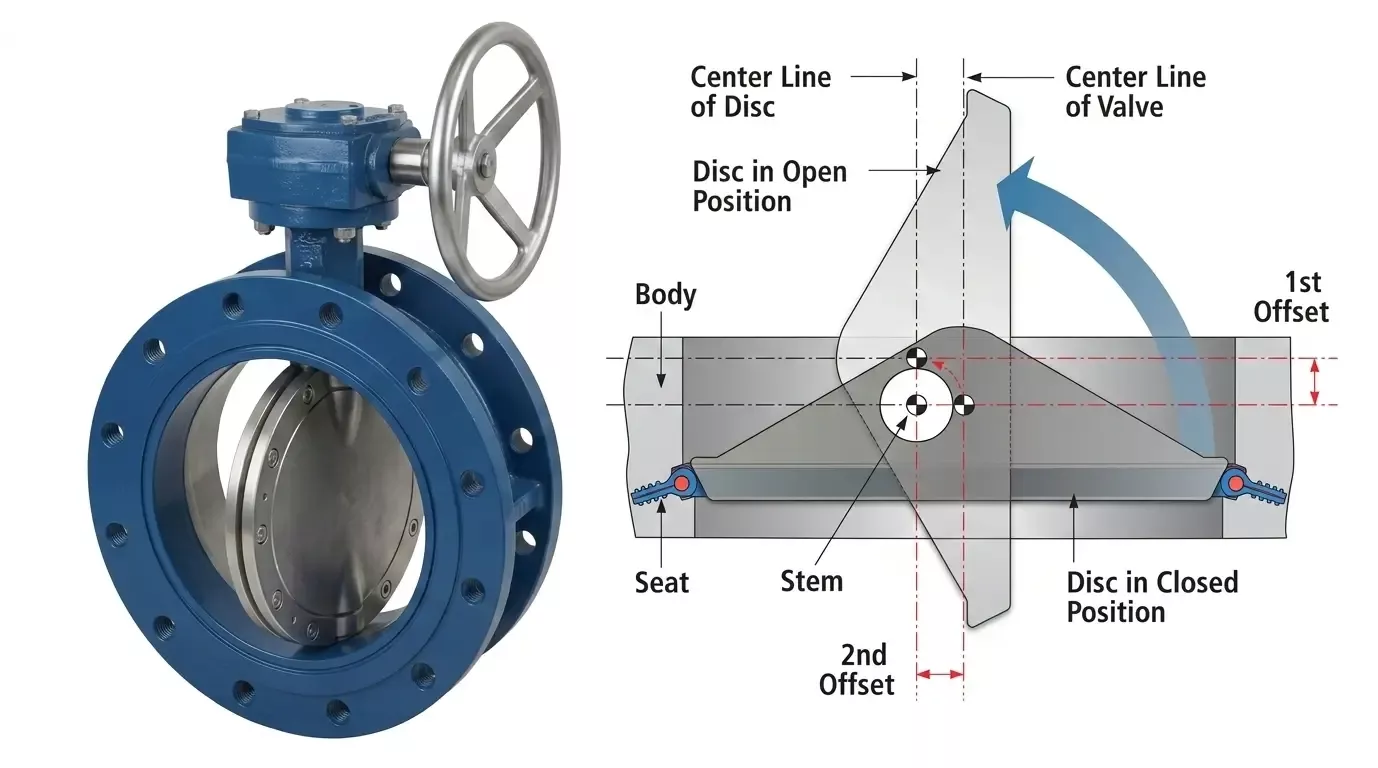
In high-performance conditions, the double eccentric design is the mainstream choice. It incorporates two key offsets:
First Eccentricity: The valve shaft is offset from the centerline of the sealing face.
Second Eccentricity: The valve shaft is offset from the centerline of the valve and the pipeline.
Characteristics: This design allows the disc to rapidly disengage from the seat upon opening, significantly reducing unnecessary friction, lowering torque, and substantially extending the service life of the seal pair.
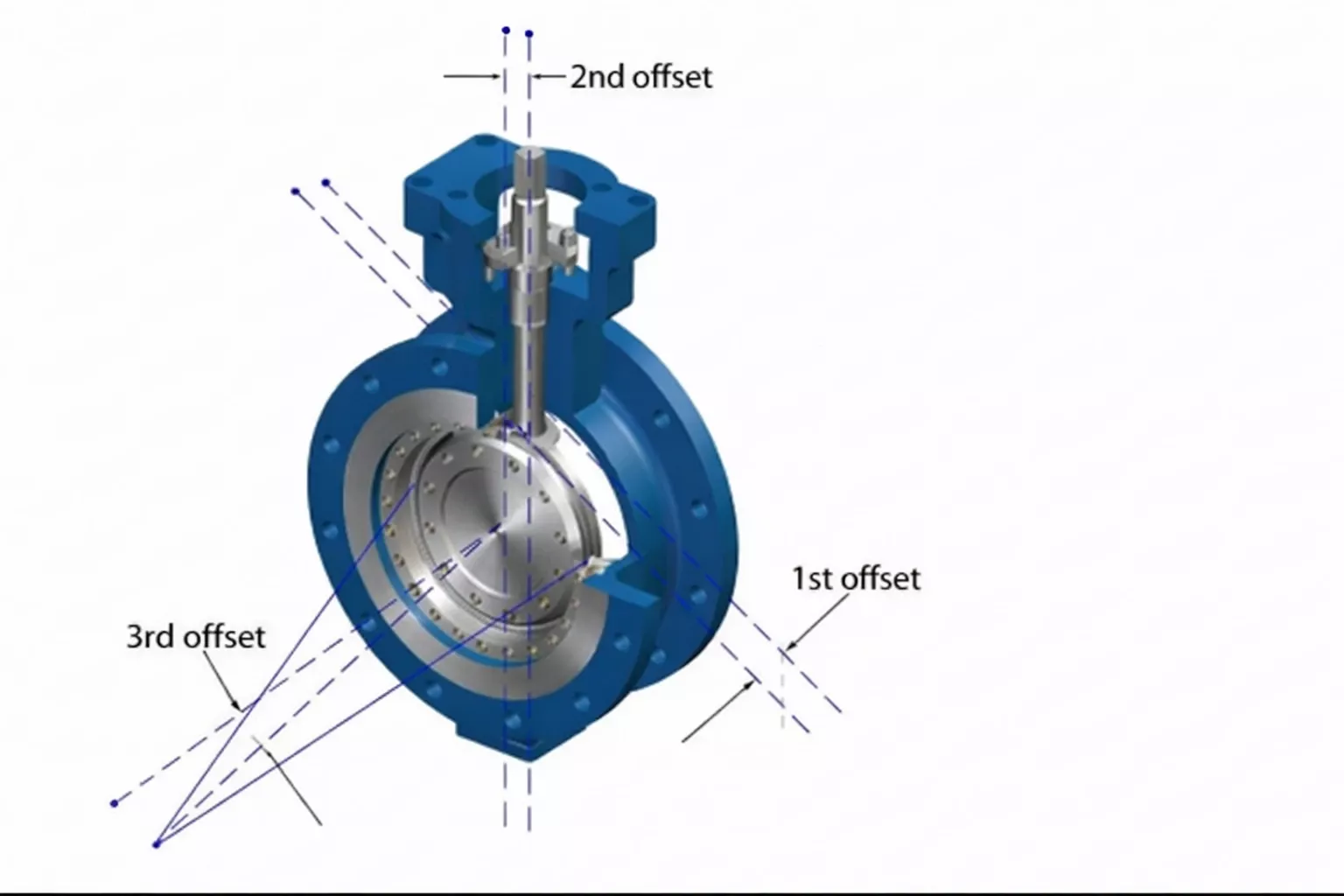
Building upon the double eccentric design, a third offset—the angular eccentricity—is added:
Third Eccentricity: The conical axis of the seat's sealing surface is inclined at an angle to the valve centerline. This means the contact surface of the seal pair is no longer circular but an elliptical geometric shape.
Characteristics: The triple eccentric design achieves a mechanical effect of "sealing upon closure and separation upon disengagement" between the disc and seat, resulting in almost zero friction throughout the stroke. It can be paired with an all-metal hard seal pair to achieve "bubble-tight" bidirectional zero leakage and is inherently fire-safe.
| Feature | Zero Offset | Double Eccentric | Triple Eccentric |
| Structural Principle | The stem axis and the disc center are aligned with the centerline of the body | Offset 1: Stem axis deviates from seat centerline; Offset 2: Stem axis deviates from pipe centerline | Adds Offset 3: The cone axis of the seat sealing surface deviates from the body centerline (angular offset) |
| Sealing Form | Interference compression sealing (Soft seal). | Elastic compensation sealing (Lip-type seal) | Torque Sealing (Metal-to-metal hard seal) |
| Material (Seat) | EPDM, NBR, or FKM (Rubber) | PTFE, RPTFE, or Polymer | Multi-level stainless steel sheet with graphite or solid metal (Stellite) |
| Sealing Feature | Polished spherical design for low torque and Minimal wear | Disc separates from the seat rapidly upon opening, reducing wear and torque. | Friction-free design. Disc only contacts the seat at the moment of closure, achieving "tighter as it closes" |
| Pressure/Temp Rating | Low pressure/temp (PN16-25, up to 180°C with FKM). | Medium pressure/temp (CL150-300, up to 150°C/230°C). | High pressure/temp/cryogenic (CL150-1500, -100°C to 600°C). |
| Core Advantage | Simple structure, low cost, bi-directional sealing | Long service life, low operating torque, fire-safe design. | Bubble-level zero leakage, high wear resistance, can replace gate/globe valves |
Centerline Butterfly Valves offer good sealing performance, low flow resistance, and a simple structure. They are suitable for various conditions such as water treatment, drainage, municipal construction, HVAC, and general industrial pipelines with low to medium pressure and normal temperatures. However, they are not suitable for high-temperature, high-pressure, or small-diameter pipelines.
Double Eccentric Butterfly Valves feature low friction torque, long sealing life, and excellent regulating performance. They are suitable for conditions with specific requirements for opening/closing frequency and reliability, such as wastewater treatment, papermaking, chemicals, and industrial pipelines with medium pressure and temperature. However, they are not suitable for ultra-high temperatures or extremely harsh environments requiring absolute zero leakage.
Triple Eccentric Butterfly Valves are inherently fire-safe, wear-resistant, and capable of "bubble-tight" bidirectional zero leakage. They are suitable for extremely severe conditions, such as oil, natural gas, petrochemicals, power, and metallurgy, as well as extreme industrial pipelines with high temperature, high pressure differential, or cryogenic temperatures. Due to their precise manufacturing process and relatively high cost, they are generally not recommended for low-pressure systems requiring only simple control.