

Views: 0 Author: Site Editor Publish Time: 2026-04-16 Origin: Site


In sterile processing environments, where product purity is paramount, you need absolute certainty. Sanitary sight glasses are the "truth-tellers" of your system, offering a direct window into critical processes without compromising the hygienic barrier. They allow operators to verify flow, color, clarity, and levels in real-time. However, defining the "best" Sanitary Sight Glass involves moving far beyond the initial purchase price. A proper evaluation must weigh performance under specific operating pressures, temperature cycles, and strict adherence to hygiene standards like 3-A and ASME BPE. The cost of failure is steep. An incorrectly specified sight glass can lead to subtle batch contamination from biofilm buildup or, in the worst case, catastrophic glass failure, risking operator safety and massive production losses. This guide will walk you through a technical selection process to ensure you choose the right component for long-term safety and reliability.
Key Takeaways
Categorizing Sanitary Sight Glasses by Application
Design Variations: Union vs. Tri-Clamp
Material Science & Component Selection
Evaluation Criteria for Supplier Selection
Total Cost of Ownership (TCO)
Implementation Risks
Conclusion
FAQ
Application-Specific Selection: Tank sight glasses focus on viewing area; in-line sight glasses focus on flow characteristics.
Material Integrity: 316L Stainless Steel and Borosilicate (or Metaglas®) are industry standards for high-purity environments.
Connection Standards: Tri-clamp remains the most popular for ease of cleaning, while union types offer specific maintenance advantages.
Compliance is Non-Negotiable: Ensure all components meet Ra < 0.8μm surface finish requirements for CIP/SIP efficacy.
The first step in selecting the correct sight glass is understanding its primary function within your process. Will it be mounted on a vessel to monitor levels, or will it be installed in a pipeline to observe fluid dynamics? This distinction fundamentally changes the design priorities.
When you need to see inside a tank, bioreactor, or processing vessel, a sanitary tank sight glass is the component of choice. These are designed to provide a clear, secure viewing port directly into the vessel wall. The two primary configurations are:
Weld-on: These units are permanently welded to the vessel, creating a smooth, crevice-free transition that is ideal for the highest levels of hygiene. They become an integral part of the tank, offering maximum structural integrity.
Bolt-on: Bolt-on or flanged sight glasses offer more flexibility for maintenance and replacement. They are bolted onto a corresponding nozzle on the vessel. While modern designs minimize dead space, careful gasket selection and torque procedures are critical to maintaining a hygienic seal.
The key trade-off here is optimizing the viewing diameter against the structural integrity of the vessel. A larger viewing port is desirable for observation, but it also requires a larger opening in the tank, which must be engineered to withstand the vessel's full pressure and temperature ratings.
When you need to verify processes within a pipeline—such as fluid flow, color changes during mixing, or the effectiveness of a Clean-in-Place (CIP) cycle—you need an in-line sight flow indicator. These are essentially short sections of pipe incorporating a viewing window.
The Tri-clamp Pipe Sanitary Sight Glass is the industry standard for modular pharmaceutical, biotech, and food processing lines. Its primary advantage is rapid disassembly for cleaning, inspection, or replacement without specialized tools. The Tri-clamp connection provides a smooth, non-threaded internal bore that prevents product holdup and facilitates effective sterilization.
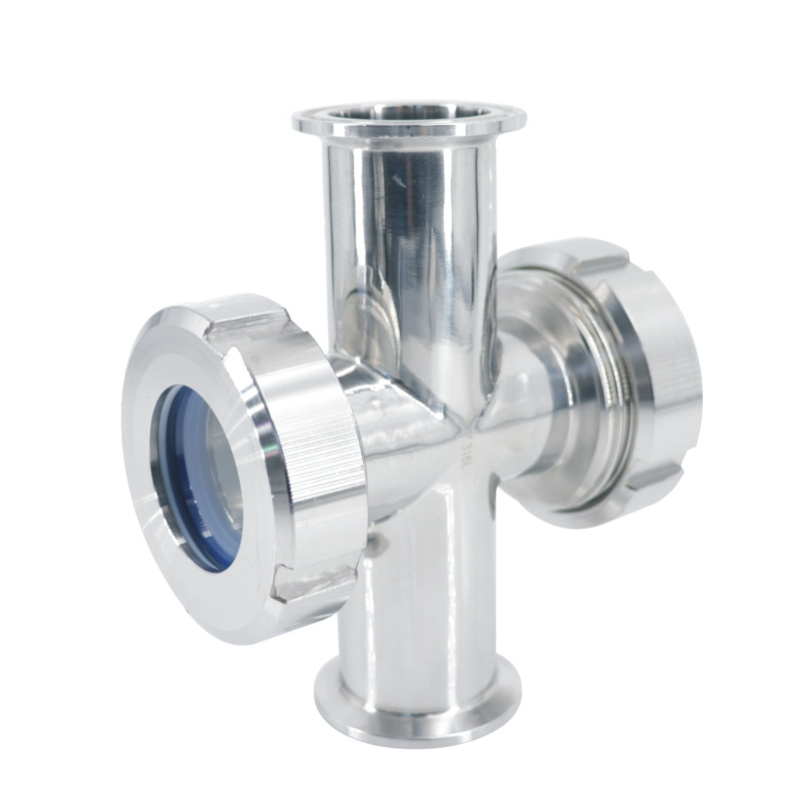
For more complex monitoring needs, a Four-way Sanitary Sight Glass offers unparalleled versatility. Its cross-shaped body provides two opposing windows for backlighting the process fluid, making it easier to see bubbles, particulates, or subtle color shifts. The other two ports can be used for pipeline connections, or one can be fitted with sensors, spray nozzles, or other instrumentation, allowing multi-angle viewing and process integration in a single compact unit.
A Spheroid Sanitary Sight Glass features a unique spherical or domed viewing area. This specialized geometry is excellent for 360-degree observation of flow, particularly in applications involving high-viscosity fluids like syrups, creams, or gels. Its smooth, curved internal profile promotes full drainage, making it a good choice for low-pressure lines where product pooling is a concern.
Beyond the application, the connection style is a critical design choice that impacts maintenance, durability, and suitability for specific process conditions. The two most common styles in sanitary systems are union and Tri-clamp.
A sanitary union sight glass uses a threaded nut to compress a seal, securing the glass within the housing. This robust mechanical connection provides excellent resistance to vibration and mechanical stress, making it a reliable choice for equipment with high-torque pumps or agitators nearby. The design often allows for higher pressure ratings compared to standard Tri-clamp connections of the same size.
For processes where condensation, splashing, or product residue can obscure the view, the Union Type Sanitary Sight Glass With Wiper is an invaluable solution. These models incorporate a manually or automatically operated wiper blade on the internal surface of the glass. This simple feature solves the chronic problem of fogging during steam-heavy operations or residue buildup in sticky processes like chocolate, dairy, or sauce production, ensuring a clear view without interrupting the process.
Tri-clamp connections are considered the "gold standard" for biotech and pharmaceutical applications. Their key advantage is the complete absence of threads in the product contact zone. The connection consists of two ferrules, a gasket, and a clamp that provides uniform pressure to create a secure, crevice-free seal. This design is exceptionally easy to disassemble, clean, and validate, which is crucial in cGMP environments. The ease of gasket replacement also simplifies preventative maintenance schedules.
Choosing between a union and a Tri-clamp style involves balancing ease of maintenance with mechanical robustness. The best choice depends entirely on your operational priorities.
| Feature | Sanitary Union Style | Sanitary Tri-Clamp Style |
|---|---|---|
| Disassembly/Assembly | Requires a wrench; can be slower. | Fast, tool-free operation. Ideal for frequent cleaning. |
| Vibration Resistance | Excellent. The threaded nut provides a secure, vibration-proof connection. | Good, but heavy-duty clamps may be needed in high-vibration areas. |
| Pressure Holding | Generally higher pressure ratings for a given size. | Standard ratings are suitable for most applications; high-pressure clamps are available. |
| Hygienic Design | Very good, but external threads can trap contaminants if not properly cleaned. | Excellent. No exposed threads in the product contact zone. |
| Seal Replacement | More involved process. | Extremely simple and quick. |
The materials used in a sanitary sight glass are just as important as its design. Each component must be able to withstand the process media, cleaning agents, and thermal cycles without degrading or leaching, ensuring product purity and operator safety.
The metal housing provides the structural frame and process connections. For a Stainless Sanitary Sight Glass, the choice of alloy is critical.
SS304: This is a cost-effective choice suitable for general-purpose food and beverage applications where the process media is not highly corrosive (e.g., water, sugar solutions, milk).
SS316L: This is the standard for pharmaceutical, biotech, and more corrosive food applications (e.g., high-salt brines, acidic products). The addition of molybdenum enhances its resistance to chlorides and other corrosive agents, while the "L" denotes low carbon content to prevent sensitization during welding.
Beyond the alloy, the surface finish is non-negotiable. A surface roughness (Ra) value of less than 0.8μm (32μin) is typically required to prevent microbial adhesion and the formation of biofilm, ensuring the sight glass can be effectively cleaned and sterilized.
The window itself must provide clarity, strength, and resistance to thermal shock and chemical attack.
Borosilicate Glass: This is the most common material for sanitary applications. Its low coefficient of thermal expansion makes it highly resistant to thermal shock, a critical feature during Steam-in-Place (SIP) cycles where temperatures can change rapidly. It also offers excellent chemical neutrality against most acids and alkalis.
Fused Glass (Metaglas®): This represents the highest level of safety. Metaglas® is a composite where borosilicate glass is molecularly fused into a stainless steel ring. This process puts the glass under uniform compression, making it extraordinarily resistant to impact, pressure, and thermal stress. Unlike standard glass that can shatter, fused glass typically cracks in a web-like pattern while maintaining its seal, preventing explosive failure and catastrophic process breaches. It is often specified where operator safety is the absolute top priority.
The gasket creates the hygienic seal between the glass and the metal housing. Its material must be compatible with the process fluid, cleaning chemicals, and temperatures. Common choices include:
| Gasket Material | Key Properties | Common Applications |
|---|---|---|
| EPDM (Ethylene Propylene Diene Monomer) | Excellent for hot water and steam. Good resistance to many acids and alkalis. Poor with oils and solvents. | General food & beverage, water-for-injection (WFI) systems. |
| PTFE (Polytetrafluoroethylene) | Virtually inert to all chemicals. Wide temperature range. More rigid, requires proper torquing to seal. | Aggressive chemical processing, high-purity solvents, pharmaceuticals. |
| Silicone | Excellent flexibility and temperature range. Good for food products. Can be susceptible to steam and some chemicals. | Dairy, food processing (oily or fatty products), some pharmaceutical applications. |
For pharmaceutical use, ensure the gasket material is certified to USP Class VI standards, confirming it meets stringent biocompatibility requirements.
Once you understand the technical requirements of your application, the next step is to select a reliable supplier. Vetting potential sanitary sight glass manufacturers goes beyond comparing datasheets; it involves assessing their commitment to quality, compliance, and support.
A reputable manufacturer must provide clear documentation demonstrating compliance with relevant industry standards. Ask for certifications or statements of conformity for:
3-A Sanitary Standards: Ensures the design meets specific criteria for cleanability and inspectability in dairy and food processing.
ASME BPE (Bioprocessing Equipment): A critical standard for the pharmaceutical and biotech industries, specifying materials, design, fabrication, and surface finishes to ensure sterility and cleanability.
Lack of proper documentation is a major red flag and should disqualify a potential supplier immediately.
Standard off-the-shelf products don't always fit complex systems. A top-tier manufacturer can often provide value-added customizations, such as:
Integrating high-intensity LED lighting for better visibility in poorly lit areas or with dark fluids.
Mounting brackets for cameras to enable remote process monitoring and recording.
Offering specialized wipers or spray nozzles integrated into the sight glass assembly.
Demand transparency in quality control processes. Key indicators of a quality-focused manufacturer include:
Pressure Testing Protocols: They should be able to provide test reports showing that each unit is hydrostatically tested to a pressure significantly higher than its stated operating limit.
Material Traceability Reports (MTRs): For all wetted parts (especially SS316L), they must provide MTRs that trace the material back to its original heat lot, confirming its chemical composition and compliance.
A sight glass is a component with wearable parts, namely the glass and gaskets. Before purchasing, assess the manufacturer's supply chain reliability. Ask about standard lead times for replacement glass discs and common gasket types. Extended downtime waiting for a simple replacement gasket can cost far more than the initial price difference between two suppliers.
A smart purchasing decision looks beyond the initial capital expenditure (CAPEX) and considers the total cost of ownership over the component's life cycle. A cheaper sight glass can quickly become more expensive if it leads to increased maintenance or process risks.
Factor in the operational costs associated with the sight glass. For example:
Seal Replacement: How often will gaskets need to be replaced based on your process cycles? A more durable (and slightly more expensive) gasket material might reduce maintenance labor and downtime.
CIP Cycle Time: A well-designed sight glass with a superior surface finish can be cleaned more quickly and effectively, potentially shortening CIP cycles and saving on water, chemicals, and energy.
Understanding how sight glasses can fail allows you to mitigate those risks through proper selection and procedures.
Thermal Shock: This is a primary cause of failure. It occurs when there is a rapid, extreme temperature change, such as introducing cold fluid immediately after a hot SIP cycle. Using borosilicate or, preferably, fused glass significantly reduces this risk. Operator training on gradual temperature changes is also crucial.
Mechanical Stress: Improper installation is a common source of failure. Over-torquing bolts on a bolt-on sight glass can create stress concentrations in the glass, leading to premature cracking. Always follow the manufacturer's specified torque patterns and values.
Investing in advanced features can provide a tangible return on investment. A sight glass with an integrated wiper might cost more upfront, but it can eliminate the need for an operator to manually clean a window, reducing labor costs and preventing a batch from being put on hold due to poor visibility. Similarly, high-intensity lighting can reduce inspection errors, preventing contaminated or out-of-spec product from moving downstream, thereby saving an entire batch from being wasted.
The "best" sanitary sight glass is not a one-size-fits-all product. It is the one that is precisely matched to your specific application, process media, and operational standards. The optimal choice is a careful balance of design, materials, and connection type. As a final recommendation, always prioritize safety, reliability, and hygiene compliance over a small initial cost saving. Investing in a high-quality, properly certified sanitary sight glass from a reputable manufacturer is an investment in your process stability, product quality, and the safety of your personnel. It ensures that your "window" into the process is a source of truth, not a point of failure.
A: A sanitary sight glass is a general term, but it most often refers to a viewing port mounted on a tank or vessel to observe levels or contents. A sight flow indicator, on the other hand, is an in-line device installed directly into a pipeline to allow observation of the fluid moving through it, confirming flow, color, and clarity.
A: Gasket replacement frequency depends heavily on the material, process conditions, and the frequency of Steam-in-Place (SIP) or chemical cleaning cycles. As a best practice, gaskets should be inspected during every maintenance cycle for signs of hardening, cracking, or deformation. A typical preventative maintenance schedule might call for replacement every 6 to 12 months, but this should be adjusted based on real-world wear.
A: No, this is highly discouraged. Industrial sight glasses often have threaded connections, rough surface finishes, and "dead spaces" or crevices where product can become trapped. These areas are impossible to clean effectively and become breeding grounds for bacteria, leading to batch contamination. Always use a sight glass specifically designed and certified for sanitary applications (e.g., 3-A or ASME BPE compliant).
A: Pressure limits vary significantly based on the diameter, glass thickness, temperature, and type of clamp used. Standard Tri-clamp sight glasses are often rated for pressures up to 150 PSI (approx. 10 bar) at ambient temperatures. However, these ratings decrease as temperature increases. For higher pressure applications, heavy-duty clamps and thicker glass configurations are available. Always consult the manufacturer's specific pressure/temperature chart for the exact model.
A: Borosilicate glass has a much lower coefficient of thermal expansion than standard soda-lime glass. This makes it far more resistant to thermal shock, which is the stress caused by rapid temperature changes (like a hot steam flush followed by a cool product rinse). It also offers superior chemical durability against most process fluids and cleaning agents, ensuring it won't leach or corrode over time.


