

Views: 0 Author: Site Editor Publish Time: 2026-07-20 Origin: Site


Electric actuators are widely used in valve automation systems to provide reliable and precise control. With different options including On/Off, Modulating, Intelligent, Multi-turn, Quarter-turn, and Explosion-proof models, choosing the right type is essential. This guide explains electric actuator working principles, types, and selection factors to help you find the best solution for your application.
Table of Contents
1. What Is an Electric Actuator?
2. How Does an Electric Actuator Work?
3. Main Types of Electric Actuators
4. Electric Actuator Types Comparison Table
5. Applications of Electric Actuators
6. How to Select the Right Electric Actuator
7. Why Choose KONTE Electric Actuators
8. FAQ
Core Keyword: Electric Actuator,On/Off Electric Actuator,Modulating Electric Actuator,Intelligent Electric Actuator,Multi-turn Electric Actuator,Explosion-proof Electric Actuator
An electric actuator is a device that converts electrical energy into rotary or linear mechanical motion to automatically open, close, or control industrial valves. It is widely used for electric valve automation, providing precise and reliable operation for ball valves, butterfly valves, gate valves, and control valves.
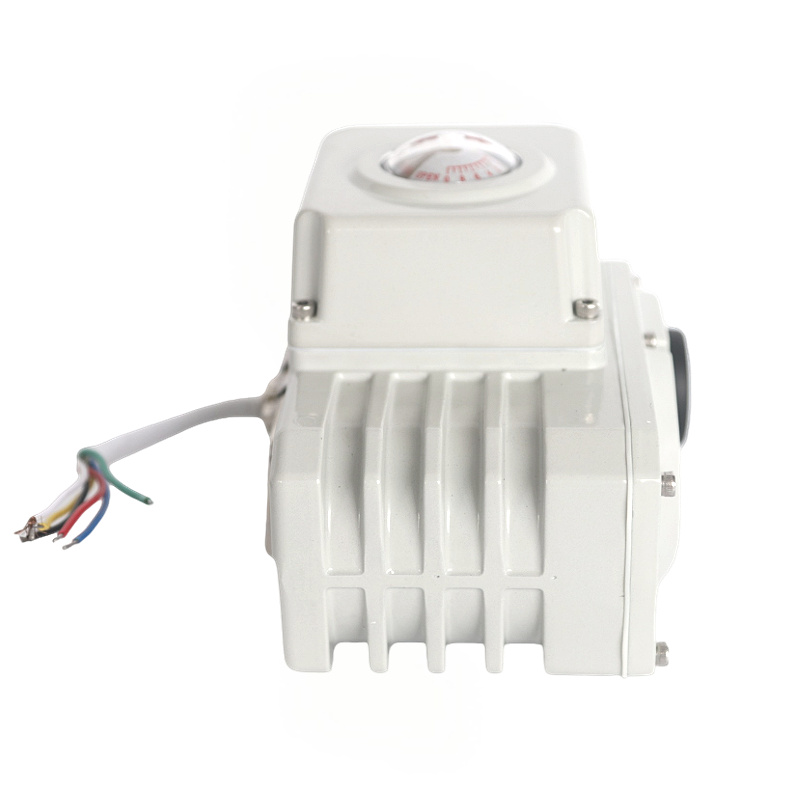
The working principle is simple: the internal motor converts electrical energy into rotational force, which is transmitted through a worm gear mechanism to produce high torque and low-speed output. The output shaft then drives the valve stem or shaft to achieve accurate valve movement, typically with a 90° rotation for quarter-turn valves.
To ensure safe and stable operation, electric actuators are equipped with essential protection features, including electronic and mechanical limit switches to prevent overtravel, and a self-locking worm gear system that maintains valve position even during power failure.
An on/off electric actuator performs simple open and close operations using a switching signal. It is the most cost-effective choice for pipelines that only require full-open or full-close control, such as isolation valves in water distribution.

A modulating electric actuator accepts a 4–20mA current or 0–10VDC voltage signal and positions the valve at any angle between 0° and 90°. It is essential for processes that demand precise flow, pressure, or temperature regulation. The Compact Electric Actuator supports both control modes with IP67 protection.
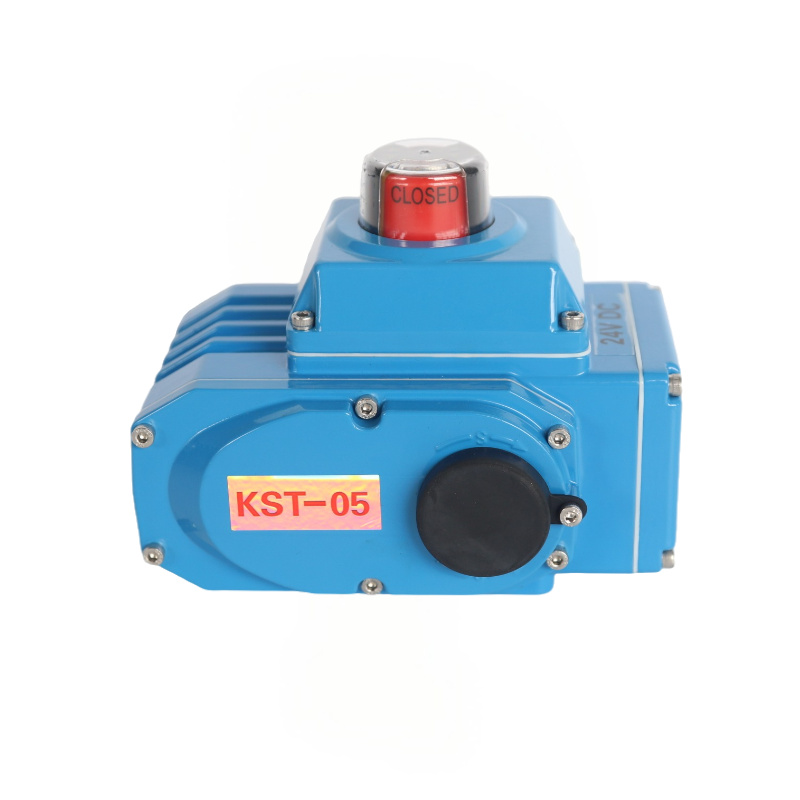
An intelligent electric actuator integrates a digital control module for self-diagnosis, digital tuning, and non-invasive commissioning. It reduces setup time and enables remote monitoring in automated production lines. KONTE's Smart Type Electric Actuator complies with JB/T 8219-2016 and offers factory-preset travel times from 9s to 100s. See the full Smart-Type series for specifications.
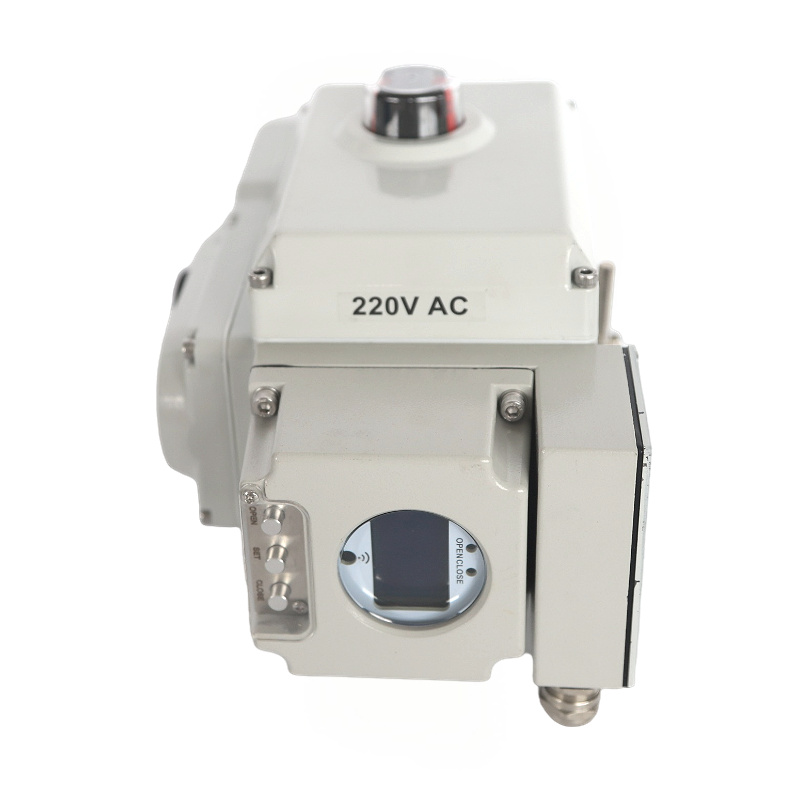
A multi-turn electric actuator rotates the valve stem through multiple revolutions, making it suitable for gate valves and globe valves that require linear stem travel. Choose multi-turn models when quarter-turn output cannot fully stroke the valve.
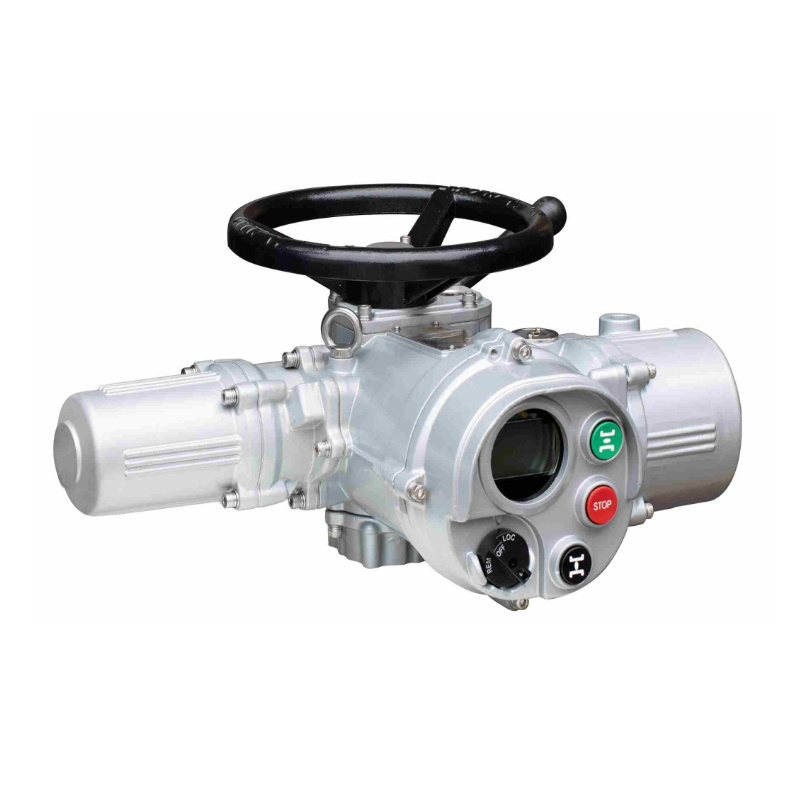
An explosion-proof electric actuator uses a flameproof (Exd) enclosure to contain internal ignition, certified to Exd IIC T5 Gb per IEC 60079 standards. It is mandatory in hazardous areas where flammable gases may be present, such as refineries and offshore platforms. The KST-Ex05 Intelligent Explosion-Proof Electric Actuator delivers 50–1000 N·m torque, while the Premium Explosion-Proof Electric Actuator adds optional IP68 protection.
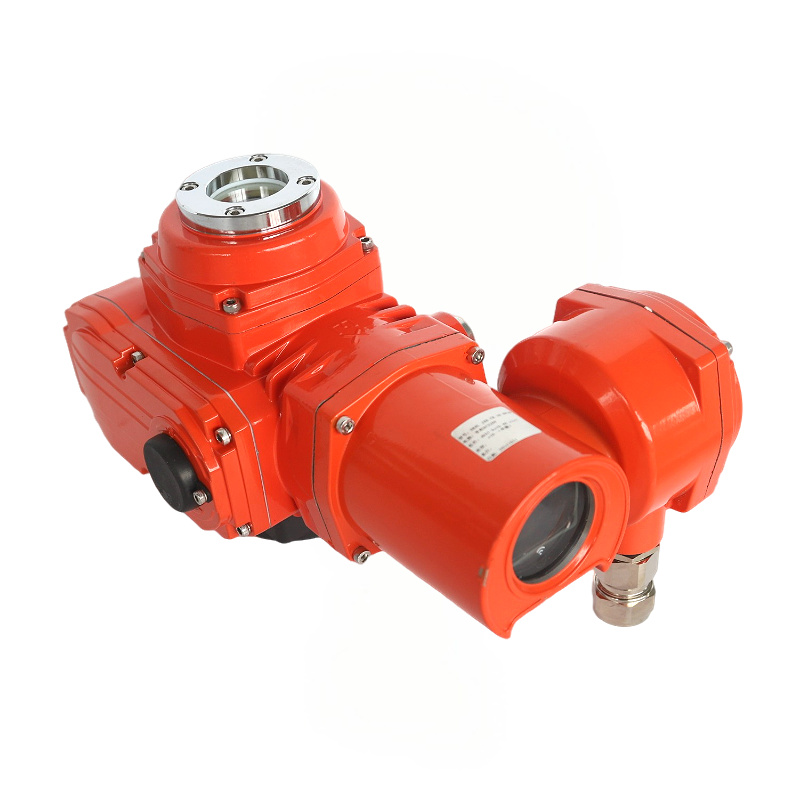
Electric actuators are available in different models to meet various valve automation requirements.The following table compares the key features of On/Off, Modulating, Intelligent, Multi-turn, and Explosion-proof electric actuators.
| Type | Control Signal | Typical Valves | Typical Application |
On/Off | Switching signal | Ball, butterfly | Water treatment system |
Modulating | 4–20mA / 0–10VDC | Control, butterfly | Chemical dosing, HVAC |
Intelligent | Digital + analog | Ball, butterfly, plug | Automated production lines |
Multi-turn | Switching / analog | Gate, globe | Power plants, pipelines |
Explosion-proof | Switching / 4–20mA | Ball, butterfly, plug | Oil & gas pipeline |
Electric actuators are widely used in valve automation systems to achieve reliable, accurate, and efficient flow control. Since different valves and industries have different operating requirements, selecting the right electric actuator model is essential for ensuring stable performance, improving automation efficiency, and extending service life.
Generally, electric actuator applications can be divided into two aspects: actuator selection based on valve type and actuator selection based on industrial application scenarios.
Different valves require different operating methods and torque requirements. Therefore, selecting an electric actuator according to valve structure and movement characteristics helps achieve better control performance and more reliable operation.
Butterfly valves are quarter-turn valves that require only a 90° rotation to achieve full opening and closing. Therefore, quarter-turn electric actuators are the most commonly used solution for butterfly valve automation.
For butterfly valve applications, quarter-turn, On/Off, and Modulating electric actuators are commonly selected for water treatment systems, HVAC systems, industrial pipelines, and cooling water systems where reliable flow control is required.

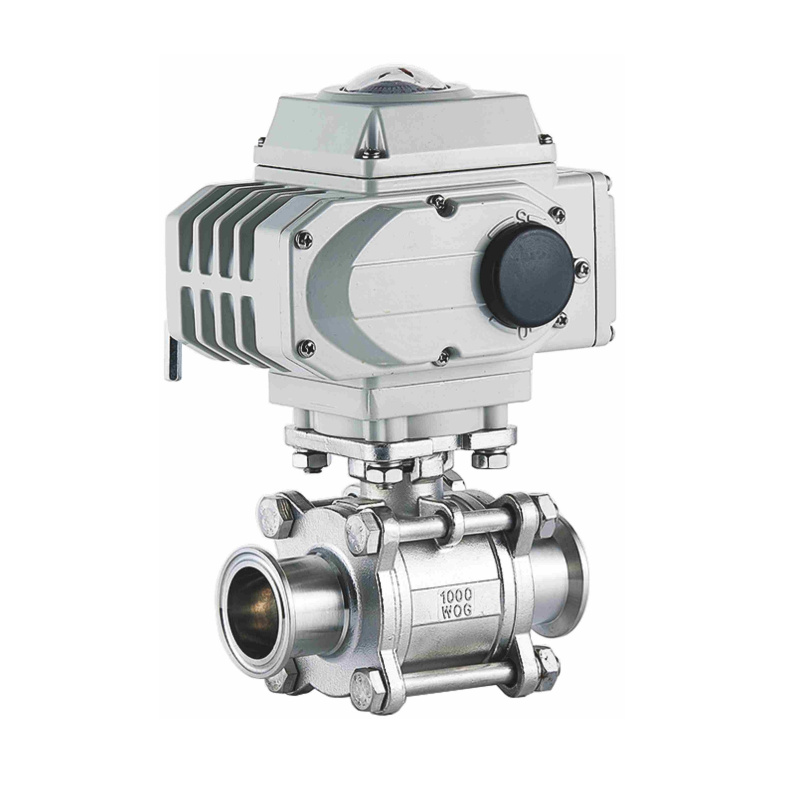
Ball valves also operate through a 90° rotary movement, making quarter-turn electric actuators an ideal solution for compact and efficient valve automation.
For ball valve automation, quarter-turn, explosion-proof, and intelligent electric actuators are widely used in oil & gas pipelines, chemical processing systems, fuel systems, and industrial automation applications.
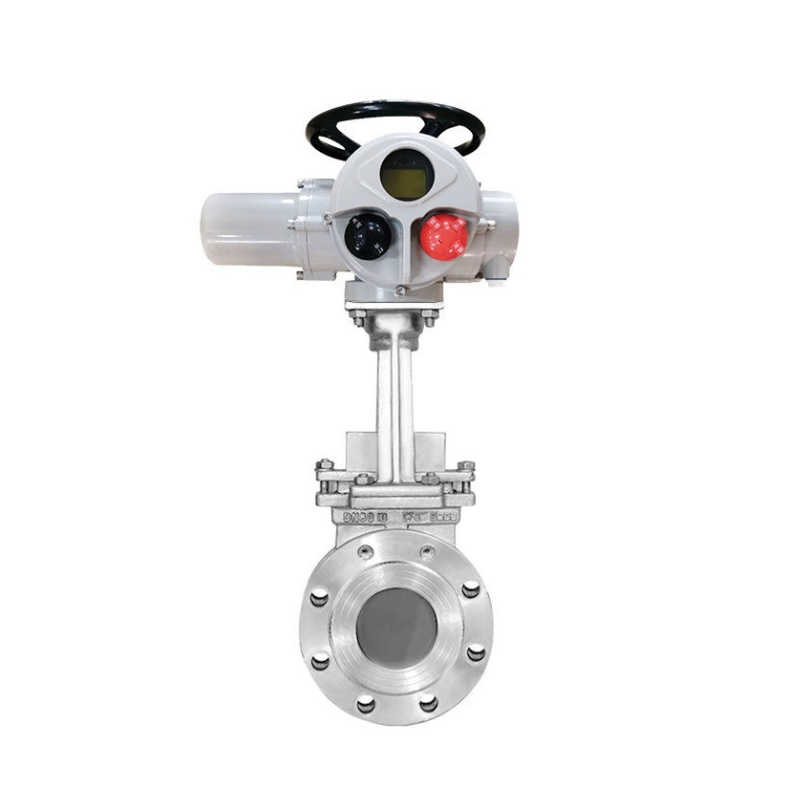
Gate valves require multiple rotations to move the valve stem between open and closed positions. Therefore, multi-turn electric actuators are designed to provide sufficient torque and travel distance.
For gate valve applications, multi-turn electric actuators are commonly used in large pipeline systems, power plants, water supply networks, and energy industries that require reliable valve operation.
Control valves are mainly used for precise flow regulation. Because these applications require accurate positioning, modulating electric actuators with feedback signals are commonly selected.
For precise process control, Modulating and Intelligent electric actuators are widely applied in chemical production lines, steam control systems, and industrial automation processes requiring continuous valve adjustment.

In addition to valve type selection, electric actuators are widely applied across various industries where automated valve control, remote operation, and precise regulation are required.
Different industries may require specific actuator features, such as explosion-proof protection, intelligent control, or modulating adjustment, depending on their working environment.
In water treatment applications, electric actuators are commonly installed on butterfly valves and ball valves to automate water flow control, filtration, and distribution processes.
In this industry, On/Off and Modulating electric actuators are commonly used for water intake systems, wastewater treatment plants, pump stations, and filtration systems to achieve efficient flow management.
The oil and gas industry requires reliable valve automation solutions, especially in hazardous environments where safety is a critical concern. Explosion-proof electric actuators are designed to operate safely in areas with flammable gases or vapors.
In oil and gas applications, Explosion-proof and Intelligent electric actuators are widely used for oil pipelines, natural gas systems, storage tanks, and refinery equipment where safety and reliability are essential.
Chemical and petrochemical processes often involve corrosive media, strict flow control requirements, and demanding operating conditions. Therefore, precise and durable electric actuator solutions are essential.
For chemical applications, Modulating and Explosion-proof electric actuators are commonly applied in chemical processing equipment, corrosive media pipelines, petrochemical production lines, and reaction systems.
In food and beverage production, electric actuators improve automation efficiency, process consistency, and production reliability while supporting modern production systems.
For food and beverage applications, Intelligent and On/Off electric actuators are commonly used in beverage filling systems, dairy processing equipment, CIP cleaning systems, and production pipelines.
Pharmaceutical and biotechnology industries require high precision, cleanliness, and reliable process control. Intelligent electric actuators provide accurate positioning, signal feedback, and easy integration with automated systems.
In pharmaceutical applications, Intelligent and Modulating electric actuators are widely used for pure water systems, bio-pharmaceutical equipment, and sterile processing systems requiring precise control.
Match the actuator torque to the valve's maximum operating torque with a 20–30% safety margin. KONTE electric actuators cover 50–1000 N·m with 90° ±1° accuracy, and 270° rotation is optional.
Confirm your site voltage first: AC220V, AC380V, DC24V, or DC220V. Selecting an actuator compatible with your existing control system eliminates costly signal converters.
Standard IP67 handles outdoor installation; IP68 suits flood-prone areas. For hazardous zones, an explosion-proof electric actuator with Exd IIC certification is required. Always verify the ambient temperature range (-25°C to +60°C) against site conditions.
On/off duty is rated S2-15 min, while modulating duty requires S4-50%. A service life above 20,000 cycles (per JB/T 8862-2014) ensures low total cost of ownership.
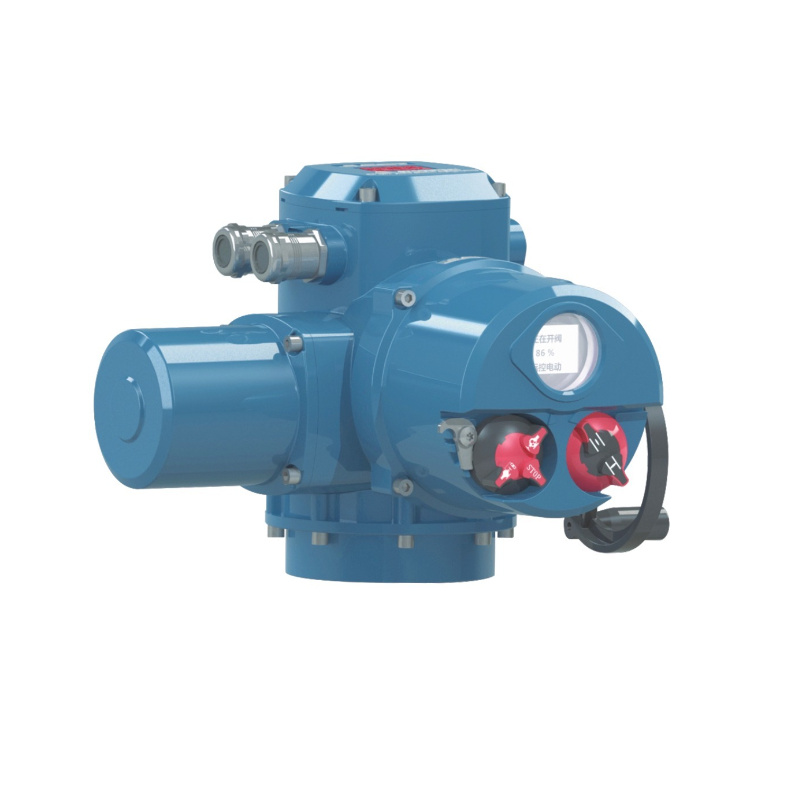
KONTE is backed by over 30 years of manufacturing expertise from Kangsaite Automation Group (KST), with products exported to more than 60 countries. All actuators are certified to ISO9001, CE, ATEX, and SIL standards, with 100% inspection before shipment. OEM/ODM services cover custom voltage, torque, travel time, and private labeling. Learn more on our company profile.
Q1: What is the difference between an on/off and a modulating electric actuator?
An on/off type only opens or closes the valve fully, while a modulating type positions the valve at any angle using a 4–20mA or 0–10VDC signal.
Q2: Can electric actuators be used in hazardous areas?
Yes. Choose an explosion-proof electric actuator rated Exd IIC T5 Gb, such as the KST-Ex05, for environments with flammable gases.
Q3: What torque range do KONTE electric actuators cover?
Standard models cover 50–1000 N·m. Custom torque configurations are available for special projects.
Q4: What control signals are supported?
Switching signals, 4–20mA current signals, and 0–10VDC voltage signals, with optional optical isolation.
Q5: Can the actuator be installed at any angle?
Yes. KONTE actuators support 360° installation at any angle and require no lubrication or regular inspection.
Q6: Do you offer OEM/ODM customization?
Yes. KONTE provides custom voltage, control logic, branding, and packaging for bulk orders.


