

Views: 0 Author: Site Editor Publish Time: 2025-11-21 Origin: Site


In industries where hygiene, precision, and reliability are paramount, the right valve choice can significantly impact product quality and operational efficiency. Sanitary ball valves have emerged as a key solution for food, beverage, dairy, pharmaceutical, and biotechnology applications, ensuring safe, efficient, and contamination-free flow control. Designed with smooth surfaces, corrosion-resistant materials, and versatile actuation options, these valves support both manual and automated operations while complying with strict sanitation standards. By understanding the types, features, and applications of sanitary ball valves, engineers and facility operators can make informed decisions that enhance performance, safety, and regulatory compliance.
What Are Sanitary Ball Valves?
Applications of Sanitary Ball Valves
Advantages of Using Sanitary Ball Valves
How to Choose the Right Sanitary Ball Valve
Comparison Table of Popular Sanitary Ball Valve Types
Maintenance and Installation Tips
In industries that demand hygienic, precise, and reliable flow control, choosing the right valve is critical. Sanitary ball valves have become the preferred solution for food processing, beverage production, dairy operations, pharmaceuticals, biotechnology, and other sensitive applications. They provide not only superior flow control and tight shut-off but also meet strict sanitation requirements that prevent contamination and ensure product safety.
With increasing global demand for hygienic equipment, companies often look for trustworthy sanitary ball valves suppliers who can deliver high-quality valves that combine durability, efficiency, and compliance. In this article, we provide an in-depth overview of sanitary ball valves, including types, applications, benefits, selection criteria, and maintenance tips. We also include a detailed comparison table of the most common valve types and answer frequently asked questions to guide engineers, procurement managers, and facility operators.
A sanitary ball valve is a type of valve specifically designed for applications that require strict hygiene standards. Unlike standard industrial ball valves, sanitary valves have smooth internal surfaces, corrosion-resistant materials, and designs that allow easy cleaning and maintenance.
Sanitary ball valves are essential for industries where contamination could compromise product quality or violate regulatory standards. Their reliability, precise flow control, and versatility make them a key component in modern hygienic processing systems.
Hygienic Design – Smooth internal surfaces minimize bacteria accumulation and contamination risks.
Durability – Stainless steel construction ensures corrosion resistance and long service life.
Precision Control – Accurate flow control with consistent shut-off performance.
Multiple Actuation Options – Manual, pneumatic, or electric actuators allow flexibility for various automation needs.
Versatile Connections – Tri-clamp, threaded, or welded ends support different piping systems.
Compact and Space-Saving – Optimized design for installations with limited space.
Sanitary ball valves are commonly made from stainless steel 304 or 316, which ensures chemical resistance and compliance with food and pharmaceutical standards. Seals are usually PTFE or FDA-approved elastomers, providing leak-proof performance while maintaining sanitary integrity.
The polished surfaces of sanitary ball valves make them suitable for clean-in-place (CIP) or steam-in-place (SIP) cleaning, critical in food, beverage, and pharmaceutical environments.
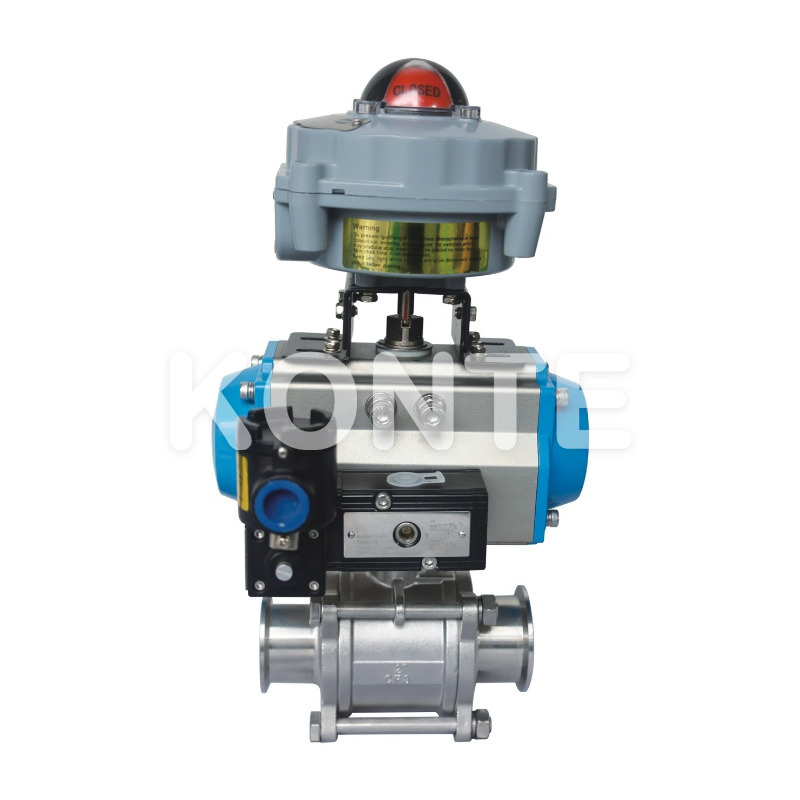
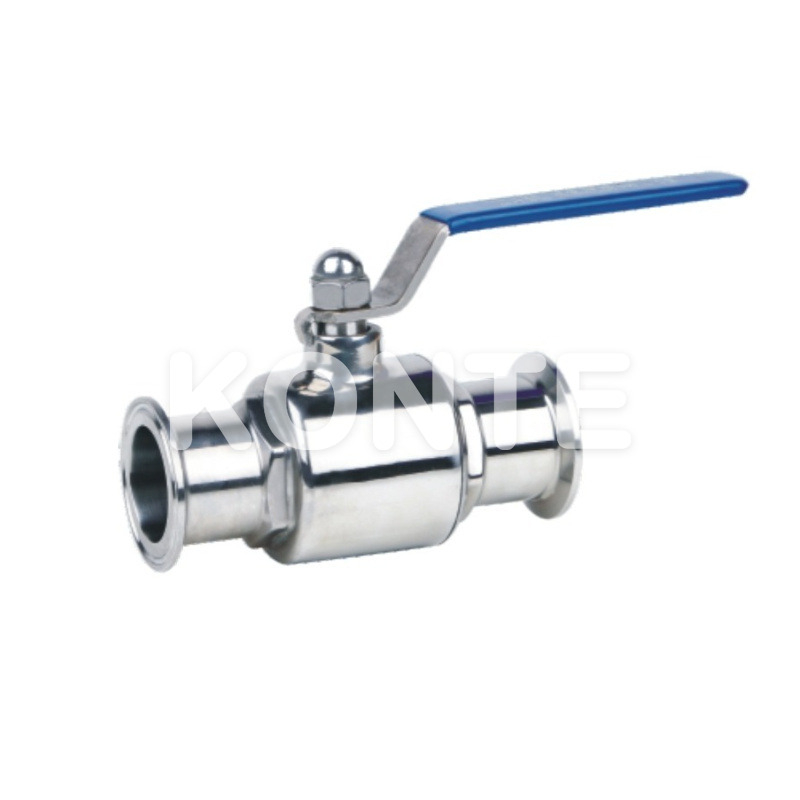
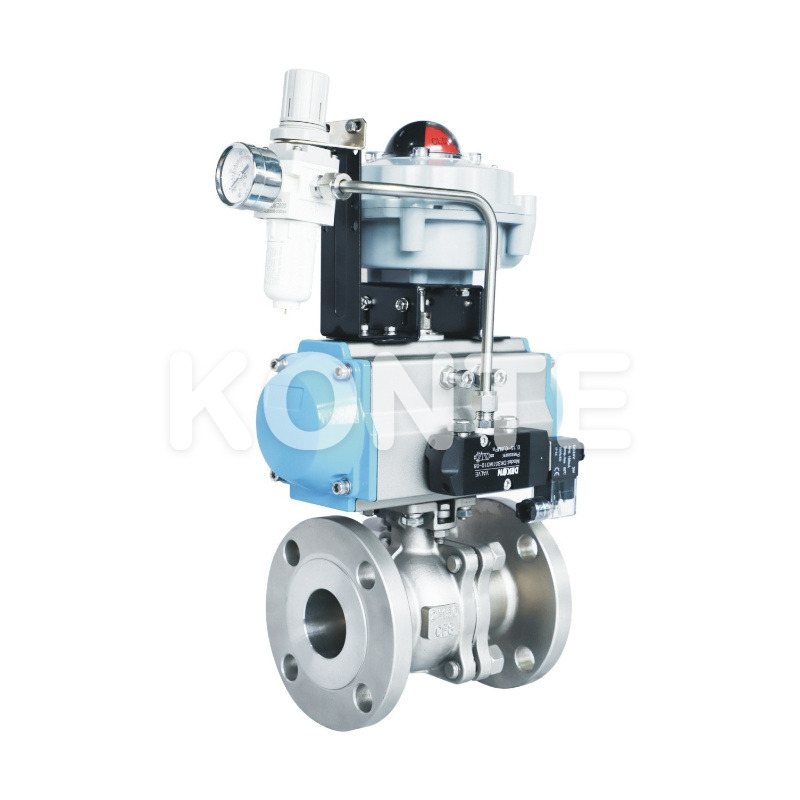
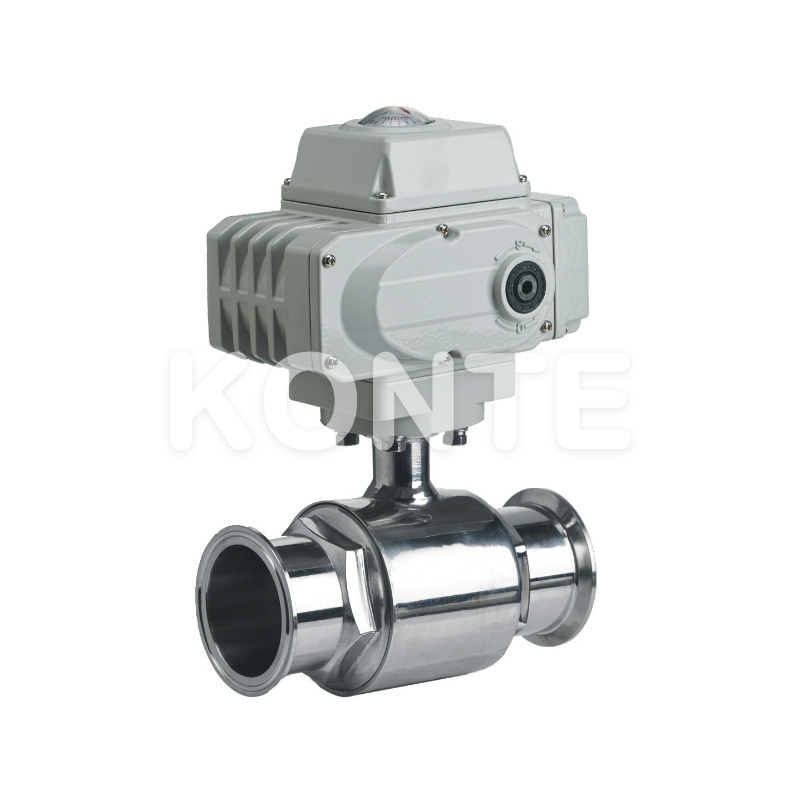
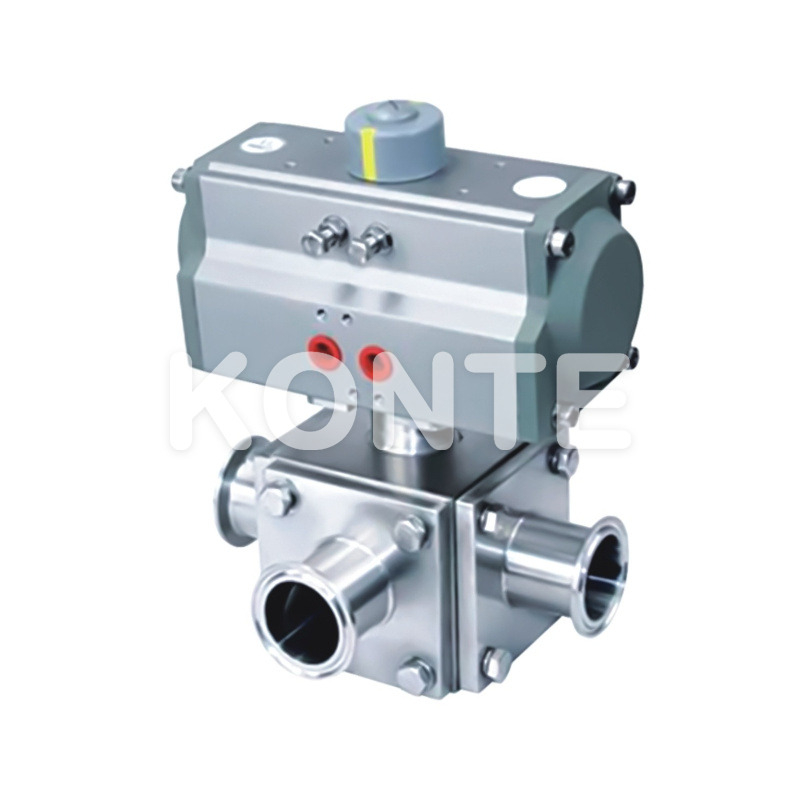
Sanitary ball valves come in various types based on actuation, flow control, and connection method. The main categories include manual, pneumatic, electric, and 3-way/multi-way valves.
The Sanitary Tri-Clamped Manual Ball Valve is operated by hand and is ideal for low-frequency or small-scale operations. Its tri-clamp connection ensures quick assembly and disassembly for cleaning or maintenance.
Applications: Food production, dairy, beverage systems.
Advantages:
Easy to operate
Low maintenance
Quick cleaning and inspection
The Sanitary Tri-Clamped Pneumatic Ball Valve uses a pneumatic actuator to automate valve operation. It is widely used in high-volume processing where speed, reliability, and consistency are crucial.
Applications: Beverage production, pharmaceutical manufacturing, cosmetic processing.
Advantages:
Automated operation reduces labor costs
Fast response and precise control
Reliable and consistent performance
Electric actuated sanitary ball valves allow remote operation and are suitable for highly automated or integrated systems. They are commonly used in pharmaceutical and biotech industries.
Applications: Pharmaceutical production, biotechnology, chemical processing.
Advantages:
Remote control and automation
Precise flow adjustment
Integration with control systems for monitoring
3-way sanitary ball valves and multi-way valves enable fluid routing between multiple pipelines. They are particularly useful in complex systems where multiple processing lines require flexible flow control.
Applications: Food and beverage production, cosmetic formulation, chemical refining.
Advantages:
Flexible flow routing
Reduces number of valves required in a system
Compact and space-efficient design
Sanitary ball valves are used across many industries that require high hygiene standards:
Food Processing – Dairy, chocolate, sauces, and liquid ingredients.
Beverage Industry – Breweries, soft drinks, juices, and bottled water.
Pharmaceutical Industry – API production, sterile fluid transfer.
Biotechnology – Fermentation tanks, cell culture media, and bioprocess systems.
Cosmetics Industry – Lotions, creams, and liquid cosmetic formulations.
Chemical Industry – Handling sterile or corrosive fluids safely.
Each industry relies on sanitary ball valves to maintain product quality, prevent contamination, and ensure compliance with stringent safety regulations.
Hygienic Operation – Smooth surfaces prevent microbial growth and contamination.
Reliable Sealing – Tight shut-off prevents leaks, even under high pressure.
Durability – Stainless steel and FDA-approved seals provide long-lasting performance.
Versatility – Suitable for manual, pneumatic, or electric actuation.
Regulatory Compliance – Designed to meet FDA, 3A, ISO, and other sanitary standards.
Cost-Effective Maintenance – Tri-clamp design simplifies cleaning and reduces downtime.
Flexible Flow Control – Multi-way valves enable complex routing without extra components.
Selecting the appropriate sanitary ball valve depends on several factors:
Medium Type – Consider food, beverage, chemical, or pharmaceutical fluids.
Temperature and Pressure – Ensure valve materials and seals can withstand operating conditions.
Connection Type – Tri-clamp, welded, or threaded based on pipeline configuration.
Actuation – Manual for low-frequency operations, pneumatic or electric for automation.
Flow Requirements – Full-port or reduced-port valves for optimal efficiency.
Regulatory Compliance – Confirm valve meets hygiene standards for your industry.
| Valve Type | Actuation | Connection | Applications | Advantages |
|---|---|---|---|---|
| Tri-Clamped Manual | Manual | Tri-clamp | Food, Dairy | Easy to clean, low maintenance |
| Tri-Clamped Pneumatic | Pneumatic | Tri-clamp | Beverage, Pharmaceutical | Automated, fast response |
| Tri-Clamped Electric | Electric | Tri-clamp | Pharmaceutical, Biotech | Remote control, high precision |
| 3-Way / Multi-Way | Pneumatic/Electric | Tri-clamp | Food, Cosmetic, Refining | Flexible flow routing, space-saving |
Proper installation and maintenance ensure the longevity and performance of sanitary ball valves. Key points include:
Regular Cleaning – Follow CIP or SIP procedures to maintain hygiene.
Seal Inspection – Check and replace PTFE or elastomer seals regularly.
Lubrication – Maintain actuator components as per manufacturer recommendations.
Installation Alignment – Avoid excessive torque; ensure proper alignment of connections.
Leak Testing – Test valves for pressure and leakage after installation.
Storage and Handling – Keep valves in clean, dry conditions until installation.
At Wenzhou Kangtuo International Trade Co., Ltd., we specialize in providing high-quality sanitary ball valves that meet the most stringent hygiene and performance standards. Our valves are crafted from corrosion-resistant stainless steel, compatible with manual, pneumatic, and electric actuators, and designed for easy cleaning and long-term reliability. Trusted by clients in over 60 countries across food, beverage, dairy, pharmaceutical, and biotechnology industries, our products ensure precise flow control and contamination-free operation. Backed by decades of valve manufacturing expertise, rigorous quality control, and prompt after-sales support, Kangtuo valves deliver both efficiency and peace of mind for your production systems. Whether you need sanitary tri-clamped manual, pneumatic, or electric ball valves, our team provides tailored solutions to meet your specific process requirements.
Sanitary ball valves are a critical component for industries requiring hygiene, precision, and reliability. With a range of actuation options, connection types, and flow configurations, these valves provide safe, efficient, and compliant control of fluids in food, beverage, pharmaceutical, biotech, cosmetic, and chemical applications. By selecting the right sanitary ball valves and following proper maintenance protocols, facilities can ensure operational efficiency, product safety, and long-term reliability.
Q1: What industries commonly use sanitary ball valves?
A1: Food processing, beverage, dairy, pharmaceuticals, biotechnology, cosmetics, and chemical industries.
Q2: What materials are sanitary ball valves made of?
A2: Stainless steel 304 or 316 with PTFE or FDA-approved seals.
Q3: What is a 3-way sanitary ball valve used for?
A3: It allows fluid to flow in multiple directions, enabling flexible routing between pipelines.
Q4: Can sanitary ball valves be automated?
A4: Yes, pneumatic and electric actuators allow for automated control.
Q5: How often should sanitary ball valves be maintained?
A5: Regular inspection and cleaning, following manufacturer guidelines for seals and lubrication.
Q6: Are sanitary ball valves suitable for high-pressure applications?
A6: Yes, but always confirm the valve rating for your system.
Q7: What are the benefits of tri-clamp connections?
A7: They allow quick assembly, easy disassembly, and thorough cleaning.
Q8: Can sanitary ball valves handle corrosive liquids?
A8: Yes, stainless steel construction ensures resistance to many chemicals.
Q9: Do sanitary ball valves meet international standards?
A9: Most comply with FDA, 3A, ISO, and other hygiene standards.
Q10: How do I choose between manual and automated valves?
A10: Manual valves suit low-frequency or small-scale operations; pneumatic or electric valves are ideal for automated or high-volume systems.


