

Views: 0 Author: Site Editor Publish Time: 2026-04-07 Origin: Site


In pharmaceutical manufacturing, the stakes for fluid transfer are exceptionally high. The selection of a pump is not merely a mechanical choice; it's a critical decision that directly impacts batch integrity, product sterility, and regulatory compliance with standards like FDA and GMP. A single miscalculation can lead to catastrophic failures. The financial and safety risks associated with contamination, seal failure, or poor cleanability are immense, potentially resulting in batch loss, recalls, and significant reputational damage. "Dead legs" or crevices in a pump's internal geometry can harbor microorganisms, jeopardizing an entire production run. This guide provides a comprehensive framework for selecting the optimal Sanitary Grade Pump, balancing fluid dynamics, stringent hygiene standards, and the total cost of ownership to ensure your process is safe, efficient, and compliant.
Key Takeaways
Defining Pharmaceutical Standards for Sanitary Pumps
Primary Pump Technologies for Pharmaceutical Manufacturing
Evaluation Criteria: Matching Pump to Application
Pump Selection Guide by Application
Total Cost of Ownership (TCO) & ROI
Implementation Risks & Vendor Selection
Implementation Strategy & Next Steps
Conclusion
FAQ
Compliance is Non-Negotiable: Ensure all pumps meet 3A, EHEDG, and USP Class VI standards.
Material Matters: 316L stainless steel with a surface finish of Ra ≤ 0.4 μm is the industry benchmark for pharmaceutical applications.
Match Pump Type to Fluid: Centrifugal for low-viscosity (WFI); Rotary Lobe or Twin-Screw for high-viscosity or shear-sensitive products.
Operational Efficiency: Prioritize CIP/SIP (Clean-in-Place/Steam-in-Place) compatibility and VFD integration to reduce energy and maintenance costs.
A pump used in pharmaceutical applications must meet a set of uncompromising standards that far exceed those in other industries. These standards are designed to protect product purity and patient safety at every stage. They revolve around material integrity, hygienic design, regulatory adherence, and flawless sealing technology.
The baseline material for any wetted part in a pharmaceutical pump is 316L stainless steel. Its low carbon content ("L") makes it highly resistant to corrosion, especially from the aggressive cleaning agents used in Clean-in-Place (CIP) and Steam-in-Place (SIP) cycles. However, the raw material is only the starting point. The surface finish is equally critical.
To prevent microbial adhesion and biofilm formation, surfaces must be exceptionally smooth. This is achieved through mechanical polishing followed by electropolishing, a process that removes a microscopic layer of metal to create a passive, crevice-free surface. The industry benchmark for a Sanitary Grade Pump for Pharmaceuticals is a surface roughness (Ra) of less than or equal to 0.4 micrometers (μm), which is essential for sterile applications.
Hygienic design is about ensuring a pump is fully cleanable and drainable. The primary goal is to eliminate any area where product or cleaning solutions can stagnate. Key principles include:
No Dead Legs: All internal pathways must be free of stagnant zones or "dead legs" where fluid can collect and harbor bacteria.
Total Drainability: The pump casing and internal geometry must be self-draining to ensure no residue is left behind after cleaning cycles.
Crevice-Free Construction: All joints, welds, and connections are designed to be smooth and free of crevices that could trap contaminants.
Navigating the regulatory landscape is crucial for compliance. Several key standards and bodies govern the design and use of sanitary pumps in pharmaceuticals:
FDA (U.S. Food and Drug Administration): Sets broad guidelines for equipment used in drug manufacturing.
3-A Sanitary Standards: Provides specific design criteria for equipment to ensure cleanability and inspectability.
EHEDG (European Hygienic Engineering & Design Group): Offers detailed guidelines and testing methods to verify hygienic design.
GMP (Good Manufacturing Practices): A system of regulations that ensures products are consistently produced and controlled according to quality standards.
USP Class VI: A standard for plastics and elastomers, ensuring that materials like O-rings and gaskets are non-toxic and do not leach harmful substances into the product.
The shaft seal is often the most vulnerable component in a pump system. It prevents leakage while the pump shaft rotates. In pharmaceutical applications, any leakage is unacceptable. Two primary technologies dominate the field:
Mechanical Seals: These are the most common type, using two extremely flat, hard faces (often silicon carbide) pressed together to form a seal. While effective, they are a wear item and a potential point of failure. Proper selection of seal face materials and USP Class VI elastomers is critical.
Magnetic Drives (Mag-Drives): These pumps are sealless. They use magnets to couple the motor to the impeller through a containment shell, completely isolating the fluid from the atmosphere. This design offers zero leakage, making it ideal for handling highly valuable, sterile, or hazardous fluids. However, they typically come at a higher initial cost.
Selecting the right pump technology depends entirely on the fluid's properties and the process requirements. Each type of sanitary pump has a specific role where it excels within a pharmaceutical facility.
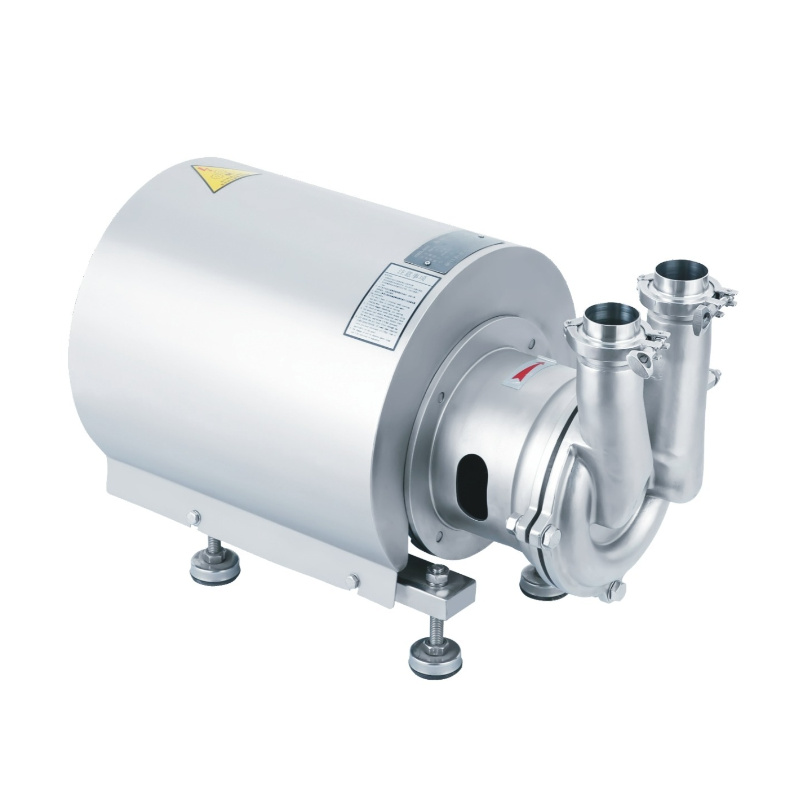
Often called the "workhorse" of the industry, the sanitary centrifugal pump is designed for high-flow, low-viscosity applications. It uses rotational energy from an impeller to move fluids. Its simple, robust design makes it reliable and easy to maintain.
Best for: Water-for-Injection (WFI), purified water, solvents, and CIP solutions.
Key Advantage: High efficiency and flow rates for thin liquids. Cost-effective for transfer duties.
Limitation: Not suitable for high-viscosity products or shear-sensitive materials. Performance drops significantly as viscosity increases above 500 cP.
A Rotary Lobe Sanitary Grade Pump is a type of positive displacement pump that uses two or more intermeshing lobes to move fluid. The lobes do not touch, providing a gentle, low-shear pumping action that preserves product integrity.
Best for: High-viscosity fluids like syrups, gels, creams, and ointments. Also ideal for shear-sensitive biologicals such as cell cultures and proteins.
Key Advantage: Gentle product handling, ability to handle solids, and consistent flow rate regardless of pressure changes.
Limitation: More complex and expensive than centrifugal pumps. Can be damaged if run dry.
This specialized centrifugal or liquid-ring pump is designed to handle fluids with entrained air. A Self-Priming Sanitary Grade Pump can evacuate air from the suction line, allowing it to "lift" fluid from a lower level without needing a foot valve.
Best for: CIP return applications, tank emptying, and situations where the pump is located above the fluid source.
Key Advantage: Excellent air-handling capability, which prevents air locking and ensures efficient removal of cleaning fluids.
Limitation: Generally less efficient than standard centrifugal pumps for pure liquid transfer.
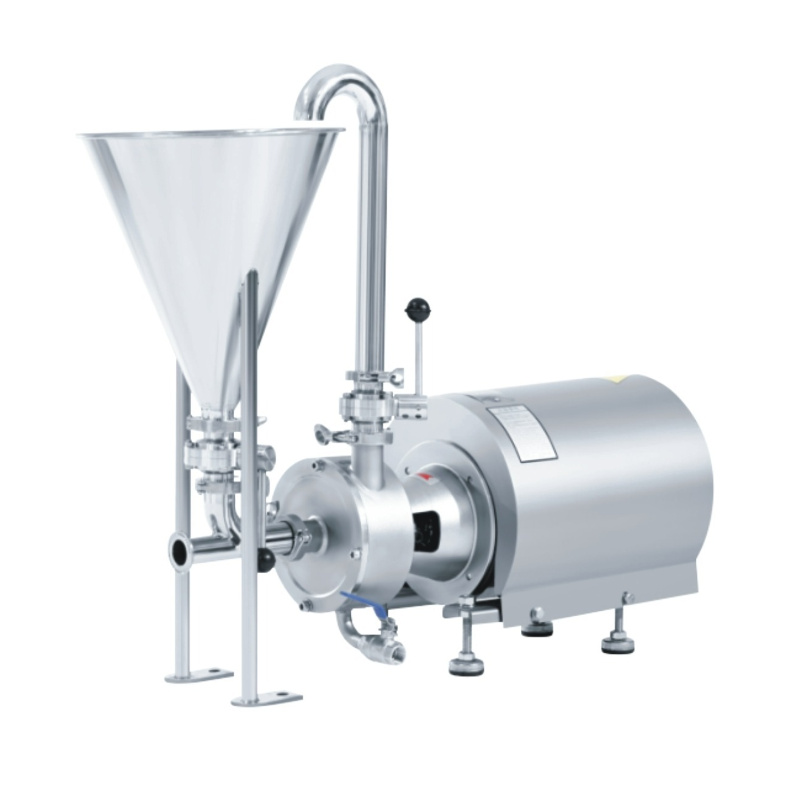
A Trl-H Shear Sanitary Grade Pump, also known as a high-shear mixer or emulsifier, is not just for transfer but for processing. It uses a high-speed rotor-stator assembly to break down particles and create stable emulsions or dispersions.
Best for: Emulsification, homogenization, dissolving powders into liquids, and high-shear mixing of active pharmaceutical ingredients (APIs).
Key Advantage: Combines pumping and mixing into a single, efficient unit, improving process consistency.
Limitation: Highly specialized and not suitable for simple fluid transfer. The intense shear can damage sensitive products.
A Stainless Steel Sanitary Vacuum Pump is crucial for processes that require negative pressure. Often using liquid-ring technology, these pumps are built to the same hygienic standards as fluid transfer pumps.
Best for: Degassing liquids to remove dissolved air, vacuum-assisted transfer of sensitive products, and sterile filtration processes.
Key Advantage: Enables processes that are not possible at atmospheric pressure, ensuring product stability and purity.
Limitation: Designed specifically for creating a vacuum and handling gas/liquid mixtures; not a primary fluid transfer device.
A systematic evaluation process ensures you select a pump that not only works but excels. This involves a deep dive into your fluid's characteristics, required performance metrics, and specific operational needs.
The nature of the fluid is the most important factor in pump selection. Key properties to analyze include:
Viscosity (cP): This measures a fluid's resistance to flow. Low-viscosity fluids like water (~1 cP) are ideal for centrifugal pumps. High-viscosity fluids like creams (>10,000 cP) require positive displacement pumps like rotary lobe models.
Temperature: Operating temperature affects fluid viscosity, material expansion, and the selection of elastomers for seals and gaskets.
Shear Sensitivity: Biological products like proteins, vaccines, and cell cultures can be damaged or denatured by the high shear forces generated in a centrifugal pump. Low-shear pumps (lobe, peristaltic) are essential for these applications.
Once you understand the fluid, you must define the performance requirements of the system.
Flow Rate (GPM/LPM): The volume of fluid that needs to be moved in a given time. This is a primary factor in sizing the pump.
Differential Pressure (Head): The total pressure the pump must generate to move the fluid from the source to the destination. This includes overcoming gravity (static head), friction in the pipes (friction head), and any pressure in the destination vessel.
The relationship between flow rate and head is plotted on a pump curve, which is essential for proper pump selection.
Standard centrifugal pumps cannot handle significant amounts of air and must have a flooded suction (fluid source above the pump inlet) to operate. In situations where this is not possible, or where air is expected in the line, you must utilize a self-priming sanitary grade pump. These pumps are critical for:
CIP Return: Efficiently evacuating cleaning solutions mixed with air from vessels and pipelines.
Tank Unloading: Completely emptying tanks without leaving a heel.
Suction Lift: Drawing fluid from drums or sumps located below the pump.
If your fluid contains suspended solids, such as crystals in a suspension or cell debris, the pump must be able to handle them without causing damage to the product or the pump itself. Centrifugal pumps can often handle small, hard solids, but delicate particulates require a gentler approach. Positive displacement pumps with specific rotor or lobe designs (e.g., bi-wing lobes) are designed to pass larger, fragile solids with minimal impact.
| Pump Type | Viscosity Range | Shear Impact | Best Application |
|---|---|---|---|
| Centrifugal | Low (<500 cP) | High | WFI, Solvents, CIP Supply |
| Rotary Lobe | Medium to Very High | Low | Creams, Gels, Biologics |
| Self-Priming | Low | Medium-High | CIP Return, Tank Emptying |
| High Shear | Low to Medium | Very High | Emulsifying, Homogenizing |
The initial purchase price of a pump is only a fraction of its total cost of ownership (TCO). Operational costs, including energy, maintenance, and downtime, often outweigh the capital expenditure over the pump's lifecycle. Optimizing for these factors is key to achieving a strong return on investment (ROI).
Pumps are significant energy consumers in any manufacturing plant. Many applications, however, do not require the pump to run at full speed all the time. Integrating a Variable Frequency Drive (VFD) allows you to control the pump's motor speed to precisely match the process demand. According to pump affinity laws, power consumption is proportional to the cube of the speed. This means that reducing a pump's speed by just 20% can reduce its energy consumption by nearly 50%. A VFD offers significant savings, especially for pumps operating at partial loads for extended periods.
Automated cleaning and sterilization cycles are standard in pharmaceuticals to ensure consistent, verifiable results and reduce downtime. A pump must be fully compatible with these processes.
CIP (Clean-in-Place): The pump must be able to withstand the chemical agents (acids, caustics) and temperatures used in cleaning cycles. Its internal design must ensure adequate flow velocity to all surfaces for effective cleaning.
SIP (Steam-in-Place): The pump and its seals must be able to handle the high temperatures and rapid temperature changes (thermal shock) associated with steam sterilization without warping or failing.
Even the best pumps require maintenance. The key is to select a design that makes maintenance simple, quick, and predictable.
Ease of Seal Replacement: Look for front-loading seal designs that allow maintenance personnel to replace seals without removing the pump from the pipeline, significantly reducing downtime.
Availability of Spares: Ensure the manufacturer provides readily available spare parts, especially critical wear items like seals and elastomers.
Elastomer Selection: All O-rings and gaskets must be made from USP Class VI certified materials, such as EPDM or PTFE, to prevent leaching and ensure compatibility with the product and cleaning agents.
In a regulated environment, you don't just have to use the right equipment; you have to prove it. A reputable pump vendor should provide a comprehensive documentation package to support your validation efforts. This includes:
Installation Qualification (IQ): Documentation verifying that the pump is installed correctly and matches the specified design.
Operational Qualification (OQ): Records confirming that the pump operates correctly according to its functional specifications.
Performance Qualification (PQ): Evidence that the pump consistently performs as required within the context of the overall process.
This documentation is critical for audit readiness and demonstrating GMP compliance.
Even with careful planning, several pitfalls can compromise a pump installation. Understanding these risks and developing a logical shortlisting process for vendors can help you avoid costly mistakes.
Over-sizing Pumps: It's a common mistake to add excessive safety factors when specifying a pump. An oversized centrifugal pump is often throttled with a valve, which wastes energy and can lead to cavitation (the formation and collapse of vapor bubbles) that damages the impeller and casing. Sizing the pump correctly and using a VFD for control is a much more efficient and reliable approach.
Ignoring Material Compatibility: While 316L stainless steel is robust, it is not immune to all chemicals. Highly concentrated acids or chlorides used in some cleaning protocols can cause corrosion. Always verify the compatibility of all wetted materials—including elastomers—with every fluid they will contact.
Mechanical seals are the number one cause of pump downtime. A seal failure not only stops production but can also cause product contamination. The key to reliability is selecting the right seal face materials for the application. While carbon/ceramic is a common choice, more demanding pharmaceutical applications benefit from harder, more durable materials like Silicon Carbide (SiC) vs. Silicon Carbide (SiC) or Tungsten Carbide. These materials offer superior resistance to wear, corrosion, and thermal shock.
When shortlisting pump suppliers, move beyond the technical specifications and evaluate the vendor's capabilities and support system. Use this checklist:
Technical Support: Do they have accessible experts who understand pharmaceutical applications and can help you size and select the right pump?
Spare Parts Availability: Can they guarantee quick delivery of critical spare parts to minimize downtime? Do they maintain local inventory?
Validation Documentation: Is their standard documentation package comprehensive and sufficient for your IQ/OQ requirements?
Historical Performance: Can they provide references or case studies from other clients in the high-purity pharmaceutical or biotech sectors?
Training and Service: Do they offer on-site training for your maintenance teams and provide field service support?
Once you have a shortlist of technically suitable pumps from qualified vendors, the final steps involve a more formal evaluation. This typically includes issuing a Request for Proposal (RFP) to receive formal quotations and, for critical applications, conducting pilot testing. A pilot test allows you to evaluate the pump's real-world performance with your specific product, confirming that it meets all process requirements before committing to a full-scale purchase.
Selecting the right sanitary grade pump for a pharmaceutical application is a mission-critical task that requires a holistic approach. The optimal choice is rarely the cheapest one upfront. It is a calculated balance between initial capital expenditure (CAPEX) and the long-term operational costs of energy, maintenance, and potential downtime. By systematically evaluating fluid characteristics, adhering to strict hygienic design and regulatory standards, and considering the total cost of ownership, you can ensure process reliability and product safety. Ultimately, the best practice is to consult with a fluid handling specialist who can help verify pump curves against your specific process conditions, guaranteeing a solution that is not just compliant, but truly optimized for performance.
A: The primary differences lie in the level of documentation and material standards. A pharmaceutical pump requires a much smoother surface finish (Ra ≤ 0.4 μm) to prevent microbial growth, full material traceability, and elastomers (gaskets, O-rings) that meet USP Class VI biocompatibility standards. Food-grade pumps may have a less stringent surface finish and may not require the same level of validation paperwork.
A: Choose a rotary lobe pump when your fluid is either high-viscosity (like a cream or gel) or shear-sensitive (like a biologic or cell culture). Centrifugal pumps are highly efficient for low-viscosity liquids like water but their high-speed impeller can damage delicate products and they lose efficiency rapidly as viscosity increases.
A: 316L stainless steel is required for its superior corrosion resistance, particularly against chlorides and aggressive cleaning agents. The "L" indicates low carbon content, which minimizes carbide precipitation during welding. This ensures the material's anti-corrosive properties are maintained at weld points, a common area for failure in lower-grade stainless steels.
A: A self-priming pump dramatically improves Clean-in-Place (CIP) efficiency by effectively handling the air-fluid mixture created during the return cycle. It can evacuate air from the lines, preventing "air lock" and ensuring that all cleaning solution is completely removed from vessels and piping. This leads to faster, more reliable, and more repeatable cleaning outcomes.
A: For sterile pharmaceutical processes, the industry standard for wetted surfaces is typically Ra ≤ 0.4 micrometers (μm), often achieved through electropolishing. While some applications may allow up to Ra 0.8 μm, the smoother 0.4 μm finish provides a superior defense against microbial adhesion and biofilm formation, making it the preferred choice for ensuring sterility.


